Results by title
5550 books match the query 'Biography & Autobiography' and 22 start with y
Yankee Warhorse
A Biography of Major General Peter OsterhausMary Bobbit Townsend
University of Missouri Press, 2021
Yazoo
Integration in a Deep-Southern TownWillie Morris
University of Arkansas Press, 2012
Year of Plenty
A Family's Season of GriefB.J. Hollars
University of Wisconsin Press, 2024
So began the Hollars family’s year of plenty—a cancer diagnosis on top of the ongoing COVID pandemic, then feelings of falling short as parents, partners, and people. While Hollars traces his family’s daily devastations alongside his father-in-law’s decline, he recounts the small mercies along the way: birthdays, campfires, fishing trips, kayaking, and fireflies. As he, his wife, Meredith, and their three young children grapple with how best to say goodbye to the person they love, they are forced to reassess their own lives. How can we make the most of our time, they wonder, when time feels so short?
Written in vignettes and accompanied by photographs and family interviews, Year of Plenty provides a poignant and unflinching account of how death separates us not only from the people we love but from places and memories too. Hollars explores how death’s all-consuming weight has the potential to fracture—rather than strengthen—even those relationships we think we know the best. Ultimately, he cracks wide personal moments from his own life and allows the world to peer in.
Year of the Pig
Hunting Feral HogsMark J. Hainds
University of Alabama Press, 2011
Exploring the ecology, culture, and challenge of America’s most controversial wild hogs.
What happens when a conservation-minded forester decides to spend an entire year hunting feral hogs across ten states? You get a book that’s equal parts adventure, ecology, and laugh-out-loud grit. In Year of the Pig, Mark J. Hainds straps on rifles, bows, and even a knife (yes, really) to tackle one of North America’s most destructive invasive species. Along the way, he delivers unforgettable stories from Alabama swamps to Hawaiian volcanoes, mixing adrenaline with insight into why pigs are an ecological nightmare and a hunter’s dream.
In it real-world and armchair hunters will find:
• Authentic Adventures: Belly-crawling through privet thickets, stalking pigs in palmetto jungles, and chasing razorbacks in the Ozarks.
• Ecological Wisdom: Learn how hogs impact forests, farms, and fragile ecosystems—and why hunting them matters.
• Humor & Humanity: From near-misses to triumphs, Hainds’ candid storytelling will keep you grinning (and maybe craving barbecue).
Hunters seeking real-world thrills, conservationists fighting invasive species, outdoor enthusiasts who savor gritty tales, and anyone who enjoys a good laugh with their environmental education. Perfect for reading—or gifting to that friend who thinks “hog hunting” is just a Southern stereotype. Spoiler: It’s not.
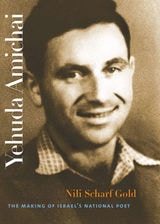
Yehuda Amichai
The Making of Israel's National PoetNili Scharf Gold
Brandeis University Press, 2008
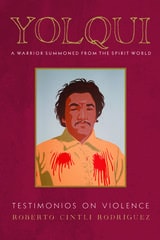
Yolqui, a Warrior Summoned from the Spirit World
Testimonios on ViolenceRoberto Cintli Rodríguez; Foreword by Patrisia Gonzales
University of Arizona Press, 2019
Framed by Rodríguez’s personal testimony of police violence, this book offers a historia profunda of the culture of extralegal violence against Red-Black-Brown communities in the United States. In addition to Rodríguez’s story, this book includes several short essays from victims and survivors that bring together personal accounts of police brutality and state-sponsored violence. This wide-ranging work touches on historical and current events, including the Watts rebellion, the Zoot Suit Riots, Operation Streamline, Standing Rock, and much more.
From the eyewitness accounts of Bartolomé de las Casas to the protestors and allies at Standing Rock, this book makes evident the links between colonial violence against Red-Black-Brown bodies to police violence in our communities today. Grounded in the stories of the lives of victims and survivors of police violence, Yolqui, a Warrior Summoned from the Spirit World illuminates the physical, spiritual, and epistemic depths and consequences of racialized dehumanization.
Rodríguez offers us an urgent, poignant, and personal call to end violence and the philosophies that permit such violence to flourish. Like the Nahuatl yolqui, this book is intended as a means of healing, offering a footprint going back to the origins of violence, and, more important, a way forward.
With contributions by Raúl Alcaraz-Ochoa, Citalli Álvarez, Tanya Alvarez, Rebekah Barber, Juvenal Caporale, David Cid, Arianna Martinez Reyna, Carlos Montes, Travis Morales, Simon Moya Smith, Cesar Noriega, Kimberly Phillips, Christian Ramirez, Michelle Rascon Canales, Carolyn Torres, Jerry Tello, Tara Trudell, and Laurie Valdez.
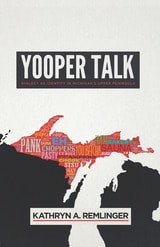
Yooper Talk
Dialect as Identity in Michigan's Upper PeninsulaKathryn A. Remlinger
University of Wisconsin Press, 2019
Drawing on sixteen years of fieldwork, including interviews with seventy-five lifelong residents of the UP, Kathryn Remlinger examines how the idea of a unique Yooper dialect emerged. Considering UP English in relation to other regional dialects and their speakers, she looks at local identity, literacy practices, media representations, language attitudes, notions of authenticity, economic factors, tourism, and contact with immigrant and Native American languages. The book also explores how a dialect becomes a recognizable and valuable commodity: Yooper talk (or "Yoopanese") is emblazoned on t-shirts, flags, postcards, coffee mugs, and bumper stickers.
Yooper Talk explains linguistic concepts with entertaining examples for general readers and also contributes to interdisciplinary discussions of dialect and identity in sociolinguistics, anthropology, dialectology, and folklore.
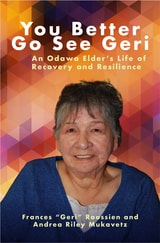
You Better Go See Geri
An Odawa Elder’s Life of Recovery and ResilienceFrances “Geri” Roossien
Oregon State University Press, 2021
While a graduate student, Andrea Riley Mukavetz was invited into Geri’s home to listen to her stories and assist in compiling and publishing a memoir. Geri wanted her stories to serve as a resource, form of support, and affirmation that Indigenous people can be proud of who they are and overcome trauma. Geri hoped to be a model to current and future generations, and she believed strongly that more Indigenous people should become substance abuse counselors and work with their communities in tribally specific ways.
Geri died in 2019, but Riley Mukavetz carried on the work. This book presents Geri’s stories, lightly edited and organized for clarity, with an introduction by Riley Mukavetz that centers Geri’s life and the process of oral history in historical and theoretical context.
You Can Crush the Flowers
A Visual Memoir of the Egyptian RevolutionBahia Shehab
Gingko, 2021
You Feel So Mortal
Essays on the BodyPeggy Shinner
University of Chicago Press, 2014
Over the course of twelve essays, Shinner holds a mirror up to the complex desires, fears, confusions, and mysteries that shape our bodily perceptions. Driven by the collision between herself and the larger world, she examines her feet through the often-skewed lens of history to understand what makes them, in the eyes of some, decidedly Jewish; considers bras, breasts, and the storied skills of the bra fitter; asks, from the perspective of a confused and grieving daughter, what it means to cut the body open; and takes a reeling time-trip through myth, culture, and history to look at women’s hair in ancient Rome, Laos, France, Syria, Cuba, India, and her own past. Some pieces investigate the body under emotional or physical duress, while others use the body to consider personal heritage and legacy. Throughout, Shinner writes with elegance and assurance, weaving her wide-ranging thoughts into a firm and fascinating fabric.
Turning the category of body books on, well, its ear, You Feel So Mortal offers a probing view of our preoccupation with the body that is both idiosyncratic and universal, leaving us with the deep satisfaction of our shared humanity.
You May Take the Witness
By Clinton Giddings Brown
University of Texas Press, 1955
When Clinton Giddings Brown (1882–1964) retired from a long and successful career as a trial lawyer in San Antonio, Texas, fishing on the Gulf Coast was out—by doctor’s orders. So he sat on the front gallery of his house in San Antonio and fished with a lead pencil in the richly stocked memories of his professional life. “Some days I didn’t get a nibble, but some mornings they were biting fine.”
The resultant and delightful catch is the story of a full, merry, and successful life. From the day in 1906 when “Mr. Clint” hung out his shingle in a little office over his father’s bank, through the long succession of “fine scraps, rough and tumble, no holds barred,” which were the jury cases he tried for defendant corporations in personal-injury damage suits, there was not much about the law and about human nature that he did not have the opportunity to learn.
The first client in the little office was Charlie Ross, a Pullman porter who wanted to make sure that the title on his new house was clear. The fee was $15, and Charlie was his friend for life. In the pages that follow the reader will meet many other unforgettable characters, including Dr. John Brinkley, the man who made a million dollars a year from his goat-gland operation until Dr. Morris Fishbein called him a “quack”; old Jim Wheat, who killed a white man, and Jim’s little grandson Lige, who knew what God would do to him if he told lies in court; Bosco, who forgot his complete paralysis when the lady lure came into the picture; and pretty little Mary, whom the jury loved.
Brown was elected district attorney for Bexar County, Texas, in 1913 and became mayor of San Antonio the following year; in the latter office he served two terms, resigning to join the Army in the First World War. On his return from France he was invited to work with a law firm that represented many large corporations, among them the Public Service Company, which ran San Antonio’s streetcar and bus lines, and the Southern Pacific Railroad. Soon made a partner, he remained with the firm until his retirement, and through a quarter of a century tried about as many jury cases as any other attorney in the city.
You May Take the Witness is a book for anyone who has ever felt the fascination of courtrooms and trials, and who has not? It is also a book in which lawyers will find an excellent refresher course for both mind and spirit. Here are invaluable tips on all the ins-and-outs of jury trial, not from the flat dimensions of a law-school text but from the full, real world of actual trials and the men and women involved. Brown tells how to handle witnesses and to pick juries, when to object and when not to object. The most important lesson of all, he says, is to value the jury and be an honest person before them. “The jury is decent, so you be decent, and ‘be yourself.’”
It is clear that Clinton Giddings Brown succeeded as a lawyer because he succeeded as a human being, just as it is clear that he knows how to tell story after fine story because he enjoyed living each episode of his life to its fullest.
You Were Never in Chicago
Neil Steinberg
University of Chicago Press, 2012
In 1952 the New Yorker published a three-part essay by A. J. Liebling in which he dubbed Chicago the "Second City." From garbage collection to the skyline, nothing escaped Liebling's withering gaze. Among the outraged responses from Chicago residents was one that Liebling described as the apotheosis of such criticism: a postcard that read, simply, "You were never in Chicago."
Neil Steinberg has lived in and around Chicago for more than three decades—ever since he left his hometown of Berea, Ohio, to attend Northwestern—yet he remains fascinated by the dynamics captured in Liebling's anecdote. In You Were Never in Chicago Steinberg weaves the story of his own coming-of-age as a young outsider who made his way into the inner circles and upper levels of Chicago journalism with a nuanced portrait of the city that would surprise even lifelong residents.
Steinberg takes readers through Chicago's vanishing industrial past and explores the city from the quaint skybridge between the towers of the Wrigley Building, to the depths of the vast Deep Tunnel system below the streets. He deftly explains the city's complex web of political favoritism and carefully profiles the characters he meets along the way, from greats of jazz and journalism to small-business owners just getting by. Throughout, Steinberg never loses the curiosity and close observation of an outsider, while thoughtfully considering how this perspective has shaped the city, and what it really means to belong. Intimate and layered, You Were Never in Chicago will be a welcome addition to the bookshelves of all Chicagoans, be they born in the city or forever transplanted.
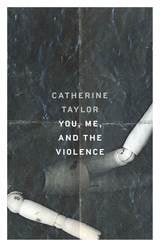
You, Me, and the Violence
Catherine Taylor
The Ohio State University Press, 2017
From conversations with her own brother about his military experiences to Punch and Judy, from the original tale of Pinocchio to the radio chatter of soldiers in active drone operation, Taylor writes about family, power, and the “theater” of war in a voice both sly and sobering, heartbreaking and hopeful.
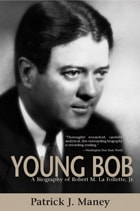
Young Bob
A Biography of Robert M. La Follette, Jr.Patrick J. Maney
Wisconsin Historical Society Press, 2002
United States senator "Young Bob" La Follette entered politics as a young reformer in the shadow of his legendary father, "Fighting Bob" La Follette. He made his own mark as a key architect of Roosevelt’s New Deal and as a champion of labor rights and civil liberties. But in 1946 he was unexpectedly unseated by Joseph McCarthy, whose rise to Cold War notoriety foreshadowed La Follette’s despair and suicide in 1953. This new edition updates the only full scale biography of La Follette,Jr., the first to exploit his voluminous collection of personal papers. Patrick J. Maney makes clear that Young Bob’s story is as relevant today as it was when he died. His life stands as dramatic evidence of how one of the most respected politicians of his time bridged the political spectrum and was admired by both liberals like FDR and Harry Truman and conservatives like Robert Taft and Richard Nixon.
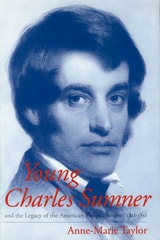
Young Charles Sumner and the Legacy of the American Enlightenment, 1811-1851
Anne-Marie Taylor
University of Massachusetts Press, 2001
In this book, Anne-Marie Taylor challenges that long-standing view, offering in its stead the portrait of a man animated more by principle than by impulse or ambition. According to Taylor, Sumner's reform-minded politics, including his fervent commitment to put an end to slavery, must be understood in the context of a young nation still struggling to live up to the Enlightenment ideals embraced by its founders and embodied in its Constitution.
Focusing on the first forty years of Sumner's life, before he took public office, Taylor traces the evolution of his character and thought among Boston's cultural elite. His belief in the virtues of cosmopolitanism, in the dignity of the human intellect and conscience, and in the possibility of a cultivated and just society, all find their roots in an education steeped in Enlightenment principles. At the same time, as a child of New England Puritanism and Revolutionary republicanism, Sumner was raised to believe in the moral obligation of the individual to work for the common good.
As Taylor shows in this richly drawn biography, much of the triumph and tragedy of Sumner's story—the energy of his idealism as well as the poignancy of his eventual disappointment— derives from the overpowering sense of duty and national destiny imbued by his upbringing.
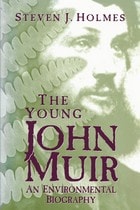
Young John Muir
An Environmental BiographySteven J. Holmes
University of Wisconsin Press, 1999
From his childhood in Scotland and Wisconsin through his young adulthood in the Midwest and Canada, Muir struggled—often without success—to find a place for himself both in nature and in society. Far from granting comfort, the natural world confronted the young Muir with a full range of practical, emotional, and religious conflicts. Only with the help of his family, his religion, and the extraordinary power of nature itself could Muir in his late twenties find a welcoming vision of nature as home—a vision that would shape his lifelong environmental experience, most immediately in his transformative travels through the South and to the Yosemite Valley.
More than a biography, The Young John Muir is a remarkable exploration of the human relationship with wilderness. Accessible and engaging, the book will appeal to anyone interested in the individual struggle to come to terms with the power of nature.
Young Man From The Provinces
A Gay Life Before StonewallAlan Helms
University of Minnesota Press, 2003
An insider’s account of gay high society in pre-Stonewall New York City—now back in print!
Young, intelligent, and handsome, Alan Helms left a brutal midwestern childhood for New York City in 1955. Denied a Rhodes scholarship because of his sexual orientation, he soon became an object of desire in a gay underground scene frequented by, among many others, Noel Coward, Leonard Bernstein, and Marlene Dietrich. In this unusually vivid and sensitive account, Helms describes the business of being a sex object and its psychological and physical toll.
Young Men and Fire
Norman Maclean
University of Chicago Press, 1992
Young Men and Fire won the National Book Critics Circle Award in 1992.
"A magnificent drama of writing, a tragedy that pays tribute to the dead and offers rescue to the living.... Maclean's search for the truth, which becomes an exploration of his own mortality, is more compelling even than his journey into the heart of the fire. His description of the conflagration terrifies, but it is his battle with words, his effort to turn the story of the 13 men into tragedy that makes this book a classic."—from New York Times Book Review Editor's Choice, Best Books of 1992
"A treasure: part detective story, part western, part tragedy, part elegy and wholly eloquent ghost story in which the dead and the living join ranks cheerfully, if sometimes eerily, in a search for truth and the rest it brings."—Joseph Coates, Chicago Tribune
"An astonishing book. In compelling language, both homely and elegant, Young Men and Fire miraculously combines a fascinating primer on fires and firefighting, a powerful, breathtakingly real reconstruction of a tragedy, and a meditation on writing, grief and human character.... Maclean's last book will stir your heart and haunt your memory."—Timothy Foote, USA Today
"Beautiful.... A dark American idyll of which the language can be proud."—Robert M. Adams, The New York Review of Books
"Young Men and Fire is redolent of Melville. Just as the reader of Moby Dick comes to comprehend the monstrous entirety of the great white whale, so the reader of Young Men and Fire goes into the heart of the great red fire and comes out thoroughly informed. Don't hesitate to take the plunge."—Dennis Drabelle, Washington Post Book World
"Young Men and Fire is a somber and poetic retelling of a tragic event. It is the pinnacle of smokejumping literature and a classic work of 20th-century nonfiction."—John Holkeboer, The Wall Street Journal
"Maclean is always with the brave young dead. . . . They could not have found a storyteller with a better claim to represent their honor. . . . A great book."—James R. Kincaid, New York Times Book Review
Young Men and Fire
Twenty-fifth Anniversary EditionNorman Maclean
University of Chicago Press, 2017
Alongside Maclean’s now-canonical A River Runs through It and Other Stories, Young Men and Fire is recognized today as a classic of the American West. This twenty-fifth anniversary edition of Maclean’s later triumph—the last book he would write—includes a powerful new foreword by Timothy Egan, author of The Big Burn and The Worst Hard Time. As moving and profound as when it was first published, Young Men and Fire honors the literary legacy of a man who gave voice to an essential corner of the American soul.
Your Own Will Leave You
My Mother's DementiaManash Firaq Bhattacharjee
Temple University Press, 2026
“Memory’s barriers are without barriers,” writes Manash Firaq Bhattacharjee in the opening of his touching and thoughtful memoir, Your Own Will Leave You. Bhattacharjee eloquently reflects on family, care, and memory as he chronicles his experiences with his elderly mother who suffers from dementia. Working from his journal, Bhattacharjee ruminates on the ways we understand dementia and memory as well as end-of-life issues. He is not only a loving son, but also an Indian with a universal sensibility who turns to ancient and contemporary thinkers that inform his perspective.
Bhattacharjee focuses on the last months of his mother’s life and her changing demeanor—her stubbornness, humor, and vulnerability. He traces her interactions with family members, neighbors, and caregivers, while also addressing burden-of-care issues. Recounting his moments of grief and guilt with candor, Bhattacharjee also re-evaluates how Western culture prejudices popular perceptions of mental illness.
Lyrical, penetrating, occasionally aphoristic, and full of insights, Your Own Will Leave You is a heartfelt, and at times heartbreaking, memoir and a warm elegy for the author’s late mother.
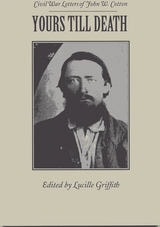
Yours Till Death
Civil War Letters of John W. CottonJohn Cotton
University of Alabama Press, 1951
Letters from a Confederate soldier to his wife during the Civil War.
Yours Till Death: Civil War Letters of John W. Cotton offers a rare and deeply personal window into the lived experience of the American Civil War through the words of an ordinary Confederate soldier. Composed of letters written by John W. Cotton to his wife in Coosa County, Alabama, this collection preserves an unfiltered, intimate record of wartime life from 1862 to 1865, revealing both the hardships of military service and the enduring ties of family and home.
Cotton, a yeoman farmer who enlisted in the Confederate Army in the spring of 1862, writes with directness and honesty about his daily experiences as he moves through the major campaigns of the war, including service in Tennessee, Kentucky, Georgia, and South Carolina. His correspondence captures not only the movements and conditions of military life—guard duty, illness, shortages, and shifting morale—but also the emotional landscape of a soldier separated from his family. His letters are filled with concern for his wife, children, and farm, illustrating the constant tension between duty to country and responsibility to home.
More than a military chronicle, Yours Till Death is also a valuable portrait of rural Southern life during wartime. Cotton’s references to crops, weather, labor, and household concerns provide insight into how families on the home front coped with absence, uncertainty, and economic strain. These details illuminate the broader social and agricultural context of the Confederacy, offering readers a richer understanding of how war reshaped everyday life for civilians as well as soldiers.
The letters, preserved and edited by historian Lucille Griffith, retain the immediacy and authenticity of Cotton’s voice. Written without the benefit of hindsight, they convey the evolving attitudes, anxieties, and hopes of a man living through one of the most turbulent periods in American history. As such, they serve as an important primary source for scholars and students, complementing official histories with the perspective of an individual whose experiences reflect those of countless others who lived and fought during the Civil War.
Yours Till Death will appeal to readers interested in Civil War studies, Southern history, and personal narratives of wartime experience. By bringing together themes of conflict, family, survival, and resilience, this collection transforms historical events into a deeply human story—one that reminds us that the past is best understood not only through battles and politics, but through the voices of those who lived it.
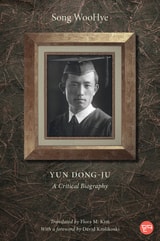
Yun Dong-ju
A Critical BiographySong WooHye
Rutgers University Press, 2026
Historian and novelist Song WooHye chronicles the life of Yun Dong-ju (1917-1945), one of the most beloved and important poets in the modern Korean literary canon, widely considered Korea's "National Poet". Beginning with the history of the North Gando region (now Yanbian, China), where Yun was born, and ending with facts behind the publication of his only and posthumous poetry collection, Sky, Wind, Star, and Poem, this critical biography elucidates who Yun Dong-ju really was, with factual descriptions of the bleak and turbulent period of Japan’s colonization of Korea.
While first working on the book in the 1980s, Song had interviewed the poet’s surviving relatives and friends, most of whom have since passed away. Without her interviews, these important first-hand accounts would have been lost. Song had an added advantage of an “insider,” as she is a niece of Song Mong-gyu, who was the poet’s first cousin and inseparable friend for life. Incorporating newly discovered materials and using interviews with the beloved poet's family and friends, this biography is the most comprehensive, definitive biography of Yun Dong-ju to date, now available in English for the first time.
This book is published with the support of the Literature Translation Institute of Korea (LTI Korea).