1038 books match the query 'Economic conditions' and 5 start with y

cover of You Had a Job for Life: Story of a Company Town

You Had a Job for Life

Story of a Company Town

Jamie Sayen

University Press of New England, 2017

Absentee owners. Single-minded concern for the bottom line. Friction between workers and management. Hostile takeovers at the hands of avaricious and unaccountable multinational interests. The story of America’s industrial decline is all too familiar—and yet, somehow, still hard to fathom. Jamie Sayen spent years interviewing residents of Groveton, New Hampshire, about the century-long saga of their company town. The community’s paper mill had been its economic engine since the early twentieth century. Purchased and revived by local owners in the postwar decades, the mill merged with Diamond International in 1968. It fell victim to Anglo-French financier James Goldsmith’s hostile takeover in 1982, then suffered through a series of owners with no roots in the community until its eventual demise in 2007. Drawing on conversations with scores of former mill workers, Sayen reconstructs the mill’s human history: the smells of pulp and wood, the injuries and deaths, the struggles of women for equal pay and fair treatment, and the devastating impact of global capitalism on a small New England town. This is a heartbreaking story of the decimation of industrial America.

[more]
cover of You Had a Job for Life: Story of a Company Town

You Had a Job for Life

Story of a Company Town

Jamie Sayen

Brandeis University Press, 2023

A local story with profound national implications, now available as a paperback with a new preface by the author.
 
Absentee owners. Single-minded concern for the bottom line. Friction between workers and management. Hostile takeovers at the hands of avaricious and unaccountable multinational interests. The story of America’s industrial decline is all too familiar—and yet, somehow, still hard to fathom. Jamie Sayen spent years interviewing residents of Groveton, New Hampshire, about the century-long saga of their company town. The community’s paper mill had been its economic engine since the early twentieth century. Purchased and revived by local owners in the postwar decades, the mill merged with Diamond International in 1968. It fell victim to Anglo-French financier James Goldsmith’s hostile takeover in 1982, then suffered through a series of owners with no roots in the community until its eventual demise in 2007. Drawing on conversations with scores of former mill workers, Sayen reconstructs the mill’s human history: the smells of pulp and wood, the injuries and deaths, the struggles of women for equal pay and fair treatment, and the devastating impact of global capitalism on a small New England town. This is a heartbreaking story of the decimation of industrial America.
[more]
cover of Young Men, Time, and Boredom in the Republic of Georgia

Young Men, Time, and Boredom in the Republic of Georgia

Martin Frederiksen

Temple University Press, 2016

In the midst of societal optimism, how do young men cope with the loss of a vibrant future? Young Men, Time, and Boredom in the Republic of Georgia provides a vivid exploration of the tension between subjective and societal time and the ways these tensions create experiences of marginality among under- or unemployed young men in the Republic of Georgia.

Based on long-term ethnographic fieldwork, Martin Demant Frederiksen shows how the Georgian state has attempted to make the so-called post-Soviet transition a thing of the past as it creates new ideas about the future. Yet some young men in the regional capital of Batumi do not feel that they are part of the progression these changes create. Instead, they feel marginalized both by space and time—passed over and without prospects.


This distinctive case study provides empirical evidence for a deeper understanding of contemporary societal developments and their effects on individual experiences. 

[more]
cover of Young Tel Aviv: A Tale of Two Cities

Young Tel Aviv

A Tale of Two Cities

Anat Helman

Brandeis University Press, 2012
Practical Zionism in the Mandate era (1920–1948) is usually associated with agricultural settlements (kibbutzim), organized socialist workers, and the creation of a formal high culture. This book fills a gap in historical research by presenting a different type of practical Zionism in Jewish Palestine—urban, middle-class, and created by popular and informal daily practices. While research on Tel Aviv has so far been confined to “positivist” historical description or focused nostalgically on local myths, Helman’s book reconstructs and analyzes the city’s formative decades on various levels, juxtaposing historical reality with cultural images and ideological doctrines. Topics include the city’s physical portrait, major public events, consumer culture, patterns of leisure and entertainment, and urban subcultures.
[more]
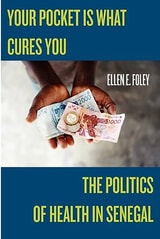
cover of Your Pocket Is What Cures You: The Politics of Health in Senegal

Your Pocket Is What Cures You

The Politics of Health in Senegal

Foley, Ellen E

Rutgers University Press, 2009

In the wake of structural adjustment programs in the 1980s and health reforms in the 1990s, the majority of sub-Saharan African governments spend less than ten dollars per capita on health annually, and many Africans have limited access to basic medical care. Using a community-level approach, anthropologist Ellen E. Foley analyzes the implementation of global health policies and how they become intertwined with existing social and political inequalities in Senegal. Your Pocket Is What Cures You examines qualitative shifts in health and healing spurred by these reforms, and analyzes the dilemmas they create for health professionals and patients alike. It also explores how cultural frameworks, particularly those stemming from Islam and Wolof ethnomedicine, are central to understanding how people manage vulnerability to ill health.

While offering a critique of neoliberal health policies, Your Pocket Is What Cures You remains grounded in ethnography to highlight the struggles of men and women who are precariously balanced on twin precipices of crumbling health systems and economic decline. Their stories demonstrate what happens when market-based health reforms collide with material, political, and social realities in African societies.

[more]