Results by title
1832 books match the query 'Essays' and 5 start with y
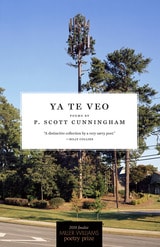
Ya Te Veo
PoemsP. Scott Cunningham
University of Arkansas Press, 2018
Finalist, 2018 Miller Williams Poetry Prize
Ya Te Veo takes as its title the name of a mythical tree that eats people. Like the branches of that tree, the poems in this book seem to capture and nourish themselves on a diverse cast of would-be passers-by, drawing their life-force from the resulting synthesis of characters. Among the seized are poets and painters alongside musicians from Garth Brooks to Wu-Tang Clan to the composer Morton Feldman, whose mysterious personality serves as a backdrop in many poems for meditations on intimacy, ethics, and anxiety.
As the phrase “ya te veo” (“I see you”) implies, this is a book interested in revealing what we think is hidden, in questioning the gap inside all of us, a gap between what we feel and what we say and do, making space for our many contradictions.
Like the works of Feldman, these poems focus and recede, experimenting with form in order to accomplish a state of deep concentration. They impersonate sonnets, ghazals, terza rima, monologues, translations, and freestyles, but inexactly, embracing failed imitation as an opportunity to remix the familiar.
Years Of The Forest
Helen Hoover
University of Minnesota Press, 1999
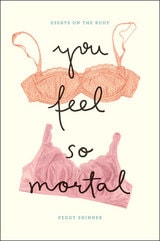
You Feel So Mortal
Essays on the BodyPeggy Shinner
University of Chicago Press, 2014
Over the course of twelve essays, Shinner holds a mirror up to the complex desires, fears, confusions, and mysteries that shape our bodily perceptions. Driven by the collision between herself and the larger world, she examines her feet through the often-skewed lens of history to understand what makes them, in the eyes of some, decidedly Jewish; considers bras, breasts, and the storied skills of the bra fitter; asks, from the perspective of a confused and grieving daughter, what it means to cut the body open; and takes a reeling time-trip through myth, culture, and history to look at women’s hair in ancient Rome, Laos, France, Syria, Cuba, India, and her own past. Some pieces investigate the body under emotional or physical duress, while others use the body to consider personal heritage and legacy. Throughout, Shinner writes with elegance and assurance, weaving her wide-ranging thoughts into a firm and fascinating fabric.
Turning the category of body books on, well, its ear, You Feel So Mortal offers a probing view of our preoccupation with the body that is both idiosyncratic and universal, leaving us with the deep satisfaction of our shared humanity.
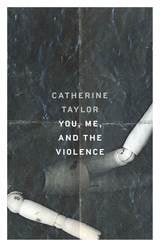
You, Me, and the Violence
Catherine Taylor
The Ohio State University Press, 2017
From conversations with her own brother about his military experiences to Punch and Judy, from the original tale of Pinocchio to the radio chatter of soldiers in active drone operation, Taylor writes about family, power, and the “theater” of war in a voice both sly and sobering, heartbreaking and hopeful.
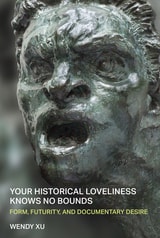
Your Historical Loveliness Knows No Bounds
Form, Futurity, and Documentary DesireWendy Xu
University of Michigan Press, 2025
Not an overview or primer, least of all the final word, this free-ranging exploration of contemporary poetry considers larger questions of belonging, diaspora, the violence of language, the allure of the past, genre, witness, and form. It returns to memorable touchstone texts in the author’s life with renewed curiosity about their inner workings. Essays move with restless curiosity across topics, bringing them into conversation with poetry, from considering depictions of Christ in Pier Paolo Pasolini’s The Gospel According to St. Matthew, to the ecstatic illegible texts of Henri Michaux, discomfiting likenesses of agoraphobia and political imprisonment, and the epistolary trouble of fan-mail. Xu is drawn to poetry works of radical hybridity alongside personal experiences of formal intensity, as an immigrant daughter, a parentified child, an occasional agoraphobe, and a writer. Your Historical Loveliness Knows No Bounds is a tour of poetic influences and the futures they’ve made possible.