Results by title
884 books match the query 'Historical' and 5 start with y
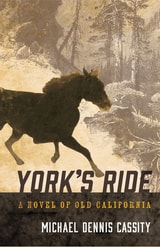
York's Ride
A Novel of Old CaliforniaMichael Dennis Cassity
University of Nevada Press, 2025
Jim, an orphan, has moved to the West to live on his Uncle Martin and Aunt Hanna’s ranch in the small, post-Gold Rush town of Taylorsville where the Sierra Nevada meets the Cascades. Mostly, Jim doesn’t miss his family farm in Missouri, and when he’s not doing ranch chores, he spends his time fly-fishing on nearby Indian Creek. This is where he first encounters York, a local boy from the Maidu tribe, and the two become fast friends. Jim and York soon meet up with Blind Charlie, a famous Maidu elder storyteller, who fills their heads with ancestral myths and legends.
After the untimely death of York, Meshuga’s caretaker, Jim is suddenly moved to take responsibility for the great black mustang and become part of Blind Charlie’s prophecies. With York gone, Jim must fulfill what his friend knew all along—that he and Meshuga would learn to conquer the challenge of the race of the century. A romantic novel of the Old West imbued with rich historical details, York’s Ride is a complex and beautiful tale about family relationships and coming-of-age in early twentieth-century California.
You Can Cross the Massacre on Foot
Freddy Prestol Castillo
Duke University Press, 2019
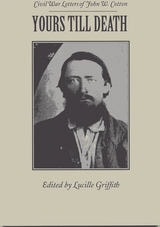
Yours Till Death
Civil War Letters of John W. CottonJohn Cotton
University of Alabama Press, 1951
Letters from a Confederate soldier to his wife during the Civil War.
Yours Till Death: Civil War Letters of John W. Cotton offers a rare and deeply personal window into the lived experience of the American Civil War through the words of an ordinary Confederate soldier. Composed of letters written by John W. Cotton to his wife in Coosa County, Alabama, this collection preserves an unfiltered, intimate record of wartime life from 1862 to 1865, revealing both the hardships of military service and the enduring ties of family and home.
Cotton, a yeoman farmer who enlisted in the Confederate Army in the spring of 1862, writes with directness and honesty about his daily experiences as he moves through the major campaigns of the war, including service in Tennessee, Kentucky, Georgia, and South Carolina. His correspondence captures not only the movements and conditions of military life—guard duty, illness, shortages, and shifting morale—but also the emotional landscape of a soldier separated from his family. His letters are filled with concern for his wife, children, and farm, illustrating the constant tension between duty to country and responsibility to home.
More than a military chronicle, Yours Till Death is also a valuable portrait of rural Southern life during wartime. Cotton’s references to crops, weather, labor, and household concerns provide insight into how families on the home front coped with absence, uncertainty, and economic strain. These details illuminate the broader social and agricultural context of the Confederacy, offering readers a richer understanding of how war reshaped everyday life for civilians as well as soldiers.
The letters, preserved and edited by historian Lucille Griffith, retain the immediacy and authenticity of Cotton’s voice. Written without the benefit of hindsight, they convey the evolving attitudes, anxieties, and hopes of a man living through one of the most turbulent periods in American history. As such, they serve as an important primary source for scholars and students, complementing official histories with the perspective of an individual whose experiences reflect those of countless others who lived and fought during the Civil War.
Yours Till Death will appeal to readers interested in Civil War studies, Southern history, and personal narratives of wartime experience. By bringing together themes of conflict, family, survival, and resilience, this collection transforms historical events into a deeply human story—one that reminds us that the past is best understood not only through battles and politics, but through the voices of those who lived it.
Yours
The Civil War, a Love Triangle, and the Steamboat SultanaLila Jeanne Elliott Sybesma
Indiana Historical Society Press, 2019
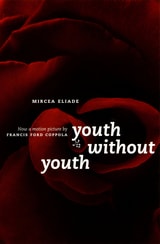
Youth Without Youth
Mircea Eliade
University of Chicago Press, 2007
Bucharest, 1938: while Hitler gains power in Germany, the Romanian police start arresting students they suspect of belonging to the Iron Guard. Meanwhile, a man who has spent his life studying languages, poetry, and history—a man who thought his life was over—lies in a hospital bed, inexplicably alive and miraculously healthy, trying to figure out how to conceal his identity.
At the intersection of the natural and supernatural, myth and history, dream and science, lies Mircea Eliade’s novella. The psychological thriller features Dominic Matei, an elderly academic who experiences a cataclysmic event that allows him to live a new life with startling intellectual capacity. Sought by the Nazis for their medical experiments on the potentially life-prolonging power of electric shocks, Matei is helped to flee through Romania, Switzerland, Malta and India. Newly endowed with prodigious powers of memory and comprehension, he finds himself face to face with the glory and terror of the supernatural. In this surreal, philosophy-driven fantasy, Eliade tests the boundaries of literary genre as well as the reader’s imagination.
Suspenseful, witty, and poignant, Youth Without Youth illuminates Eliade’s longing for past loves and new texts, his erotic imagination, and his love of a thrilling mystery. It was adapted for the screen in 2007 by Francis Ford Coppola