Results by title
748 books match the query 'Influence' and 2 start with y
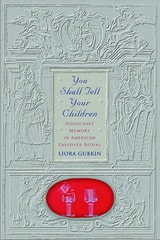
You Shall Tell Your Children
Holocaust Memory in American Passover RitualGubkin, Liora
Rutgers University Press, 2007
Passover is among the most widely observed holidays for American Jews. During this festival of redemption, Jewish families retell the biblical story of Exodus using a ritual book known as a haggadah, often weaving modern tales of oppression through the biblical narrative. References to the Holocaust are some of the most common additions to contemporary haggadot. However, the parallel between ancient and modern oppression, which seems obvious to some, raises troubling questions for many others. Is it possible to find any redemptive meaning in the Nazi genocide? Are we adding value to this unforgivable moment in history?
Liora Gubkin critiques commemorations that violate memory by erasing the value of everyday life that was lost and collapse the diversity of responses both during the Shoah and afterward. She recounts oral testimonies from Holocaust survivors, cites references to the holiday in popular American culture, and analyzes examples of actual haggadot. Ultimately, Gubkin concludes that it is possible and important to make a space for Holocaust commemoration, all the time recognizing that haggadot must be constantly revisited and “performed.”
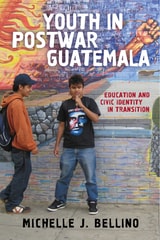
Youth in Postwar Guatemala
Education and Civic Identity in TransitionMichelle J. Bellino
Rutgers University Press, 2017
In the aftermath of armed conflict, how do new generations of young people learn about peace, justice, and democracy? Michelle J. Bellino describes how, following Guatemala’s civil war, adolescents at four schools in urban and rural communities learn about their country’s history of authoritarianism and develop civic identities within a fragile postwar democracy.
Through rich ethnographic accounts, Youth in Postwar Guatemala, traces youth experiences in schools, homes, and communities, to examine how knowledge and attitudes toward historical injustice traverse public and private spaces, as well as generations. Bellino documents the ways that young people critically examine injustice while shaping an evolving sense of themselves as civic actors. In a country still marked by the legacies of war and division, young people navigate between the perilous work of critiquing the flawed democracy they inherited, and safely waiting for the one they were promised...