Results by title
155 books match the query 'Legislators' and 2 start with y
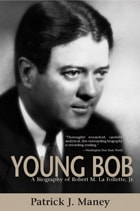
Young Bob
A Biography of Robert M. La Follette, Jr.Patrick J. Maney
Wisconsin Historical Society Press, 2002
United States senator "Young Bob" La Follette entered politics as a young reformer in the shadow of his legendary father, "Fighting Bob" La Follette. He made his own mark as a key architect of Roosevelt’s New Deal and as a champion of labor rights and civil liberties. But in 1946 he was unexpectedly unseated by Joseph McCarthy, whose rise to Cold War notoriety foreshadowed La Follette’s despair and suicide in 1953. This new edition updates the only full scale biography of La Follette,Jr., the first to exploit his voluminous collection of personal papers. Patrick J. Maney makes clear that Young Bob’s story is as relevant today as it was when he died. His life stands as dramatic evidence of how one of the most respected politicians of his time bridged the political spectrum and was admired by both liberals like FDR and Harry Truman and conservatives like Robert Taft and Richard Nixon.
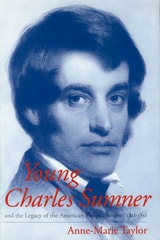
Young Charles Sumner and the Legacy of the American Enlightenment, 1811-1851
Anne-Marie Taylor
University of Massachusetts Press, 2001
In this book, Anne-Marie Taylor challenges that long-standing view, offering in its stead the portrait of a man animated more by principle than by impulse or ambition. According to Taylor, Sumner's reform-minded politics, including his fervent commitment to put an end to slavery, must be understood in the context of a young nation still struggling to live up to the Enlightenment ideals embraced by its founders and embodied in its Constitution.
Focusing on the first forty years of Sumner's life, before he took public office, Taylor traces the evolution of his character and thought among Boston's cultural elite. His belief in the virtues of cosmopolitanism, in the dignity of the human intellect and conscience, and in the possibility of a cultivated and just society, all find their roots in an education steeped in Enlightenment principles. At the same time, as a child of New England Puritanism and Revolutionary republicanism, Sumner was raised to believe in the moral obligation of the individual to work for the common good.
As Taylor shows in this richly drawn biography, much of the triumph and tragedy of Sumner's story—the energy of his idealism as well as the poignancy of his eventual disappointment— derives from the overpowering sense of duty and national destiny imbued by his upbringing.