Results by title
941 books match the query 'Military' and 4 start with y
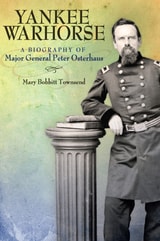
Yankee Warhorse
A Biography of Major General Peter OsterhausMary Bobbit Townsend
University of Missouri Press, 2021
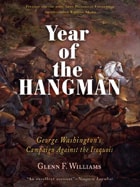
Year of the Hangman
George Washington's Campaign Against the IroquoisGlenn F. Williams
Westholme Publishing, 2007
Winner of the 2005 Thomas Fleming Award for the Best Book in American Revolutionary War History
Finalist for the Army Historical Foundation Distinguished Writing Award
After two years of fighting, Great Britain felt confident that the American rebellion would be crushed in 1777, the "Year of the Hangman." Britain devised a bold new strategy. Turning its attention to the colonial frontiers, especially those of western New York, Pennsylvania, and Virginia, Britain enlisted its provincial rangers, Tories, and allied warriors, principally from the Iroquois Confederacy, to wage a brutal backwoods war in support of General John Burgoyne's offensive as it swept southward from Canada in an attempt to cut the colonies in half, divert the Continental Army, and weaken its presence around British-occupied New York City and Philadelphia.
Burgoyne's defeat at Saratoga sent shock waves through the British command. But the efforts along the frontier under the direction of Sir John Johnson, Colonel John Butler, and the charismatic Mohawk leader, Joseph Brant, appeared to be impairing the American ability to conduct the war. Destroying Patriot settlements and farms across hundreds of miles of frontier, the British and Indian forces threatened to reduce Continental army enlistment, and more importantly, precious food supplies. Following the massacres at the well-established colonial settlements of Wyoming, Pennsylvania, and Cherry Valley, New York, the Continental Congress persuaded General George Washington to conduct a decisive offensive to end the threat once and for all. Brewing for years, the conflict between the Iroquois and colonists would now reach its deadly climax.
Charging his troops "to not merely overrun, but destroy," Washington devised a two-prong attack to exact American revenge. The largest coordinated American military action against American Indians in the war, the campaign shifted the power in the east, ending the political and military influence of the Iroquois, forcing large numbers of loyalist to flee to Canada, and sealing Britain's fateful decision to seek victory in the south. In Year of the Hangman: George Washington's Campaign Against the Iroquois, historian Glenn F. Williams recreates the riveting events surrounding the action, including the checkered story of European and Indian alliances, the bitter frontier wars, and the bloody battles of Oriskany and Newtown.
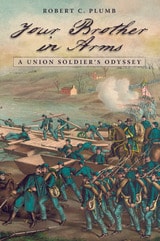
Your Brother in Arms
A Union Soldier's OdysseyRobert C. Plumb
University of Missouri Press, 2011
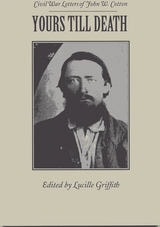
Yours Till Death
Civil War Letters of John W. CottonJohn Cotton
University of Alabama Press, 1951
Letters from a Confederate soldier to his wife during the Civil War.
Yours Till Death: Civil War Letters of John W. Cotton offers a rare and deeply personal window into the lived experience of the American Civil War through the words of an ordinary Confederate soldier. Composed of letters written by John W. Cotton to his wife in Coosa County, Alabama, this collection preserves an unfiltered, intimate record of wartime life from 1862 to 1865, revealing both the hardships of military service and the enduring ties of family and home.
Cotton, a yeoman farmer who enlisted in the Confederate Army in the spring of 1862, writes with directness and honesty about his daily experiences as he moves through the major campaigns of the war, including service in Tennessee, Kentucky, Georgia, and South Carolina. His correspondence captures not only the movements and conditions of military life—guard duty, illness, shortages, and shifting morale—but also the emotional landscape of a soldier separated from his family. His letters are filled with concern for his wife, children, and farm, illustrating the constant tension between duty to country and responsibility to home.
More than a military chronicle, Yours Till Death is also a valuable portrait of rural Southern life during wartime. Cotton’s references to crops, weather, labor, and household concerns provide insight into how families on the home front coped with absence, uncertainty, and economic strain. These details illuminate the broader social and agricultural context of the Confederacy, offering readers a richer understanding of how war reshaped everyday life for civilians as well as soldiers.
The letters, preserved and edited by historian Lucille Griffith, retain the immediacy and authenticity of Cotton’s voice. Written without the benefit of hindsight, they convey the evolving attitudes, anxieties, and hopes of a man living through one of the most turbulent periods in American history. As such, they serve as an important primary source for scholars and students, complementing official histories with the perspective of an individual whose experiences reflect those of countless others who lived and fought during the Civil War.
Yours Till Death will appeal to readers interested in Civil War studies, Southern history, and personal narratives of wartime experience. By bringing together themes of conflict, family, survival, and resilience, this collection transforms historical events into a deeply human story—one that reminds us that the past is best understood not only through battles and politics, but through the voices of those who lived it.