Results by title
2335 books match the query 'Modern' and 5 start with y
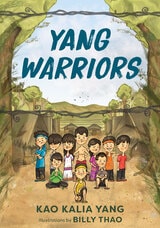
Yang Warriors
Kao Kalia Yang
University of Minnesota Press, 2021
Award-winning author Kao Kalia Yang delivers an inspiring tale of resourceful children confronting adversaries in a refugee camp
After lunch the Yang warriors prepare for battle. They practice drills, balance rocks on their heads, wield magical swords from fallen branches. Led by ten-year-old Master Me (whose name means “little”), the ten cousins are ready to defend the family at all costs. After a week without fresh vegetables , the warriors embark on a dangerous mission to look for food, leaving the camp’s boundaries, knowing their punishment would be severe if they were caught by the guards.
In this inspiring picture book, fierce and determined children confront the hardships of Ban Vinai refugee camp, where the author lived as a child. Yang’s older sister, seven-year-old Dawb, was one of the story’s warriors, and her brave adventure unfolds here with all the suspense and excitement that held her five-year-old sister spellbound many years later. Accompanied by the evocative and rich cultural imagery of debut illustrator Billy Thao, the warriors’ secret mission shows what feats of compassion and courage children can perform, bringing more than foraged greens back to the younger children and to their elders. In this unforgiving place, with little to call their own, these children are the heroes, offering gifts of hope and belonging in a truly unforgettable way.
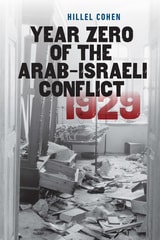
Year Zero of the Arab-Israeli Conflict 1929
Hillel Cohen
Brandeis University Press, 2015
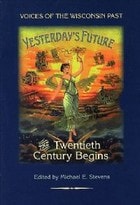
Yesterday's Future
The Twentieth Century BeginsMichael E. Stevens
Wisconsin Historical Society Press, 1999
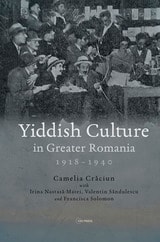
Yiddish Culture in Greater Romania (1918-1940)
Camelia Craciun
Central European University Press, 2025
In the newly created Greater Romania, the Jewish community included more than half a million individuals still speaking Yiddish. Building on pre-war trends, the new nation-state faced an antisemitism problem since its inception. This continued in the period that followed, culminating in the horrors of the Holocaust, which destroyed most of the Yiddish-language community. Most survivors were discouraged from continuing to use a language that reminded them of a painful past.
This volume examines the socio-cultural mechanisms responsible for restructuring the Yiddish cultural life after the changes brought about by the end of World War I and the creation of Greater Romania. It describes how this process evolved until the political regimes banned the activity of Yiddish theaters, press and, ultimately, the usage of Yiddish, thus making cultural life impossible.
The four authors identify the main institutions, individuals and projects that promoted Yiddish cultural life in interwar Romania. They also trace the impact of Yiddish within Romanian society through joint projects, events, and initiatives. Special attention is given to Yiddish theater, which played a key role both within the community and in its interaction with the Romanian-speaking public.
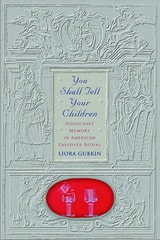
You Shall Tell Your Children
Holocaust Memory in American Passover RitualGubkin, Liora
Rutgers University Press, 2007
Passover is among the most widely observed holidays for American Jews. During this festival of redemption, Jewish families retell the biblical story of Exodus using a ritual book known as a haggadah, often weaving modern tales of oppression through the biblical narrative. References to the Holocaust are some of the most common additions to contemporary haggadot. However, the parallel between ancient and modern oppression, which seems obvious to some, raises troubling questions for many others. Is it possible to find any redemptive meaning in the Nazi genocide? Are we adding value to this unforgivable moment in history?
Liora Gubkin critiques commemorations that violate memory by erasing the value of everyday life that was lost and collapse the diversity of responses both during the Shoah and afterward. She recounts oral testimonies from Holocaust survivors, cites references to the holiday in popular American culture, and analyzes examples of actual haggadot. Ultimately, Gubkin concludes that it is possible and important to make a space for Holocaust commemoration, all the time recognizing that haggadot must be constantly revisited and “performed.”