Results by title
1148 books match the query 'Political Ideologies' and 4 start with y
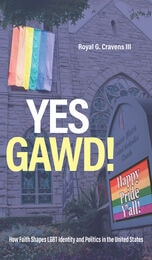
Yes Gawd!
How Faith Shapes LGBT Identity and Politics in the United StatesCravens III, Royal G.
Temple University Press, 2024
Cravens also demonstrates the mobilizing power of faith for LGBT people by contrasting the effects of participation in faith and secular communities on political activism. He explores how factors such as coming out, race, and LGBT-affirming churches influence political attitudes and behavior and explains how the development of LGBT politico-religious activism provides opportunities for LGBT people to organize politically.
Ultimately, Cravens provides a cohesive account of how religion acts as a catalyst for and facilitator in the political development of LGBT people in the United States. In the process, he shows that there is room for both religion in LGBT communities and LGBT people in religious communities.

Yes
The Radical Case for Scottish IndependencePete Ramand and James Foley
Pluto Press, 2014
The United Kingdom faces a historic turning point in 2014. A 'Yes' vote in the referendum on Scottish independence would see the break-up of the 300-year-old union, adding a constitutional crisis to a deep economic crisis.
An accessible polemic written for progressives both north and south of the border, Yes argues that independence can reinvigorate campaigns against austerity across Britain and deal a blow to the imperialist ambitions of the British state.
An urgent and invigorating political intervention, Yes argues that even if the referendum result is 'no', a progressive independence campaign will alter the political landscape. Written by leading activists from the Radical Independence Campaign, Yes will be a unique contribution to the referendum debate.
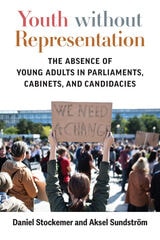
Youth without Representation
The Absence of Young Adults in Parliaments, Cabinets, and CandidaciesDaniel Stockemer and Aksel Sundström
University of Michigan Press, 2022
Officeholders in contemporary parliaments and cabinets are more likely than not to be male, wealthy, middle-aged or older, and from the dominant ethnicity, whereas young adults have an insufficient presence in political office. Young adults—those aged 35 years or under—comprise a mere ten percent of all parliamentarians globally, and three percent of all cabinet members. Compared to their presence in the world’s population, this age group faces an underrepresentation of one to three in parliament and one to ten in cabinet. In this book, Stockemer and Sundström provide a holistic account of youths’ marginalization in legislatures, cabinets, and candidacies for office through a comparative lens. They argue that youths’ underrepresentation in political office constitutes a democratic deficit and provide ample evidence for why they think that youth must be present in politics at much higher rates. They further embed this book within what they label a vicious cycle of political alienation, which involves the declining political sophistication of the young, their waning electoral participation, and their insufficient of representation in office. Empirically, the authors combine a global focus with in-depth studies, discussing the country-level, party-level, and individual-level factors that bar young adults’ entry to positions of political power. This is the first comprehensive book on youth representation and it has relevance for those broadly interested in issues of representation, democracy, inequality, and comparative politics.

Yugoslavia's Sunny Side
A History of Tourism in Socialism (1950s–1980s)Hannes Grandits
Central European University Press, 2010