Results by title
8811 books match the query 'Political Science' and 19 start with y

Yazoo
Integration in a Deep-Southern TownWillie Morris
University of Arkansas Press, 2012

Year One of the Russian Revolution
Victor Serge
Pluto Press, 1992
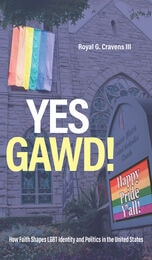
Yes Gawd!
How Faith Shapes LGBT Identity and Politics in the United StatesCravens III, Royal G.
Temple University Press, 2024
Cravens also demonstrates the mobilizing power of faith for LGBT people by contrasting the effects of participation in faith and secular communities on political activism. He explores how factors such as coming out, race, and LGBT-affirming churches influence political attitudes and behavior and explains how the development of LGBT politico-religious activism provides opportunities for LGBT people to organize politically.
Ultimately, Cravens provides a cohesive account of how religion acts as a catalyst for and facilitator in the political development of LGBT people in the United States. In the process, he shows that there is room for both religion in LGBT communities and LGBT people in religious communities.
Yes
The Radical Case for Scottish IndependencePete Ramand and James Foley
Pluto Press, 2014
The United Kingdom faces a historic turning point in 2014. A 'Yes' vote in the referendum on Scottish independence would see the break-up of the 300-year-old union, adding a constitutional crisis to a deep economic crisis.
An accessible polemic written for progressives both north and south of the border, Yes argues that independence can reinvigorate campaigns against austerity across Britain and deal a blow to the imperialist ambitions of the British state.
An urgent and invigorating political intervention, Yes argues that even if the referendum result is 'no', a progressive independence campaign will alter the political landscape. Written by leading activists from the Radical Independence Campaign, Yes will be a unique contribution to the referendum debate.
Yesterday in Mexico
A Chronicle of the Revolution, 1919–1936By John W. F. Dulles
University of Texas Press, 1961
Early in a sixteen-year sojourn in Mexico as an engineer for an American mining company, John W. F. Dulles became fascinated by the story of Mexico’s emergence as a modern nation, and was imbued with the urge to tell that story as it had not yet been told—by letting events speak for themselves, without any interpretations or appraisal.
The resultant book offers an interesting paradox: it is “chronicle” in the medieval sense—a straightforward record of events in chronological order, recounted with no effort at evaluation or interpretation; yet in one aspect it is a highly personal narrative, since much of its significant new material came to Dulles as a result of personal interviews with principals of the Revolution. From them he obtained firsthand versions of events and other reminiscences, and he has distilled these accounts into a work of history characterized by thorough research and objective narration.
These fascinating interviews were no more important, however, than were the author’s many hours of laborious search in libraries for accounts of the events from Carranza’s last year to Calles’ final retirement from the Mexican scene. The author read scores of impassioned versions of what transpired during these fateful years, accounts written from every point of view, virtually all of them unpublished in English and many of them documents which had never been published in any language.
Combining this material with the personal reminiscences, Dulles has provided a narrative rich in its new detail, dispassionate in its presentation of facts, dramatic in its description of the clash of armies and the turbulence of rough-and-tumble politics, and absorbing in its panoramic view of a people’s struggle.
In it come to life the colorful men of the Revolution —Obregón, De la Huerta, Carranza, Villa, Pani, Carillo Puerto, Morones, Calles, Portes Gil, Vasconcelos, Ortiz Rubio, Garrido Canabal, Rodríguez, Cárdenas. (Dulles’ narrative of their public actions is illumined occasionally by humorous anecdotes and by intimate glimpses.) From it emerges also, as the main character, Mexico herself, struggling for self-discipline, for economic stability, for justice among her citizens, for international recognition, for democracy.
This account will be prized for its encyclopedic collection of facts and for its important clarification of many notable events, among them the assassination of Carranza, the De La Huerta revolt, the assassination of Obregón, the trial of Toral, the resignation of President Ortiz Rubio, and the break between Cárdenas and Calles. More than sixty photographs supplement the text.
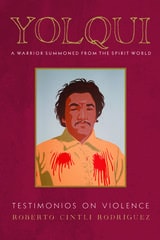
Yolqui, a Warrior Summoned from the Spirit World
Testimonios on ViolenceRoberto Cintli Rodríguez; Foreword by Patrisia Gonzales
University of Arizona Press, 2019
Framed by Rodríguez’s personal testimony of police violence, this book offers a historia profunda of the culture of extralegal violence against Red-Black-Brown communities in the United States. In addition to Rodríguez’s story, this book includes several short essays from victims and survivors that bring together personal accounts of police brutality and state-sponsored violence. This wide-ranging work touches on historical and current events, including the Watts rebellion, the Zoot Suit Riots, Operation Streamline, Standing Rock, and much more.
From the eyewitness accounts of Bartolomé de las Casas to the protestors and allies at Standing Rock, this book makes evident the links between colonial violence against Red-Black-Brown bodies to police violence in our communities today. Grounded in the stories of the lives of victims and survivors of police violence, Yolqui, a Warrior Summoned from the Spirit World illuminates the physical, spiritual, and epistemic depths and consequences of racialized dehumanization.
Rodríguez offers us an urgent, poignant, and personal call to end violence and the philosophies that permit such violence to flourish. Like the Nahuatl yolqui, this book is intended as a means of healing, offering a footprint going back to the origins of violence, and, more important, a way forward.
With contributions by Raúl Alcaraz-Ochoa, Citalli Álvarez, Tanya Alvarez, Rebekah Barber, Juvenal Caporale, David Cid, Arianna Martinez Reyna, Carlos Montes, Travis Morales, Simon Moya Smith, Cesar Noriega, Kimberly Phillips, Christian Ramirez, Michelle Rascon Canales, Carolyn Torres, Jerry Tello, Tara Trudell, and Laurie Valdez.

You Can Crush the Flowers
A Visual Memoir of the Egyptian RevolutionBahia Shehab
Gingko, 2021
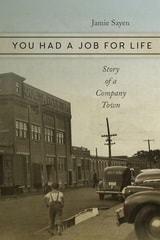
You Had a Job for Life
Story of a Company TownJamie Sayen
University Press of New England, 2017
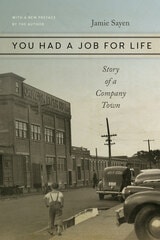
You Had a Job for Life
Story of a Company TownJamie Sayen
Brandeis University Press, 2023
Absentee owners. Single-minded concern for the bottom line. Friction between workers and management. Hostile takeovers at the hands of avaricious and unaccountable multinational interests. The story of America’s industrial decline is all too familiar—and yet, somehow, still hard to fathom. Jamie Sayen spent years interviewing residents of Groveton, New Hampshire, about the century-long saga of their company town. The community’s paper mill had been its economic engine since the early twentieth century. Purchased and revived by local owners in the postwar decades, the mill merged with Diamond International in 1968. It fell victim to Anglo-French financier James Goldsmith’s hostile takeover in 1982, then suffered through a series of owners with no roots in the community until its eventual demise in 2007. Drawing on conversations with scores of former mill workers, Sayen reconstructs the mill’s human history: the smells of pulp and wood, the injuries and deaths, the struggles of women for equal pay and fair treatment, and the devastating impact of global capitalism on a small New England town. This is a heartbreaking story of the decimation of industrial America.
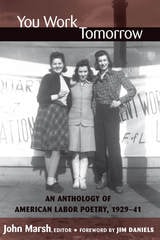
You Work Tomorrow
An Anthology of American Labor Poetry, 1929-41John Marsh, Editor
University of Michigan Press, 2007
---Nicholas Coles, University of Pittsburgh
---Alan Wald, University of Michigan
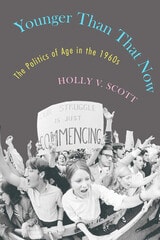
Younger Than That Now
The Politics of Age in the 1960sHolly V. Scott
University of Massachusetts Press, 2016
Retrospectives of the 1960s routinely include the face of youth rebellion: long-haired students occupying campus buildings, young men burning draft cards, hippies dancing at Woodstock. In Younger Than That Now, Holly V. Scott explores how the idea of “youth” served as a tactic in the political and social activism of these years. In the early part of that decade, young white activists began to learn from the civil rights movement's defiance of racism. They examined their own lives and concluded that campus rules and the draft were repression as well. As a group, they were ripe for revolution, and their age gave them a unique perspective for understanding and protesting against injustice. In short, young people began to use their youth as a political strategy.
Some in the New Left were dubious of this strategy and asked how it might damage long-term progress. Young feminists and people of color were particularly quick to question the idea that age alone was enough to sustain a movement. And the media often presented young people as impulsive and naive, undermining their political legitimacy. In tracing how “youth” took on multiple meanings as the 1960s progressed, Scott demonstrates the power of this idea to both promote and hinder social change.
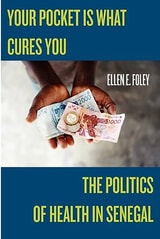
Your Pocket Is What Cures You
The Politics of Health in SenegalFoley, Ellen E
Rutgers University Press, 2009
While offering a critique of neoliberal health policies, Your Pocket Is What Cures You remains grounded in ethnography to highlight the struggles of men and women who are precariously balanced on twin precipices of crumbling health systems and economic decline. Their stories demonstrate what happens when market-based health reforms collide with material, political, and social realities in African societies.
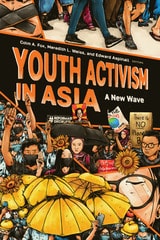
Youth Activism in Asia
A New WaveEdited by Colm A. Fox, Meredith L. Weiss, Edward Aspinall
University of Michigan Press, 2026
Over the last decade, a youth revolt has swept through Asia. Massive, regime-rocking protests have grabbed global attention as students and other young people have confronted security forces on the streets, taking great risks to condemn authoritarian rule, promote democracy, and to push forward new agendas of personal freedom and gender equality. Behind the scenes, young people have experimented with novel and diverse modes of political and social activism, often using new tools of online communication and cultural expression, forging new kinds of coalitions, and exploring nonconfrontational and subterranean networking.
Youth Activism in Asia focuses equally on the episodes of spectacular protest and on varieties of less visible engagement, examining the diversity, origins, and impact of contemporary youth activism in Asia. With fifteen case studies, the volume highlights shared patterns among demands, tactical repertoires, and activist networks, and examines what differentiates protest movements across countries and over time. Drawing on original fieldwork and, in many cases, their own experience, the authors address Brunei, China, Hong Kong, Indonesia, Malaysia, Myanmar, the Philippines, Singapore, Taiwan, Thailand, Timor-Leste, and transnational activism. Conceiving of “activism” broadly as any action intended to bring about social and political change, the volume makes theoretical contributions to our understanding of the relationship between protest and democratic backsliding, engagement with new communication technologies, and this generation’s distinctive intersectional politics. Youth Activism in Asia showcases the creativity, energy, boldness, and diversity of a new generation of Asian political activists.
Youth Employment and Joblessness in Advanced Countries
Edited by David G. Blanchflower and Richard B. Freeman
University of Chicago Press, 2000
This volume brings together key studies, providing detailed analyses of the difficult economic situation plaguing young workers. Why have demographic changes and additional schooling failed to resolve youth unemployment? How effective have those economic policies been which aimed to improve the labor skills and marketability of young people? And how have youths themselves responded to the deteriorating job market confronting them? These questions form the empirical and organizational bases upon which these studies are founded.
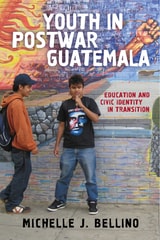
Youth in Postwar Guatemala
Education and Civic Identity in TransitionMichelle J. Bellino
Rutgers University Press, 2017
In the aftermath of armed conflict, how do new generations of young people learn about peace, justice, and democracy? Michelle J. Bellino describes how, following Guatemala’s civil war, adolescents at four schools in urban and rural communities learn about their country’s history of authoritarianism and develop civic identities within a fragile postwar democracy.
Through rich ethnographic accounts, Youth in Postwar Guatemala, traces youth experiences in schools, homes, and communities, to examine how knowledge and attitudes toward historical injustice traverse public and private spaces, as well as generations. Bellino documents the ways that young people critically examine injustice while shaping an evolving sense of themselves as civic actors. In a country still marked by the legacies of war and division, young people navigate between the perilous work of critiquing the flawed democracy they inherited, and safely waiting for the one they were promised...
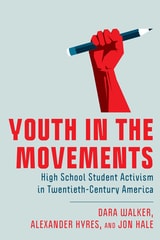
Youth in the Movements
High School Student Activism in Twentieth-Century AmericaDara Walker
Rutgers University Press, 2027
Youth in the Movements documents the history of the rise of American high school and youth activism in the United States since the Second World War. Spaces within high schools and the adults at them provided support or inspiration – both negative and positive – for youth engaged in protest, organizing, and activism. Through rich research of archival sources and oral histories, contributors reveal new perspectives on American high school and youth activism. Viewed through the eyes of high school-aged youth around the United States – in familiar locations such as Boston, New York City, and Detroit, as well as less familiar locales in the historiography, such as Salt Lake City and the Navajo Reservation – we extend our understanding of high school and how it has been experienced by youth activists in the post-World War II period.
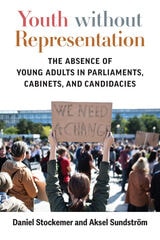
Youth without Representation
The Absence of Young Adults in Parliaments, Cabinets, and CandidaciesDaniel Stockemer and Aksel Sundström
University of Michigan Press, 2022
Officeholders in contemporary parliaments and cabinets are more likely than not to be male, wealthy, middle-aged or older, and from the dominant ethnicity, whereas young adults have an insufficient presence in political office. Young adults—those aged 35 years or under—comprise a mere ten percent of all parliamentarians globally, and three percent of all cabinet members. Compared to their presence in the world’s population, this age group faces an underrepresentation of one to three in parliament and one to ten in cabinet. In this book, Stockemer and Sundström provide a holistic account of youths’ marginalization in legislatures, cabinets, and candidacies for office through a comparative lens. They argue that youths’ underrepresentation in political office constitutes a democratic deficit and provide ample evidence for why they think that youth must be present in politics at much higher rates. They further embed this book within what they label a vicious cycle of political alienation, which involves the declining political sophistication of the young, their waning electoral participation, and their insufficient of representation in office. Empirically, the authors combine a global focus with in-depth studies, discussing the country-level, party-level, and individual-level factors that bar young adults’ entry to positions of political power. This is the first comprehensive book on youth representation and it has relevance for those broadly interested in issues of representation, democracy, inequality, and comparative politics.
Yugoslav-American Economic Relations Since World War II
John R. Lampe, Russell O. Prickett and Ljubisa S. Adamovic
Duke University Press, 1990
The authors describe American official and private support for Yugoslavia’s decades-long efforts at economic reform that included the first foreign investment legislation in 1967 and the first introduction of convertible currency in 1990 for any communist country. Also examined are the origins of Yugoslavia’s international debt crisis of the early 1980s and the American role in the highly complex multibillion-dollar international effort that helped Yugoslavia surmount that crisis.
In the past, U.S. support for the Yugoslav economy was proffered in part, the authors claim, to counter perceived threats from the Soviet Union and its allies. This may have enabled Yugoslavia to avoid some of the hard but necessary economic policy choices; hence, future U.S. support, the book concludes, will likely be tied more closely to the economic and political soundness of Yugoslavia’s own actions.

Yugoslavia's Sunny Side
A History of Tourism in Socialism (1950s–1980s)Hannes Grandits
Central European University Press, 2010