Results by title
22279 books match the query 'Social Science' and 71 start with y
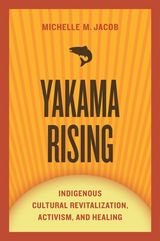
Yakama Rising
Indigenous Cultural Revitalization, Activism, and HealingMichelle M. Jacob
University of Arizona Press, 2013
Michelle M. Jacob employs ethnographic case studies to demonstrate the tension between reclaiming traditional cultural practices and adapting to change. Through interviewees’ narratives, she carefully tacks back and forth between the atrocities of colonization and the remarkable actions of individuals committed to sustaining Yakama heritage. Focusing on three domains of Indigenous revitalization—dance, language, and foods—Jacob carefully elucidates the philosophy underlying and unifying each domain while also illustrating the importance of these practices for Indigenous self-determination, healing, and survival.
In the impassioned voice of a member of the Yakama Nation, Jacob presents a volume that is at once intimate and specific to her home community and that also advances theories of Indigenous decolonization, feminism, and cultural revitalization. Jacob’s theoretical and methodological contributions make this work valuable to a range of students, academics, tribal community members, and professionals, and an essential read for anyone interested in the ways that grassroots activism can transform individual lives, communities, and society.

Yale Papyri in the Beinecke Rare Book and Manuscript Library IV
Hélène Cuvigny, Ruth Duttenhöfer, Ann Ellis Hanson, editors
University of Michigan Press, 2021
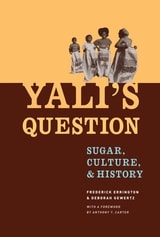
Yali's Question
Sugar, Culture, and HistoryFrederick Errington and Deborah Gewertz
University of Chicago Press, 2004
To understand the creation of such a startling place, Frederick Errington and Deborah Gewertz explore the perspectives of the diverse participants that had a hand in its creation. In examining these views, they also consider those of Yali, a local Papua New Guinean political leader. Significantly, Yali features not only in the story of RSL, but also in Jared Diamond's Pulitzer Prize winning world history Guns, Germs, and Steel—a history probed through its contrast with RSL's. The authors' disagreement with Diamond stems, not from the generality of his focus and the specificity of theirs, but from a difference in view about how history is made—and from an insistence that those with power be held accountable for affecting history.
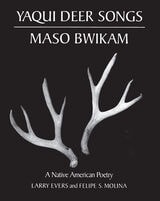
Yaqui Deer Songs/Maso Bwikam
A Native American PoetryLarry Evers and Felipe S. Molina
University of Arizona Press, 1987
Yaqui regard song as a kind of lingua franca of the intelligent universe. It is through song that experience with other living things is made intelligible and accessible to the human community. Deer songs often take the form of dialogues in which the deer and others in the wilderness world speak with one another or with the deer singers themselves. It is in this way, according to one deer singer, that “the wilderness world listens to itself even today.”
In this book authentic ceremonial songs, transcribed in both Yaqui and English, are the center of a fascinating discussion of the Deer Song tradition in Yaqui culture. Yaqui Deer Songs/Maso Bwikam thus enables non-Yaquis to hear these dialogues with the wilderness world for the first time.
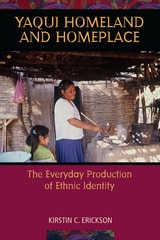
Yaqui Homeland and Homeplace
The Everyday Production of Ethnic IdentityKirstin C. Erickson
University of Arizona Press, 2008
Yaquis live in a portion of their ancestral homeland in Sonora, about 250 miles south of the Arizona border. A long history of displacement and ethnic struggle continues to shape the Yaqui sense of self, as Erickson discovered during the sixteen months that she lived in Potam, one of the eight historic Yaqui pueblos. She found that themes of identity frequently arise in the stories that Yaquis tell and that geography and location—space and place—figure prominently in their narratives.
Revisiting Edward Spicer’s groundbreaking anthropological study of the Yaquis of Potam pueblo undertaken more than sixty years ago, Erickson pays particular attention to the “cultural work” performed by Yaqui women today. She shows that by reaffirming their gendered identities and creating and occupying female-gendered spaces such as kitchens, household altars, and domestic ceremonial spaces, women constitute Yaqui ethnicity in ways that are as significant as actions taken by males in tribal leadership and public ceremony.
This absorbing study contributes new empirical knowledge about a Native American community as it adds to the growing anthropology of space/place and gender. By inviting readers into the homes and patios where Yaqui women discuss their lives, it offers a highly personalized account of how they construct—and reconstruct—their identity.
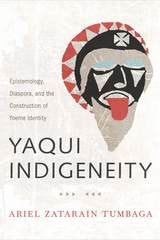
Yaqui Indigeneity
Epistemology, Diaspora, and the Construction of Yoeme IdentityAriel Zatarain Tumbaga
University of Arizona Press, 2018
Tumbaga examines colonial documents and nineteenth-century political literature that produce a Yaqui warrior mystique and reexamines the Mexican Revolution through indigenous culture. He delves into literary depictions of Yaqui battalions by writers like Martín Luis Guzmán and Carlos Fuentes and concludes that they conceal Yaqui politics and stigmatize Yaqui warriorhood, as well as misrepresent frequently performed deer dances as isolated exotic events.
Yaqui Indigeneity draws attention to a community of Chicana/o writers of Yaqui descent: Chicano-Yaqui authors such as Luis Valdez, Alma Luz Villanueva, Miguel Méndez, Alfredo Véa Jr., and Michael Nava, who possess a diaspora-based indigenous identity. Their writings rebut prior colonial and Mexican depictions of Yaquis—in particular, Véa’s La Maravilla exemplifies the new literary tradition that looks to indigenous oral tradition, religion, and history to address questions of cultural memory and immigration.
Using indigenous forms of knowledge, Tumbaga shows the important and growing body of literary work on Yaqui culture and history that demonstrates the historical and contemporary importance of the Yaqui nation in Mexican and Chicana/o history, politics, and culture.

Yaqui Myths and Legends
Ruth Warner Giddings
University of Arizona Press, 1968
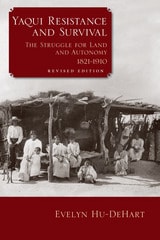
Yaqui Resistance and Survival
The Struggle for Land and Autonomy, 1821–1910Evelyn Hu-DeHart
University of Wisconsin Press, 2016
In this revised edition of her groundbreaking work, Hu-DeHart reviews and reflects on the growth in scholarship about the Yaqui, including advances in theoretical frameworks and methodologies on borderlands, transnationalism, diaspora, and collective memory that are especially relevant to their history.

Yardbird Suite
A Compendium of the Music and Life of Charlie ParkerLawrence O. Koch
University of Wisconsin Press, 1988
Yardstick Nation
The Metric System in AmericaHector Vera
Vanderbilt University Press, 2025
Honorable Mention, Robert K. Merton Book Award, American Sociological Association’s Science, Knowledge, and Technology (SKAT) Section, 2026
Why is there no metric system in the United States? Why is it that a country known for its openness to the future, its scientific innovations, and its preference for practicality has not adopted the most practical, scientific, and innovative system of measurement? Yardstick Nation answers these questions by analyzing the political, economic, and international factors that determined the trajectory of the United States as a nation self-excluded from one of the most successful global technical languages.
Using a historical-comparative approach and qualitative analysis of archival material, the book examines the trajectories of American scientists, engineers, politicians, and industrialists from 1787 to 1982, to detail what they wanted to attain and to explain what was actually possible to achieve given the political and economic conditions in which they lived. Yardstick Nation argues that in order to understand the unbreached distance between the United States and the metric system, we must consider the interaction between three structural elements: historical timing, state infrastructural power, and international economic integration.
Author Hector Vera’s systematic look at when and why countries have adopted the metric system shows that its introduction is never casual. In the countries that voluntarily embraced the metric system, this was the result of either deep internal political transformations or momentous changes in the international economy. When the adoption of the metric system is politically driven, it comes as the result of a social revolution, independence war, national unification, or the draft of a new constitution. When it is propelled by economic factors, metrication is part of the efforts of economically stagnant countries to integrate into international markets.
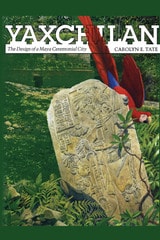
Yaxchilan
The Design of a Maya Ceremonial CityBy Carolyn E. Tate
University of Texas Press, 1991
As archaeologists peel away the jungle covering that has both obscured and preserved the ancient Maya cities of Mexico and Central America, other scholars have only a limited time to study and understand the sites before the jungle, weather, and human encroachment efface them again, perhaps forever. This urgency underlies Yaxchilan: The Design of a Maya Ceremonial City, Carolyn Tate's comprehensive catalog and analysis of all the city's extant buildings and sculptures.
During a year of field work, Tate fully documented the appearance of the site as of 1987. For each sculpture and building, she records its discovery, present location, condition, measurements, and astronomical orientation and reconstructs its Long Counts and Julian dates from Calendar Rounds. Line drawings and photographs provide a visual document of the art and architecture of Yaxchilan.
More than mere documentation, however, the book explores the phenomenon of art within Maya society. Tate establishes a general framework of cultural practices, spiritual beliefs, and knowledge likely to have been shared by eighth-century Maya people. The process of making public art is considered in relation to other modes of aesthetic expression, such as oral tradition and ritual. This kind of analysis is new in Maya studies and offers fresh insight into the function of these magnificent cities and the powerful role public art and architecture play in establishing cultural norms, in education in a semiliterate society, and in developing the personal and community identities of individuals.
Several chapters cover the specifics of art and iconography at Yaxchilan as a basis for examining the creation of the city in the Late Classic period. Individual sculptures are attributed to the hands of single artists and workshops, thus aiding in dating several of the monuments. The significance of headdresses, backracks, and other costume elements seen on monuments is tied to specific rituals and fashions, and influence from other sites is traced. These analyses lead to a history of the design of the city under the reigns of Shield Jaguar (A.D. 681-741) and Bird Jaguar IV (A.D. 752-772).
In Tate's view, Yaxchilan and other Maya cities were designed as both a theater for ritual activities and a nexus of public art and social structures that were crucial in defining the self within Maya society.
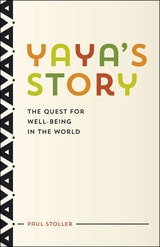
Yaya's Story
The Quest for Well-Being in the WorldPaul Stoller
University of Chicago Press, 2014
Harouna and Stoller would meet in Harlem, at a bustling African market where Harouna built a life as an African art trader and Stoller was conducting research. Moving from Belayara in Niger to Silver Spring, Maryland, and from the Peace Corps to fieldwork to New York, Stoller recounts their separate lives and how the threat posed by cancer brought them a new, profound, and shared sense of meaning. Combining memoir, ethnography, and philosophy through a series of interconnected narratives, he tells a story of remarkable friendship and the quest for well-being. It’s a story of difference and unity, of illness and health, a lyrical reflection on human resiliency and the shoulders we lean on.
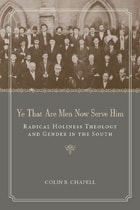
Ye That Are Men Now Serve Him
Radical Holiness Theology and Gender in the SouthColin B. Chapell
University of Alabama Press, 2016
Examines how religious belief reshaped concepts of gender during the New South period that took place from 1877 to 1915 in ways that continue to manifest today
Modernity remade much of the world in the late nineteenth and early twentieth centuries and was nowhere more transformational than in the American South. In the wake of the Civil War, the region not only formed new legal, financial, and social structures, but citizens of the South also faced disorienting uncertainty about personal identity and even gender itself. Ye That Are Men Now Serve Him traces the changes in southern gender roles during the New South period of 1877–1915 and demonstrates that religion is the key to perceiving how constructions of gender changed.
The Civil War cleaved southerners from the culture they had developed organically during antebellum decades, raising questions that went to the very heart of selfhood: What does it mean to be a man? How does a good woman behave? Unmoored from traditional anchors of gender, family, and race, southerners sought guidance from familiar sources: scripture and their churches. In Ye That Are Men Now Serve Him, Colin Chapell traces how concepts of gender evolved within the majority Baptist and Methodist denominations as compared to the more fluid and innovative Holiness movement.
Grounded in expansive research into the archives of the Southern Baptist Convention; Methodist Episcopal Church, South; and the Holiness movement, Chapell’s writing is also enlivened by a rich trove of primary sources: diaries, sermons, personal correspondence, published works, and unpublished memoirs. Chapell artfully contrasts the majority Baptist and Methodist view of gender with the relatively radical approaches of the emerging Holiness movement, thereby bringing into focus how subtle differences in belief gave rise to significantly different ideas of gender roles.
Scholars have explored class, race, and politics as factors that contributed to contemporary southern identity, and Chapell restores theology to its intuitive place at the center of southern identity. Probing and illuminating, Ye That Are Men Now Serve Him offers much of interest to scholars and readers of the South, southern history, and religion.
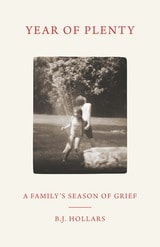
Year of Plenty
A Family's Season of GriefB.J. Hollars
University of Wisconsin Press, 2024
So began the Hollars family’s year of plenty—a cancer diagnosis on top of the ongoing COVID pandemic, then feelings of falling short as parents, partners, and people. While Hollars traces his family’s daily devastations alongside his father-in-law’s decline, he recounts the small mercies along the way: birthdays, campfires, fishing trips, kayaking, and fireflies. As he, his wife, Meredith, and their three young children grapple with how best to say goodbye to the person they love, they are forced to reassess their own lives. How can we make the most of our time, they wonder, when time feels so short?
Written in vignettes and accompanied by photographs and family interviews, Year of Plenty provides a poignant and unflinching account of how death separates us not only from the people we love but from places and memories too. Hollars explores how death’s all-consuming weight has the potential to fracture—rather than strengthen—even those relationships we think we know the best. Ultimately, he cracks wide personal moments from his own life and allows the world to peer in.
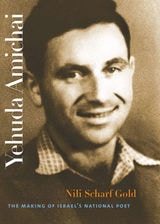
Yehuda Amichai
The Making of Israel's National PoetNili Scharf Gold
Brandeis University Press, 2008

Yellow Future
Oriental Style in Hollywood CinemaJane Chi Hyun Park
University of Minnesota Press, 2010
Park provides a genealogy of oriental style through contextualized readings of popular films-from the multicultural city in Blade Runner and the Japanese American mentor in The Karate Kid to the Afro-Asian reworking of the buddy genre in Rush Hour and the mixed-race hero in The Matrix. Throughout these analyses Park shows how references to the Orient have marked important changes in American popular attitudes toward East Asia in the past thirty years, from abjection to celebration, invisibility to hypervisibility.

Yellow Journalist
Dispatches from Asian AmericaWilliam Wong
Temple University Press, 2001

Yellow Light
The Flowering of Asian American ArtsAmy Ling
Temple University Press, 2000
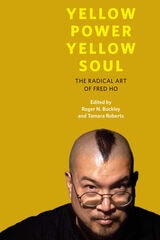
Yellow Power, Yellow Soul
The Radical Art of Fred HoEdited by Roger N. Buckley and Tamara Roberts
University of Illinois Press, 2013
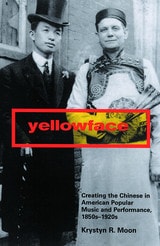
Yellowface
Creating the Chinese in American Popular Music and Performance, 1850s-1920sMoon, Krystyn R.
Rutgers University Press, 2004
Music and performance provide a unique window into the ways that cultural information is circulated and perceptions are constructed. Because they both require listening, are inherently ephemeral, and most often involve collaboration between disparate groups, they inform cultural perceptions differently from literary or visual art forms, which tend to be more tangible and stable.
In Yellowface, Krystyn R. Moon explores the contributions of writers, performers, producers, and consumers in order to demonstrate how popular music and performance has played an important role in constructing Chinese and Chinese American stereotypes. The book brings to life the rich musical period of the late nineteenth and early twentieth centuries. During this time, Chinese and Chinese American musicians and performers appeared in a variety of venues, including museums, community theaters, and world’s fairs, where they displayed their cultural heritage and contested anti-Chinese attitudes. A smaller number crossed over into vaudeville and performed non-Chinese materials. Moon shows how these performers carefully navigated between racist attitudes and their own artistic desires.
While many scholars have studied both African American music and blackface minstrelsy, little attention has been given to Chinese and Chinese American music. This book provides a rare look at the way that immigrants actively participated in the creation, circulation, and, at times, subversion of Chinese stereotypes through their musical and performance work.
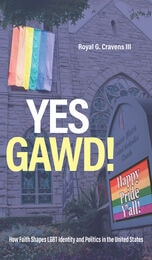
Yes Gawd!
How Faith Shapes LGBT Identity and Politics in the United StatesCravens III, Royal G.
Temple University Press, 2024
Cravens also demonstrates the mobilizing power of faith for LGBT people by contrasting the effects of participation in faith and secular communities on political activism. He explores how factors such as coming out, race, and LGBT-affirming churches influence political attitudes and behavior and explains how the development of LGBT politico-religious activism provides opportunities for LGBT people to organize politically.
Ultimately, Cravens provides a cohesive account of how religion acts as a catalyst for and facilitator in the political development of LGBT people in the United States. In the process, he shows that there is room for both religion in LGBT communities and LGBT people in religious communities.
Yesterday's Faces, Volume 1
Glory FiguresRobert Sampson
University of Wisconsin Press, 1983
This book and its companion volumes are concerned with the slow shaping of many literary conventions over many decades. This volume begins the study with the dime novels and several early series characters who influenced the direction of pulp fiction at its source.
Yesterday's Faces, Volume 2
Strange DaysRobert Sampson
University of Wisconsin Press, 1984
Yesterday's Faces, Volume 3
From the Dark SideRobert Sampson
University of Wisconsin Press, 1987
The development of these characters is traced across more than two decades of crime fiction published in Detective Story Magazine, Flynn’s, Black Mask, and other magazines. The conventions that made these stories a special part of popular fiction are examined in detail.
Yesterday's Faces, Volume 4
The SolversRobert Sampson
University of Wisconsin Press, 1987
Yesterday's Faces, Volume 5
Dangerous HorizonsRobert Sampson
University of Wisconsin Press, 1991

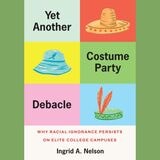
Yet Another Costume Party Debacle
Why Racial Ignorance Persists on Elite College CampusesIngrid A. Nelson
University of Chicago Press, 2024
On a cold February evening, a group of students at Bowdoin College, an elite and historically white liberal arts college in Maine, gathered to drink tequila at a party referred to as “not not a fiesta.” By noon the next day, Instagram videos of students sporting miniature sombreros had spread like wildfire through campus. Over the next few weeks, national media outlets would broadcast the embarrassing fallout. But the frequency with which similar parties recur on campuses across the United States begs the question: what, if anything, do undergraduates learn about race and racism from these encounters?
Drawing on interviews and archival research, Yet Another Costume Party Debacle shows us how colleges both contest and reproduce racialized systems of power. Sociologist Ingrid A. Nelson juxtaposes how students and administrators discuss race with how they behave in the aftermath of racially charged campus controversies. Nelson spoke in-depth with students and other key players in several controversial parties—“Cracksgiving,” a “gangster party,” and the “not not a fiesta” tequila party—at Bowdoin. The college’s administrative response failed to encourage productive dialogue or address larger questions about race on campus. Nelson shows how the underlying campus structures at elite liberal arts colleges foster an environment that is ripe for racially charged incidents; we shouldn’t be surprised when we read about yet another costume party debacle. Nelson advises how we can take charge of diversity on our campuses by changing the systems that bring students together and drive them apart.
Yet Another Costume Party Debacle
Why Racial Ignorance Persists on Elite College CampusesIngrid A. Nelson
University of Chicago Press, 2024
How the policies of elite colleges allow racially themed parties to continue by perpetuating the status quo.
On a cold February evening, a group of students at Bowdoin College, an elite and historically white liberal arts college in Maine, gathered to drink tequila at a party referred to as “not not a fiesta.” By noon the next day, Instagram videos of students sporting miniature sombreros had spread like wildfire through campus. Over the next few weeks, national media outlets would broadcast the embarrassing fallout. But the frequency with which similar parties recur on campuses across the United States begs the question: what, if anything, do undergraduates learn about race and racism from these encounters?
Drawing on interviews and archival research, Yet Another Costume Party Debacle shows us how colleges both contest and reproduce racialized systems of power. Sociologist Ingrid A. Nelson juxtaposes how students and administrators discuss race with how they behave in the aftermath of racially charged campus controversies. Nelson spoke in-depth with students and other key players in several controversial parties—“Cracksgiving,” a “gangster party,” and the “not not a fiesta” tequila party—at Bowdoin. The college’s administrative response failed to encourage productive dialogue or address larger questions about race on campus. Nelson shows how the underlying campus structures at elite liberal arts colleges foster an environment that is ripe for racially charged incidents; we shouldn’t be surprised when we read about yet another costume party debacle. Nelson advises how we can take charge of diversity on our campuses by changing the systems that bring students together and drive them apart.
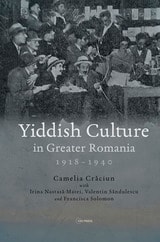
Yiddish Culture in Greater Romania (1918-1940)
Camelia Craciun
Central European University Press, 2025
In the newly created Greater Romania, the Jewish community included more than half a million individuals still speaking Yiddish. Building on pre-war trends, the new nation-state faced an antisemitism problem since its inception. This continued in the period that followed, culminating in the horrors of the Holocaust, which destroyed most of the Yiddish-language community. Most survivors were discouraged from continuing to use a language that reminded them of a painful past.
This volume examines the socio-cultural mechanisms responsible for restructuring the Yiddish cultural life after the changes brought about by the end of World War I and the creation of Greater Romania. It describes how this process evolved until the political regimes banned the activity of Yiddish theaters, press and, ultimately, the usage of Yiddish, thus making cultural life impossible.
The four authors identify the main institutions, individuals and projects that promoted Yiddish cultural life in interwar Romania. They also trace the impact of Yiddish within Romanian society through joint projects, events, and initiatives. Special attention is given to Yiddish theater, which played a key role both within the community and in its interaction with the Romanian-speaking public.
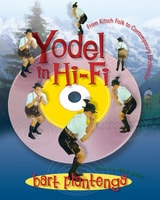
Yodel in Hi-Fi
From Kitsch Folk to Contemporary ElectronicaBart Plantenga
University of Wisconsin Press, 2012
“If Wisconsin wasn’t on the yodel music map before, this book puts it there.”—Wisconsin State Journal
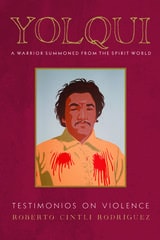
Yolqui, a Warrior Summoned from the Spirit World
Testimonios on ViolenceRoberto Cintli Rodríguez; Foreword by Patrisia Gonzales
University of Arizona Press, 2019
Framed by Rodríguez’s personal testimony of police violence, this book offers a historia profunda of the culture of extralegal violence against Red-Black-Brown communities in the United States. In addition to Rodríguez’s story, this book includes several short essays from victims and survivors that bring together personal accounts of police brutality and state-sponsored violence. This wide-ranging work touches on historical and current events, including the Watts rebellion, the Zoot Suit Riots, Operation Streamline, Standing Rock, and much more.
From the eyewitness accounts of Bartolomé de las Casas to the protestors and allies at Standing Rock, this book makes evident the links between colonial violence against Red-Black-Brown bodies to police violence in our communities today. Grounded in the stories of the lives of victims and survivors of police violence, Yolqui, a Warrior Summoned from the Spirit World illuminates the physical, spiritual, and epistemic depths and consequences of racialized dehumanization.
Rodríguez offers us an urgent, poignant, and personal call to end violence and the philosophies that permit such violence to flourish. Like the Nahuatl yolqui, this book is intended as a means of healing, offering a footprint going back to the origins of violence, and, more important, a way forward.
With contributions by Raúl Alcaraz-Ochoa, Citalli Álvarez, Tanya Alvarez, Rebekah Barber, Juvenal Caporale, David Cid, Arianna Martinez Reyna, Carlos Montes, Travis Morales, Simon Moya Smith, Cesar Noriega, Kimberly Phillips, Christian Ramirez, Michelle Rascon Canales, Carolyn Torres, Jerry Tello, Tara Trudell, and Laurie Valdez.
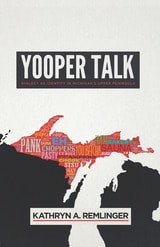
Yooper Talk
Dialect as Identity in Michigan's Upper PeninsulaKathryn A. Remlinger
University of Wisconsin Press, 2019
Drawing on sixteen years of fieldwork, including interviews with seventy-five lifelong residents of the UP, Kathryn Remlinger examines how the idea of a unique Yooper dialect emerged. Considering UP English in relation to other regional dialects and their speakers, she looks at local identity, literacy practices, media representations, language attitudes, notions of authenticity, economic factors, tourism, and contact with immigrant and Native American languages. The book also explores how a dialect becomes a recognizable and valuable commodity: Yooper talk (or "Yoopanese") is emblazoned on t-shirts, flags, postcards, coffee mugs, and bumper stickers.
Yooper Talk explains linguistic concepts with entertaining examples for general readers and also contributes to interdisciplinary discussions of dialect and identity in sociolinguistics, anthropology, dialectology, and folklore.

Yorùbá Bàtá Goes Global
Artists, Culture Brokers, and FansDebra L. Klein
University of Chicago Press, 2007
Yorùbá Bàtá Goes Global describes the dramatic changes and reinventions of traditional bàtá performance in recent years, showing how they are continually recreated, performed, and sold. Klein delves into the lives of Yorùbá musicians, focusing on their strategic collaborations with artists, culture brokers, researchers, and entrepreneurs worldwide. And she explores how reinvigorated performing ensembles are beginning to parlay success on the world stage into increased power and status within Nigeria. Klein’s study of the interwoven roles of innovation and tradition will interest scholars of African, global, and cultural studies, anthropology, and ethnomusicology alike.
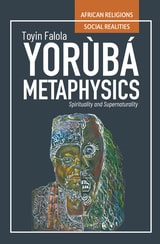
Yorùbá Metaphysics
Spirituality and SupernaturalityToyin Falola
Ohio University Press, 2025
Yorùbá Metaphysics challenges Western dominance in the field of epistemology and sheds light on the sophisticated realm of indigenous African knowledge systems and metaphysical thought. Toyin Falola comprehensively explores the complex interplay between the physical and spiritual worlds as understood by the Yorùbá people, offering a fresh perspective on metaphysics, spirituality, and the societal roles these elements play in African communities. The book contributes to the fields of philosophy, religious studies, and African studies by revealing how indigenous epistemologies can inform broader discussions of metaphysics, ethics, and societal development that are outside the Western frame of thought. Each of the book’s fifteen chapters focuses on a distinct aspect of Yorùbá life and cosmology. Topics encompass the everyday consequences of spiritual beliefs on social interactions and community living as well as the philosophical foundations that inform these practices. Noteworthy discussions include the function of language in conveying metaphysical knowledge, the societal impact of esoteric beliefs, and the application of these traditional understandings to contemporary life challenges. This work not only elucidates the nuances of Yorùbá metaphysical thought but also promotes the integration of this knowledge into broader academic and practical settings to advance societal development and sustainability. As global discourse increasingly seeks to acknowledge and incorporate diverse viewpoints, this book provides essential insights into the workings of an African metaphysical philosophy and its relevance to both regional and international concerns. Falola urges the academic community to reconsider the value and role of indigenous knowledge systems in present-day education and policy formation. This work is vital for scholars, policymakers, and practitioners interested in cultural studies, philosophy, religious studies, and African studies. It is not merely a scholarly work; it is an appeal for a reassessment of the methods by which indigenous knowledge is viewed and applied on an international scale.
Yosano Akiko and The Tale of Genji
G. G. Rowley
University of Michigan Press, 2000
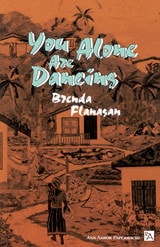
You Alone Are Dancing
Brenda Flanagan
University of Michigan Press, 1996
Rape, the devastation of Hurricane Flora, a child's tragic death, and an indifferent and corrupt government are some of the numerous problems challenging the people of Rosehill. Set on the fictional island of Santabella and spanning three years, You Alone Are Dancing follows the life of young Beatrice Salandy, balancing her ambitions, obligations, and love for Sonny Allen. Determined to create his own opportunities, Sonny leaves Rosehill for the United States in a swirl of promises and expectations. Beatrice remains on Rosehill, sharing her neighbors' struggle, adding their pain to her own, but sharing as well their music and their laughter, their history and their allegiance to it. Like Santabella, set in an indifferent blue sea, Rosehill is part of a larger neglected Caribbean society, and Beatrice must learn to negotiate its tides and ebbs, overcome its storm and ensure its lulls, as she peruses what has to be done. She succeeds--but at a price that changes her life forever, as it does that of Sonny and all of Rosehill. "In Brenda Flanagan's novel, You Alone Are Dancing, there's talk and talk, the life-long dance of talk--it's lyrical, raucous, sorrowful, vibrant, inventive. And there you are, on the island, in the midst and mix of it all. What the best musicians do with wood and brass and air, Brenda Flanagan does with words--she gives them voice and life." --Janet Kauffman, author of Places in the World a Woman Could Walk.

You Are a Ghost
Katherine Guinness
University of Minnesota Press, 2027
A ghost story where you are the ghost
What if the ghost haunting the present is you? In You Are a Ghost, Katherine Guinness offers a provocative new theory of “negative hauntology,” arguing that ghostliness is not a metaphor but the defining condition of life under late capitalism. Through compelling readings of films such as The Sixth Sense, Ghost, Beetlejuice, and The Others, alongside television, immersive performance, and contemporary art about platform surveillance and automated intelligence, Guinness reveals how today’s culture reflects a world where futurity, agency, and even humanity have already been lost.
Yet, rather than ending in nihilism, You Are a Ghost imagines a new form of collective consciousness grounded in our shared condition. Bold, accessible, and deeply original, this book rethinks social death, capitalism, and political solidarity, offering readers a new way to understand contemporary culture—and how to haunt it.
Retail e-book files for this title are screen-reader friendly.
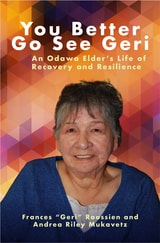
You Better Go See Geri
An Odawa Elder’s Life of Recovery and ResilienceFrances “Geri” Roossien
Oregon State University Press, 2021
While a graduate student, Andrea Riley Mukavetz was invited into Geri’s home to listen to her stories and assist in compiling and publishing a memoir. Geri wanted her stories to serve as a resource, form of support, and affirmation that Indigenous people can be proud of who they are and overcome trauma. Geri hoped to be a model to current and future generations, and she believed strongly that more Indigenous people should become substance abuse counselors and work with their communities in tribally specific ways.
Geri died in 2019, but Riley Mukavetz carried on the work. This book presents Geri’s stories, lightly edited and organized for clarity, with an introduction by Riley Mukavetz that centers Geri’s life and the process of oral history in historical and theoretical context.
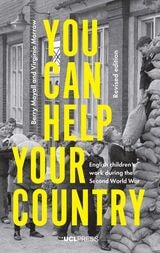
You Can Help Your Country
English Children's Work During the Second World WarBerry Mayall and Virginia Morrow
University College London, 2020

You Feel So Mortal
Essays on the BodyPeggy Shinner
University of Chicago Press, 2014
Over the course of twelve essays, Shinner holds a mirror up to the complex desires, fears, confusions, and mysteries that shape our bodily perceptions. Driven by the collision between herself and the larger world, she examines her feet through the often-skewed lens of history to understand what makes them, in the eyes of some, decidedly Jewish; considers bras, breasts, and the storied skills of the bra fitter; asks, from the perspective of a confused and grieving daughter, what it means to cut the body open; and takes a reeling time-trip through myth, culture, and history to look at women’s hair in ancient Rome, Laos, France, Syria, Cuba, India, and her own past. Some pieces investigate the body under emotional or physical duress, while others use the body to consider personal heritage and legacy. Throughout, Shinner writes with elegance and assurance, weaving her wide-ranging thoughts into a firm and fascinating fabric.
Turning the category of body books on, well, its ear, You Feel So Mortal offers a probing view of our preoccupation with the body that is both idiosyncratic and universal, leaving us with the deep satisfaction of our shared humanity.
You Know My Method
Science of the DetectiveJ.K. Van Dover
University of Wisconsin Press, 1994
The four principal writers covered are Edgar Allan Poe, Sir Arthur Conan Doyle, R. Austin Freeman, and Arthur B. Reeve. Another dozen more writers are treated somewhat more briefly: Gaboriau, Pinkerton, Green, Morrison, Futrelle, and Leroux, among others.
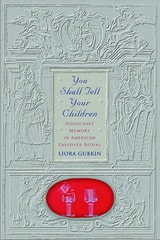
You Shall Tell Your Children
Holocaust Memory in American Passover RitualGubkin, Liora
Rutgers University Press, 2007
Passover is among the most widely observed holidays for American Jews. During this festival of redemption, Jewish families retell the biblical story of Exodus using a ritual book known as a haggadah, often weaving modern tales of oppression through the biblical narrative. References to the Holocaust are some of the most common additions to contemporary haggadot. However, the parallel between ancient and modern oppression, which seems obvious to some, raises troubling questions for many others. Is it possible to find any redemptive meaning in the Nazi genocide? Are we adding value to this unforgivable moment in history?
Liora Gubkin critiques commemorations that violate memory by erasing the value of everyday life that was lost and collapse the diversity of responses both during the Shoah and afterward. She recounts oral testimonies from Holocaust survivors, cites references to the holiday in popular American culture, and analyzes examples of actual haggadot. Ultimately, Gubkin concludes that it is possible and important to make a space for Holocaust commemoration, all the time recognizing that haggadot must be constantly revisited and “performed.”
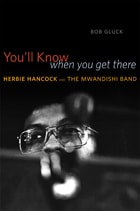
You'll Know When You Get There
Herbie Hancock and the Mwandishi BandBob Gluck
University of Chicago Press, 2012
As the 1960s ended, Herbie Hancock embarked on a grand creative experiment. Having just been dismissed from the celebrated Miles Davis Quintet, he set out on the road, playing with his first touring group as a leader until he eventually formed what would become a revolutionary band. Taking the Swahili name Mwandishi, the group would go on to play some of the most innovative music of the 1970s, fusing an assortment of musical genres, American and African cultures, and acoustic and electronic sounds into groundbreaking experiments that helped shape the American popular music that followed. In You’ll Know When You Get There, Bob Gluck offers the first comprehensive study of this influential group, mapping the musical, technological, political, and cultural changes that they not only lived in but also effected.
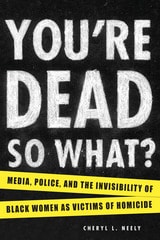
You're Dead—So What?
Media, Police, and the Invisibility of Black Women as Victims of HomicideCheryl L. Neely
Michigan State University Press, 2015
You're Doing it Wrong!
Mothering, Media, and Medical ExpertiseBethany L. Johnson
Rutgers University Press, 2019
You’re Doing it Wrong! investigates the storied history of mothering advice in the media, from the newspapers, magazines, doctors’ records and personal papers of the nineteenth-century to today’s websites, Facebook groups, and Instagram feeds. Johnson and Quinlan find surprising parallels between today’s mothering experts and their Victorian counterparts, but they also explore how social media has placed unprecedented pressures on new mothers, even while it may function as social support for some. They further examine the contentious construction of prenatal and baby care expertise itself, as individuals such as everyone from medical professionals to experienced moms have competed to have their expertise acknowledged in the public sphere.
Exploring potential health crises from infertility treatments to “better babies” milestones, You’re Doing it Wrong! provides a provocative look at historical and contemporary medical expertise during conception, pregnancy, childbirth, postpartum, and infant care stages.
You're Not from Around Here, Are You?
A Lesbian in Small-Town AmericaLouise A. Blum
University of Wisconsin Press, 2001
This is a funny, moving story about life in a small town, from the point of view of a pregnant lesbian. Louise A. Blum, author of the critically acclaimed novel Amnesty, now tells the story of her own life and her decision to be out, loud, and pregnant. Mixing humor with memorable prose, Blum recounts how a quiet, conservative town in an impoverished stretch of Appalachia reacts as she and a local woman, Connie, fall in love, move in together, and determine to live their life together openly and truthfully.
The town responds in radically different ways to the couple’s presence, from prayer vigils on the village green to a feature article in the family section of the local newspaper. This is a cautionary, wise, and celebratory tale about what it’s like to be different in America—both the good and the bad. A depiction of small town life with all its comforts and its terrors, this memoir speaks to anyone who has ever felt like an outsider in America. Blum tells her story with a razor wit and deft precision, a story about two "girls with grit," and the child they decide to raise, right where they are, in small town America.
You're the First One I've Told
The Faces of HIV in the Deep SouthWhetten-Goldstein, Kathryn
Rutgers University Press, 2013
The Deep South has seen a 36 percent increase in AIDS cases while the rest of the nation has seen a 2 percent decline. Many of the underlying reasons for the disease’s continued spread in the region—ignorance about HIV, reluctance to get tested, non-adherence to treatment protocols, resistance to behavioral changes—remain unaddressed by policymakers.
In this extensively revised second edition, Kathryn Whetten and Brian Wells Pence present a rich discussion of twenty-five ethnographic life stories of people living with HIV in the South. Most importantly, they incorporate research from their recent quantitative study, “Coping with HIV/AIDS in the Southeast” (CHASE), which includes 611 HIV-positive patients from North Carolina, South Carolina, Georgia, Alabama, and Louisiana. This new edition continues to bring the participants’ voices to life while highlighting how the CHASE study confirmed many of the themes that originally emerged from the life histories. This is the first cohesive compilation of up-to-date evidence on the unique and difficult aspects of living with HIV in the Deep South.
You've Always Been There for Me
Understanding the Lives of Grandchildren Raised by GrandparentsDunifon, Rachel E
Rutgers University Press, 2018
Young Brothers Massacre
Paul W. Barrett & Mary H. Barrett
University of Missouri Press, 1988
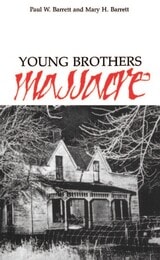
On January 2, 1932, near Springfield, Missouri, ten poorly armed law enforcement officers set out to arrest two local farm boys for auto theft. A few minutes later, six of the officers lay dead and three were wounded, setting a record that stands to this day for the greatest number of police officers killed in one incident in the history of the United States. This is the story of how it happened and of the unlikely people whose lives were forever changed.
The two killers, Jennings and Harry Young, were from a peaceful, tiny community named Brookline in central Greene County, Missouri. The "massacre" itself took place at the quiet orderly farm home of the J. D. Young family. Paul and Mary Barrett trace the personalities of those involved in the incident, describe the events of the fateful day, and examine the aftermath of the killings, detailing what was called "the greatest man hunt in the history of Texas," which culminated in the brothers' deaths in Houston.
Young Men, Time, and Boredom in the Republic of Georgia
Martin Frederiksen
Temple University Press, 2016
In the midst of societal optimism, how do young men cope with the loss of a vibrant future? Young Men, Time, and Boredom in the Republic of Georgia provides a vivid exploration of the tension between subjective and societal time and the ways these tensions create experiences of marginality among under- or unemployed young men in the Republic of Georgia.
Based on long-term ethnographic fieldwork, Martin Demant Frederiksen shows how the Georgian state has attempted to make the so-called post-Soviet transition a thing of the past as it creates new ideas about the future. Yet some young men in the regional capital of Batumi do not feel that they are part of the progression these changes create. Instead, they feel marginalized both by space and time—passed over and without prospects.
This distinctive case study provides empirical evidence for a deeper understanding of contemporary societal developments and their effects on individual experiences.