Results by title
95 books match the query 'Social media' and 3 start with y
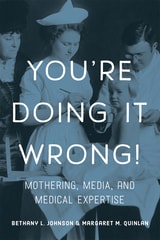
You're Doing it Wrong!
Mothering, Media, and Medical ExpertiseBethany L. Johnson
Rutgers University Press, 2019
You’re Doing it Wrong! investigates the storied history of mothering advice in the media, from the newspapers, magazines, doctors’ records and personal papers of the nineteenth-century to today’s websites, Facebook groups, and Instagram feeds. Johnson and Quinlan find surprising parallels between today’s mothering experts and their Victorian counterparts, but they also explore how social media has placed unprecedented pressures on new mothers, even while it may function as social support for some. They further examine the contentious construction of prenatal and baby care expertise itself, as individuals such as everyone from medical professionals to experienced moms have competed to have their expertise acknowledged in the public sphere.
Exploring potential health crises from infertility treatments to “better babies” milestones, You’re Doing it Wrong! provides a provocative look at historical and contemporary medical expertise during conception, pregnancy, childbirth, postpartum, and infant care stages.
Youth Media Matters
Participatory Cultures and Literacies in EducationKorina M. Jocson
University of Minnesota Press, 2018
In an information age of youth social movements, Youth Media Matters examines how young people are using new media technologies to tell stories about themselves and their social worlds. They do so through joint efforts in a range of educational settings and media environments, including high school classrooms, youth media organizations, and social media sites. Korina M. Jocson draws on various theories to show how educators can harness the power of youth media to provide new opportunities for meaningful learning and “do-it-together production.” Describing the impact that youth media can have on the broader culture, Jocson demonstrates how it supports expansive literacy practices and promotes civic engagement, particularly among historically marginalized youth.
In Youth Media Matters, Jocson offers a connective analysis of content area classrooms, career and technical education, literary and media arts organizations, community television stations, and colleges and universities. She provides examples of youth media work—including videos, television broadcasts, websites, and blogs—produced in the San Francisco Bay Area, Los Angeles, New York, and St. Louis. At a time when educators are increasingly attentive to participatory cultures yet constrained by top-down pedagogical requirements, Jocson highlights the knowledge production and transformative potential of youth media with import both in and out of the classroom.
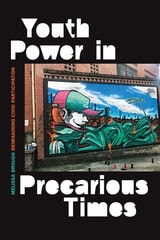
Youth Power in Precarious Times
Reimagining Civic ParticipationMelissa Brough
Duke University Press, 2020