Results by title
77 books match the query 'Wars' and 2 start with y
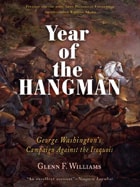
Year of the Hangman
George Washington's Campaign Against the IroquoisGlenn F. Williams
Westholme Publishing, 2007
Winner of the 2005 Thomas Fleming Award for the Best Book in American Revolutionary War History
Finalist for the Army Historical Foundation Distinguished Writing Award
After two years of fighting, Great Britain felt confident that the American rebellion would be crushed in 1777, the "Year of the Hangman." Britain devised a bold new strategy. Turning its attention to the colonial frontiers, especially those of western New York, Pennsylvania, and Virginia, Britain enlisted its provincial rangers, Tories, and allied warriors, principally from the Iroquois Confederacy, to wage a brutal backwoods war in support of General John Burgoyne's offensive as it swept southward from Canada in an attempt to cut the colonies in half, divert the Continental Army, and weaken its presence around British-occupied New York City and Philadelphia.
Burgoyne's defeat at Saratoga sent shock waves through the British command. But the efforts along the frontier under the direction of Sir John Johnson, Colonel John Butler, and the charismatic Mohawk leader, Joseph Brant, appeared to be impairing the American ability to conduct the war. Destroying Patriot settlements and farms across hundreds of miles of frontier, the British and Indian forces threatened to reduce Continental army enlistment, and more importantly, precious food supplies. Following the massacres at the well-established colonial settlements of Wyoming, Pennsylvania, and Cherry Valley, New York, the Continental Congress persuaded General George Washington to conduct a decisive offensive to end the threat once and for all. Brewing for years, the conflict between the Iroquois and colonists would now reach its deadly climax.
Charging his troops "to not merely overrun, but destroy," Washington devised a two-prong attack to exact American revenge. The largest coordinated American military action against American Indians in the war, the campaign shifted the power in the east, ending the political and military influence of the Iroquois, forcing large numbers of loyalist to flee to Canada, and sealing Britain's fateful decision to seek victory in the south. In Year of the Hangman: George Washington's Campaign Against the Iroquois, historian Glenn F. Williams recreates the riveting events surrounding the action, including the checkered story of European and Indian alliances, the bitter frontier wars, and the bloody battles of Oriskany and Newtown.
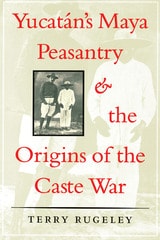
Yucatán's Maya Peasantry and the Origins of the Caste War
By Terry Rugeley
University of Texas Press, 1996
Conflicts between native Maya peoples and European-derived governments have punctuated Mexican history from the Conquest in the sixteenth century to the current Zapatista uprising in Chiapas. In this deeply researched study, Terry Rugeley delves into the 1800-1847 origins of the Caste War, the largest and most successful of these peasant rebellions.
Rugeley refutes earlier studies that seek to explain the Caste War in terms of a single issue. Instead, he explores the interactions of several major social forces, including the church, the hacienda, and peasant villagers. He uncovers a complex web of issues that led to the outbreak of war, including the loss of communal lands, substandard living conditions, the counterpoise of Catholicism versus traditional Maya beliefs, and an increasingly heavy tax burden.
Drawn from a wealth of primary documents, this book represents the first real attempt to reconstruct the history of the pre-Caste War period. In addition to its obvious importance for Mexican history, it will be illuminating background reading for everyone seeking to understand the ongoing conflict in Chiapas.