Results by title
28164 books match the query 'History' and 77 start with y
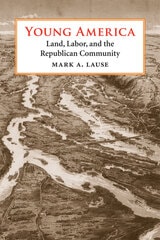
Young America
Land, Labor, and the Republican CommunityMark A. Lause
University of Illinois Press, 2005
Rooting the movement in contemporary economic structures and social ideology, Young America examines this urban and working-class "agrarianism," demonstrating how the political preoccupations of this movement transformed socialism by drawing its adherents from communitarian preoccupations into political action. The alliance of the NRA's land reformers and radical abolitionists led unprecedented numbers to petition Congress and established the foundations of what became the new Republican Party, promising "Free Soil, Free Labor, Free Men."
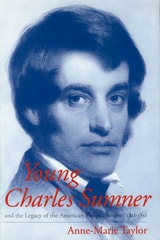
Young Charles Sumner and the Legacy of the American Enlightenment, 1811-1851
Anne-Marie Taylor
University of Massachusetts Press, 2001
In this book, Anne-Marie Taylor challenges that long-standing view, offering in its stead the portrait of a man animated more by principle than by impulse or ambition. According to Taylor, Sumner's reform-minded politics, including his fervent commitment to put an end to slavery, must be understood in the context of a young nation still struggling to live up to the Enlightenment ideals embraced by its founders and embodied in its Constitution.
Focusing on the first forty years of Sumner's life, before he took public office, Taylor traces the evolution of his character and thought among Boston's cultural elite. His belief in the virtues of cosmopolitanism, in the dignity of the human intellect and conscience, and in the possibility of a cultivated and just society, all find their roots in an education steeped in Enlightenment principles. At the same time, as a child of New England Puritanism and Revolutionary republicanism, Sumner was raised to believe in the moral obligation of the individual to work for the common good.
As Taylor shows in this richly drawn biography, much of the triumph and tragedy of Sumner's story—the energy of his idealism as well as the poignancy of his eventual disappointment— derives from the overpowering sense of duty and national destiny imbued by his upbringing.
Young Men and Fire
Norman Maclean
University of Chicago Press, 1992
Young Men and Fire won the National Book Critics Circle Award in 1992.
"A magnificent drama of writing, a tragedy that pays tribute to the dead and offers rescue to the living.... Maclean's search for the truth, which becomes an exploration of his own mortality, is more compelling even than his journey into the heart of the fire. His description of the conflagration terrifies, but it is his battle with words, his effort to turn the story of the 13 men into tragedy that makes this book a classic."—from New York Times Book Review Editor's Choice, Best Books of 1992
"A treasure: part detective story, part western, part tragedy, part elegy and wholly eloquent ghost story in which the dead and the living join ranks cheerfully, if sometimes eerily, in a search for truth and the rest it brings."—Joseph Coates, Chicago Tribune
"An astonishing book. In compelling language, both homely and elegant, Young Men and Fire miraculously combines a fascinating primer on fires and firefighting, a powerful, breathtakingly real reconstruction of a tragedy, and a meditation on writing, grief and human character.... Maclean's last book will stir your heart and haunt your memory."—Timothy Foote, USA Today
"Beautiful.... A dark American idyll of which the language can be proud."—Robert M. Adams, The New York Review of Books
"Young Men and Fire is redolent of Melville. Just as the reader of Moby Dick comes to comprehend the monstrous entirety of the great white whale, so the reader of Young Men and Fire goes into the heart of the great red fire and comes out thoroughly informed. Don't hesitate to take the plunge."—Dennis Drabelle, Washington Post Book World
"Young Men and Fire is a somber and poetic retelling of a tragic event. It is the pinnacle of smokejumping literature and a classic work of 20th-century nonfiction."—John Holkeboer, The Wall Street Journal
"Maclean is always with the brave young dead. . . . They could not have found a storyteller with a better claim to represent their honor. . . . A great book."—James R. Kincaid, New York Times Book Review
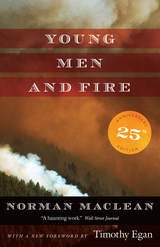
Young Men and Fire
Twenty-fifth Anniversary EditionNorman Maclean
University of Chicago Press, 2017
Alongside Maclean’s now-canonical A River Runs through It and Other Stories, Young Men and Fire is recognized today as a classic of the American West. This twenty-fifth anniversary edition of Maclean’s later triumph—the last book he would write—includes a powerful new foreword by Timothy Egan, author of The Big Burn and The Worst Hard Time. As moving and profound as when it was first published, Young Men and Fire honors the literary legacy of a man who gave voice to an essential corner of the American soul.
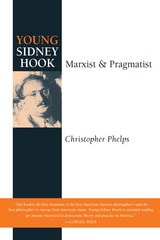
Young Sidney Hook
Marxist and PragmatistChristopher Phelps
University of Michigan Press, 2005
"This book is the best treatment of the best American Marxist philosopher-and the best philosopher to emerge from American slums. Young Sidney Hook is essential reading for anyone interested in democratic theory and practice in America."
---Cornel West
"A very detailed, and fascinating account of Hook's formative years . . . [a] first-rate contribution to the history of American leftist intellectual life."
---Richard Rorty, Raritan
"Fascinating . . . well researched and packed with information."
---Times Literary Supplement
"Succeeds in establishing the young Hook as a dedicated revolutionary Marxist."
---Amos Perlmutter, Washington Times
"A brilliant, lucid portrait of a scholar, adversarial by temperament, who turned his extraordinary powers of analysis and polemic successively against capitalism, Stalinism, and the New Left."
---Alan Wald, Monthly Review
"The best study of Hook's thought. . . . Supersedes all earlier treatments."
---David A. Hollinger and Charles Capper, The American Intellectual Tradition
"A major contribution to our understanding of Hook and the American Marxist tradition. . . . Extremely insightful."
---American Studies
"Persuasive. . . . Discovers not just a brilliant interpreter of Marx and the Russian Revolution, but a remarkable advocate and practitioner of the Americanization of Marxism."
---In These Times
"Phelps's effort to uncover, explore, and analyze Hook's forgotten leftism must be judged an unqualified success."
---Left History
"Penetrating, closely argued, and lucid. . . . An important contribution to the history of American radicalism in the 1930s."
---Labor History
One of the most controversial figures in the history of American philosophy, Sidney Hook was "an intellectual street fighter," who began his career as a brilliant Marxist thinker and "probably the greatest polemicist of [the 20th] century" (Edward Shils) before breaking with the Communist Party in the late 1930s. Turning in his later years to an allegiance with American conservatives including Richard Nixon and Ronald Reagan, Hook is now widely known as an intellectual father of the neoconservative movement.
Young Tel Aviv
A Tale of Two CitiesAnat Helman
Brandeis University Press, 2012
Young, Well-Educated, and Adaptable
Chilean Exiles in Ontario and Quebec, 1973-2010Francis Peddie
University of Manitoba Press, 2014
Young, White, and Miserable
Growing Up Female in the FiftiesWini Breines
University of Chicago Press, 2001
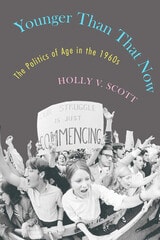
Younger Than That Now
The Politics of Age in the 1960sHolly V. Scott
University of Massachusetts Press, 2016
Retrospectives of the 1960s routinely include the face of youth rebellion: long-haired students occupying campus buildings, young men burning draft cards, hippies dancing at Woodstock. In Younger Than That Now, Holly V. Scott explores how the idea of “youth” served as a tactic in the political and social activism of these years. In the early part of that decade, young white activists began to learn from the civil rights movement's defiance of racism. They examined their own lives and concluded that campus rules and the draft were repression as well. As a group, they were ripe for revolution, and their age gave them a unique perspective for understanding and protesting against injustice. In short, young people began to use their youth as a political strategy.
Some in the New Left were dubious of this strategy and asked how it might damage long-term progress. Young feminists and people of color were particularly quick to question the idea that age alone was enough to sustain a movement. And the media often presented young people as impulsive and naive, undermining their political legitimacy. In tracing how “youth” took on multiple meanings as the 1960s progressed, Scott demonstrates the power of this idea to both promote and hinder social change.
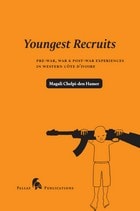
Youngest Recruits
Pre-War, War & Post-War Experiences in Western Côte d’IvoireMagali Chelpi-den Hamer
Amsterdam University Press, 2011
Youngest Recruits is an unflinching examination of the complex motivations that drive Ivoirian children in and out of armed groups. Drawing on firsthand experience with child soldiers, Magali Chelpi-Den Hamer argues that the popular narrative about children’s limited agency is insufficient to explain their participation in violent conflicts. Rather she explores in detail the pre- to postwar trajectories of child and adolescent recruits in order to show that even the youngest exercise some degree of reflection and agency when enlisting into the armed forces. In addition to shedding light on an area of great cultural concern, the author invites readers to reflect on the mixed impact of humanitarian interventions that attempt to reintegrate these children into society.
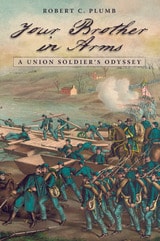
Your Brother in Arms
A Union Soldier's OdysseyRobert C. Plumb
University of Missouri Press, 2011
Your History with Me
The Films of Penny SiopisSarah Nuttall, editor
Duke University Press, 2024
Contributors. John Akomfrah, Sinazo Chiya, Mark Gevisser, Pumla Dineo Gqola, Katerina Gregos, Brenda Hollweg, William Kentridge, Achille Mbembe, Sarah Nuttall, Griselda Pollock, Laura Rascaroli, Zineb Sedira, Penny Siopis, Hedley Twidle, Zoé Whitley
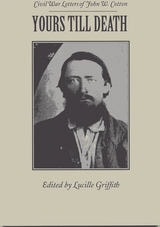
Yours Till Death
Civil War Letters of John W. CottonJohn Cotton
University of Alabama Press, 1951
Letters from a Confederate soldier to his wife during the Civil War.
Yours Till Death: Civil War Letters of John W. Cotton offers a rare and deeply personal window into the lived experience of the American Civil War through the words of an ordinary Confederate soldier. Composed of letters written by John W. Cotton to his wife in Coosa County, Alabama, this collection preserves an unfiltered, intimate record of wartime life from 1862 to 1865, revealing both the hardships of military service and the enduring ties of family and home.
Cotton, a yeoman farmer who enlisted in the Confederate Army in the spring of 1862, writes with directness and honesty about his daily experiences as he moves through the major campaigns of the war, including service in Tennessee, Kentucky, Georgia, and South Carolina. His correspondence captures not only the movements and conditions of military life—guard duty, illness, shortages, and shifting morale—but also the emotional landscape of a soldier separated from his family. His letters are filled with concern for his wife, children, and farm, illustrating the constant tension between duty to country and responsibility to home.
More than a military chronicle, Yours Till Death is also a valuable portrait of rural Southern life during wartime. Cotton’s references to crops, weather, labor, and household concerns provide insight into how families on the home front coped with absence, uncertainty, and economic strain. These details illuminate the broader social and agricultural context of the Confederacy, offering readers a richer understanding of how war reshaped everyday life for civilians as well as soldiers.
The letters, preserved and edited by historian Lucille Griffith, retain the immediacy and authenticity of Cotton’s voice. Written without the benefit of hindsight, they convey the evolving attitudes, anxieties, and hopes of a man living through one of the most turbulent periods in American history. As such, they serve as an important primary source for scholars and students, complementing official histories with the perspective of an individual whose experiences reflect those of countless others who lived and fought during the Civil War.
Yours Till Death will appeal to readers interested in Civil War studies, Southern history, and personal narratives of wartime experience. By bringing together themes of conflict, family, survival, and resilience, this collection transforms historical events into a deeply human story—one that reminds us that the past is best understood not only through battles and politics, but through the voices of those who lived it.
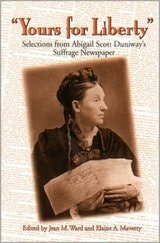
Yours for Liberty
Selections from Abigail Scott Duniway's Suffrage NewspaperJean M. Ward
Oregon State University Press, 2000

Yours to Command
The Life and Legend of Texas Ranger Captain Bill McDonaldHarold J. Weiss Jr.
University of North Texas Press, 2009
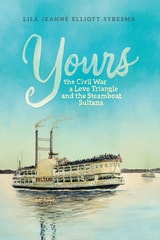
Yours
The Civil War, a Love Triangle, and the Steamboat SultanaLila Jeanne Elliott Sybesma
Indiana Historical Society Press, 2019
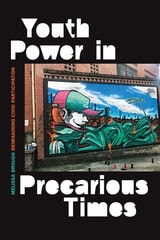
Youth Power in Precarious Times
Reimagining Civic ParticipationMelissa Brough
Duke University Press, 2020
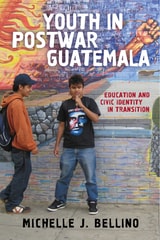
Youth in Postwar Guatemala
Education and Civic Identity in TransitionMichelle J. Bellino
Rutgers University Press, 2017
In the aftermath of armed conflict, how do new generations of young people learn about peace, justice, and democracy? Michelle J. Bellino describes how, following Guatemala’s civil war, adolescents at four schools in urban and rural communities learn about their country’s history of authoritarianism and develop civic identities within a fragile postwar democracy.
Through rich ethnographic accounts, Youth in Postwar Guatemala, traces youth experiences in schools, homes, and communities, to examine how knowledge and attitudes toward historical injustice traverse public and private spaces, as well as generations. Bellino documents the ways that young people critically examine injustice while shaping an evolving sense of themselves as civic actors. In a country still marked by the legacies of war and division, young people navigate between the perilous work of critiquing the flawed democracy they inherited, and safely waiting for the one they were promised...
Youth in the Movements
High School Student Activism in Twentieth-Century AmericaDara Walker
Rutgers University Press, 2027
Youth in the Movements documents the history of the rise of American high school and youth activism in the United States since the Second World War. Spaces within high schools and the adults at them provided support or inspiration – both negative and positive – for youth engaged in protest, organizing, and activism. Through rich research of archival sources and oral histories, contributors reveal new perspectives on American high school and youth activism. Viewed through the eyes of high school-aged youth around the United States – in familiar locations such as Boston, New York City, and Detroit, as well as less familiar locales in the historiography, such as Salt Lake City and the Navajo Reservation – we extend our understanding of high school and how it has been experienced by youth activists in the post-World War II period.
Yucatan in an Era of Globalization
Edited by Eric N. Baklanoff and Edward Moseley
University of Alabama Press, 2008
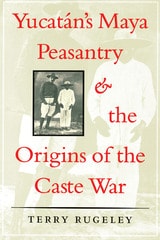
Yucatán's Maya Peasantry and the Origins of the Caste War
By Terry Rugeley
University of Texas Press, 1996
Conflicts between native Maya peoples and European-derived governments have punctuated Mexican history from the Conquest in the sixteenth century to the current Zapatista uprising in Chiapas. In this deeply researched study, Terry Rugeley delves into the 1800-1847 origins of the Caste War, the largest and most successful of these peasant rebellions.
Rugeley refutes earlier studies that seek to explain the Caste War in terms of a single issue. Instead, he explores the interactions of several major social forces, including the church, the hacienda, and peasant villagers. He uncovers a complex web of issues that led to the outbreak of war, including the loss of communal lands, substandard living conditions, the counterpoise of Catholicism versus traditional Maya beliefs, and an increasingly heavy tax burden.
Drawn from a wealth of primary documents, this book represents the first real attempt to reconstruct the history of the pre-Caste War period. In addition to its obvious importance for Mexican history, it will be illuminating background reading for everyone seeking to understand the ongoing conflict in Chiapas.
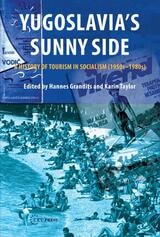
Yugoslavia's Sunny Side
A History of Tourism in Socialism (1950s–1980s)Hannes Grandits
Central European University Press, 2010
Yugoslavism
Histories Of A Failed Idea, 1918-1992Dejan Djokic
University of Wisconsin Press, 2003
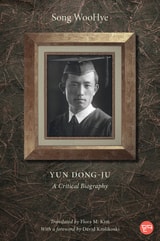
Yun Dong-ju
A Critical BiographySong WooHye
Rutgers University Press, 2026
Historian and novelist Song WooHye chronicles the life of Yun Dong-ju (1917-1945), one of the most beloved and important poets in the modern Korean literary canon, widely considered Korea's "National Poet". Beginning with the history of the North Gando region (now Yanbian, China), where Yun was born, and ending with facts behind the publication of his only and posthumous poetry collection, Sky, Wind, Star, and Poem, this critical biography elucidates who Yun Dong-ju really was, with factual descriptions of the bleak and turbulent period of Japan’s colonization of Korea.
While first working on the book in the 1980s, Song had interviewed the poet’s surviving relatives and friends, most of whom have since passed away. Without her interviews, these important first-hand accounts would have been lost. Song had an added advantage of an “insider,” as she is a niece of Song Mong-gyu, who was the poet’s first cousin and inseparable friend for life. Incorporating newly discovered materials and using interviews with the beloved poet's family and friends, this biography is the most comprehensive, definitive biography of Yun Dong-ju to date, now available in English for the first time.
This book is published with the support of the Literature Translation Institute of Korea (LTI Korea).
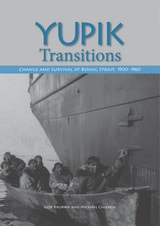
Yupik Transitions
Change and Survival at Bering Strait, 1900-1960Igor Krupnik and Michael Chlenov
University of Alaska Press, 2013
Yuthu
Community and Ritual in an Early Andean VillageAllison R. Davis
University of Michigan Press, 2011
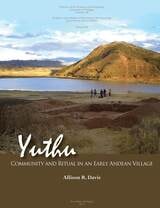
The crown jewel of the Inka Empire was their capital, Cusco. So celebrated was the Cusco of Inka times that we sometimes forget how little we know of earlier times in the region. This book presents Allison Davis’ pioneering excavations at the high-altitude Formative site of Yuthu. Davis presents all her data on early households and evidence for the villagers’ subsistence strategies, craft production, and mortuary practices. From her excavations we learn a great deal about daily life and public rituals, each conducted in a different sector of Yuthu. An unexpected bonus of Davis’ excavations was the discovery that some well-known Inka practices actually had their origin in the early villages of the Cusco region. Before her work at Yuthu, so few early houses and ceremonial structures had been published in detail for the Cusco area that we had much less evidence for understanding sacred versus secular space. Davis’ excavations contribute to our understanding of one of the most important transitions in Andean history: the shift from autonomous egalitarian villages to multicommunity polities with hereditary inequality. She is able to link archaeological houses, sites, and multisite clusters to socially meaningful units such as families, villages, and communities. Davis is also able to combine her excavations with settlement pattern data to develop a regional picture of the Formative period in Cusco. This volume is not only the first excavation report on a Formative village in the Cusco area, but is also a study that contributes new data on many traditional Andean themes, including zonal complementarity, sacred landscapes, community composition, mummies and ancestor veneration, ritual canals and religious rites, and intra-village subdivisions.
Yutopian
Archaeology, Ambiguity, and the Production of Knowledge in Northwest ArgentinaBy Joan M. Gero
University of Texas Press, 2015
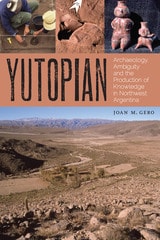
Around 400 BCE, inhabitants of the Southern Andes took up a sedentary lifestyle that included the practice of agriculture. Settlements were generally solitary or clustered structures with walled agricultural fields and animal corrals, and the first small villages appeared in some regions. Surprisingly, people were also producing and circulating exotic goods: polychrome ceramics, copper and gold ornaments, bronze bracelets and bells. To investigate the apparent contradiction between a lack of social complexity and the broad circulation of elaborated goods, archaeologist Joan Gero co-directed a binational project to excavate the site of Yutopian, an unusually well-preserved Early Formative village in the mountains of Northwest Argentina.
In Yutopian, Gero describes how archaeologists from the United States and Argentina worked with local residents to uncover the lifeways of the earliest sedentary people of the region. Gero foregounds many experiential aspects of archaeological fieldwork that are usually omitted in the archaeological literature: the tedious labor and constraints of time and personnel, the emotional landscape, the intimate ethnographic settings and Andean people, the socio-politics, the difficult decisions and, especially, the role that ambiguity plays in determining archaeological meanings. Gero’s unique approach offers a new model for the site report as she masterfully demonstrates how the decisions made in conducting any scientific undertaking play a fundamental role in shaping the knowledge produced in that project.