Results by title
22279 books match the query 'Social Science' and 71 start with y
Young Unwed Fathers
Changing Roles and Emerging Policiesedited by Robert I. Lerman and Theodora J. Ooms
Temple University Press, 1994

Young, White, and Miserable
Growing Up Female in the FiftiesWini Breines
University of Chicago Press, 2001

Young-Girls in Echoland
#Theorizing TiqqunAndrea Jonsson
University of Minnesota Press, 2021
Who’s worse, the Young-Girl or the Man-Child?
Tiqqun’s Preliminary Materials for a Theory of the Young-Girl is a controversial work of anticapitalist philosophy that has attracted musicians, playwrights, feminist theorists, and men's-rights activists since its publication in 1999. More than twenty years after its publication the international reverberation of Young-Girls shows no signs of weakening.
Young-Girls in Echoland: #Theorizing Tiqqun is a guide to this ongoing postdigital conversation, engaging with artworks and textual criticism provoked by Tiqqun’s audacious, arguably misogynistic textual voice. Heather Warren-Crow and Andrea Jonsson show how Tiqqun’s polarizing figure has grown and matured but also stayed unapologetically girly in the works of artists and scholars discussed here. Rethinking the myth of Echo and Narcissus by performing a different kind of listening, they take us on a journey from VSCO girls to basic bitches to vampires.
With an ear for the sound of Tiqqun’s polemic and its ensemble of Anglophone and Francophone rejoinders, Young-Girls in Echoland offers a model for analyzing the call-and-response of pop philosophy and for hearing the affective rhythms of communicative capitalism.
Forerunners: Ideas First is a thought-in-process series of breakthrough digital publications. Written between fresh ideas and finished books, Forerunners draws on scholarly work initiated in notable blogs, social media, conference plenaries, journal articles, and the synergy of academic exchange. This is gray literature publishing: where intense thinking, change, and speculation take place in scholarship.
Younger Than That Now
The Politics of Age in the 1960sHolly V. Scott
University of Massachusetts Press, 2016
Retrospectives of the 1960s routinely include the face of youth rebellion: long-haired students occupying campus buildings, young men burning draft cards, hippies dancing at Woodstock. In Younger Than That Now, Holly V. Scott explores how the idea of “youth” served as a tactic in the political and social activism of these years. In the early part of that decade, young white activists began to learn from the civil rights movement's defiance of racism. They examined their own lives and concluded that campus rules and the draft were repression as well. As a group, they were ripe for revolution, and their age gave them a unique perspective for understanding and protesting against injustice. In short, young people began to use their youth as a political strategy.
Some in the New Left were dubious of this strategy and asked how it might damage long-term progress. Young feminists and people of color were particularly quick to question the idea that age alone was enough to sustain a movement. And the media often presented young people as impulsive and naive, undermining their political legitimacy. In tracing how “youth” took on multiple meanings as the 1960s progressed, Scott demonstrates the power of this idea to both promote and hinder social change.

Youngest Recruits
Pre-War, War & Post-War Experiences in Western Côte d’IvoireMagali Chelpi-den Hamer
Amsterdam University Press, 2011
Youngest Recruits is an unflinching examination of the complex motivations that drive Ivoirian children in and out of armed groups. Drawing on firsthand experience with child soldiers, Magali Chelpi-Den Hamer argues that the popular narrative about children’s limited agency is insufficient to explain their participation in violent conflicts. Rather she explores in detail the pre- to postwar trajectories of child and adolescent recruits in order to show that even the youngest exercise some degree of reflection and agency when enlisting into the armed forces. In addition to shedding light on an area of great cultural concern, the author invites readers to reflect on the mixed impact of humanitarian interventions that attempt to reintegrate these children into society.

Your History with Me
The Films of Penny SiopisSarah Nuttall, editor
Duke University Press, 2024
Contributors. John Akomfrah, Sinazo Chiya, Mark Gevisser, Pumla Dineo Gqola, Katerina Gregos, Brenda Hollweg, William Kentridge, Achille Mbembe, Sarah Nuttall, Griselda Pollock, Laura Rascaroli, Zineb Sedira, Penny Siopis, Hedley Twidle, Zoé Whitley

Your Madness, Not Mine
Stories of CameroonMakuchi
Ohio University Press, 1999

Your Pocket Is What Cures You
The Politics of Health in SenegalFoley, Ellen E
Rutgers University Press, 2009
While offering a critique of neoliberal health policies, Your Pocket Is What Cures You remains grounded in ethnography to highlight the struggles of men and women who are precariously balanced on twin precipices of crumbling health systems and economic decline. Their stories demonstrate what happens when market-based health reforms collide with material, political, and social realities in African societies.
Your Time Will Come
The Law of Age Discrimination and RetirementLawrence M. Friedman
Russell Sage Foundation, 1984
Youth Media Matters
Participatory Cultures and Literacies in EducationKorina M. Jocson
University of Minnesota Press, 2018
In an information age of youth social movements, Youth Media Matters examines how young people are using new media technologies to tell stories about themselves and their social worlds. They do so through joint efforts in a range of educational settings and media environments, including high school classrooms, youth media organizations, and social media sites. Korina M. Jocson draws on various theories to show how educators can harness the power of youth media to provide new opportunities for meaningful learning and “do-it-together production.” Describing the impact that youth media can have on the broader culture, Jocson demonstrates how it supports expansive literacy practices and promotes civic engagement, particularly among historically marginalized youth.
In Youth Media Matters, Jocson offers a connective analysis of content area classrooms, career and technical education, literary and media arts organizations, community television stations, and colleges and universities. She provides examples of youth media work—including videos, television broadcasts, websites, and blogs—produced in the San Francisco Bay Area, Los Angeles, New York, and St. Louis. At a time when educators are increasingly attentive to participatory cultures yet constrained by top-down pedagogical requirements, Jocson highlights the knowledge production and transformative potential of youth media with import both in and out of the classroom.

Youth Power in Precarious Times
Reimagining Civic ParticipationMelissa Brough
Duke University Press, 2020

Youth Violence
Sex and Race Differences in Offending, Victimization, and Gang MembershipFinn-Aage Esbensen, Dana Peterson, Terrance J. Taylor and Adrienne Freng
Temple University Press, 2010
Violence by and against youth continues to be one of the most challenging subjects facing criminologists. In this comprehensive and integrated analysis of the interrelationships of youth violence, violent victimization, and gang membership, Finn-Aage Esbensen, Dana Peterson, Terrance J. Taylor and Adrienne Freng seek to understand what causes youth violence and what can be done about it. Using the results from an inclusive study they conducted of eighth-graders in eleven American cities, the authors examine how the nature, etiology, and intersections of youth violence are structured by both sex and race/ethnicity.
Youth Violence is pertinent to juvenile justice policy considerations. The authors frame their discussion within the public health perspective, focusing on risk factors associated with violent behavior. Thefindings address prevalence and incidence, as well as the demographic correlates and cumulative effects of the risk factors associated with engagement in violence. Ultimately, the theories and research methodologies here are essential for understanding the dynamics of youth violence.

Youth Who Trade Sex in the U.S.
Intersectionality, Agency, and VulnerabilityCarisa R. Showden and Samantha Majic
Temple University Press, 2018
When cases of domestic minor sex trafficking (DMST) by predatory men are reported in the media, it is often presented that a young, innocent girl has been abused by bad men with their demand for sex and profit. This narrative has shaped popular understandings of young people in the commercialized sex trades, sparking new policy responses. However, the authors of Youth Who Trade Sex in the U.S. challenge this dominant narrative as incomplete. Carisa Showden and Samantha Majic investigate young people’s engagement in the sex trades through an intersectional lens.
The authors examine the dominant policy narrative’s history and the political circumstances generating its emergence and current form. With this background, Showden and Majic review and analyze research published since 2000 about young people who trade sex since 2000 to develop an intersectional “matrix of agency and vulnerability” designed to improve research, policy, and community interventions that center the needs of these young people. Ultimately, they derive an understanding of the complex reality for most young people who sell or trade sex, and are committed to ending such exploitation.
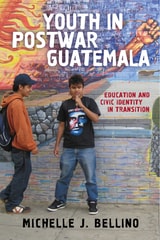
Youth in Postwar Guatemala
Education and Civic Identity in TransitionMichelle J. Bellino
Rutgers University Press, 2017
In the aftermath of armed conflict, how do new generations of young people learn about peace, justice, and democracy? Michelle J. Bellino describes how, following Guatemala’s civil war, adolescents at four schools in urban and rural communities learn about their country’s history of authoritarianism and develop civic identities within a fragile postwar democracy.
Through rich ethnographic accounts, Youth in Postwar Guatemala, traces youth experiences in schools, homes, and communities, to examine how knowledge and attitudes toward historical injustice traverse public and private spaces, as well as generations. Bellino documents the ways that young people critically examine injustice while shaping an evolving sense of themselves as civic actors. In a country still marked by the legacies of war and division, young people navigate between the perilous work of critiquing the flawed democracy they inherited, and safely waiting for the one they were promised...

Youth on Trial
A Developmental Perspective on Juvenile JusticeEdited by Thomas Grisso and Robert G. Schwartz
University of Chicago Press, 2003

Youth, Labor and Politics in East Asia
Gabriella Lukács, special issue editor
Duke University Press, 0
The economic deregulation that followed the East Asian financial crisis and recession in the 1990s blocked youth from the labor market. This issue investigates the resulting youth labor crisis and its predominant manifestations—youth unemployment and underemployment. The contributors examine these phenomena not as social anomalies but as the new faces of labor for youth. They conceptualize this situation as emblematic of a global crisis in capitalism and study how the politics of youth unemployment and underemployment emerge interconnected in China, Japan, and South Korea. The essays highlight how political leaders in these countries gamble with the futures of their young people to secure their places in neoliberal globalization, disconnecting national futures from personal ones.
Gabriella Lukács is associate professor of anthropology at the University of Pittsburgh. She is the author of Scripted Affects, Branded Selves: Television, Subjectivity, and Capitalism in 1990s Japan, also published by Duke University Press.
Contributors: Cho Hae-joang, Jennifer Jihye Chun, Mark Driscoll, Michael Fisch, Ju Hui Judy Han, Anita Koo, Gabriella Lukács, Pun Ngai, Xia Zhang

Yuarn Music Dramas
Studies in Prosody and Structure and a Complete Catalogue of Northern Arias in the Dramatic StyleDale R. Johnson
University of Michigan Press, 1981
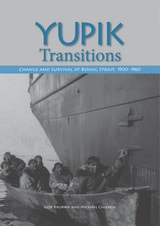
Yupik Transitions
Change and Survival at Bering Strait, 1900-1960Igor Krupnik and Michael Chlenov
University of Alaska Press, 2013
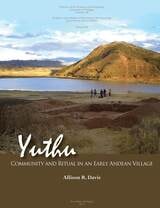
Yuthu
Community and Ritual in an Early Andean VillageAllison R. Davis
University of Michigan Press, 2011
The crown jewel of the Inka Empire was their capital, Cusco. So celebrated was the Cusco of Inka times that we sometimes forget how little we know of earlier times in the region. This book presents Allison Davis’ pioneering excavations at the high-altitude Formative site of Yuthu. Davis presents all her data on early households and evidence for the villagers’ subsistence strategies, craft production, and mortuary practices. From her excavations we learn a great deal about daily life and public rituals, each conducted in a different sector of Yuthu. An unexpected bonus of Davis’ excavations was the discovery that some well-known Inka practices actually had their origin in the early villages of the Cusco region. Before her work at Yuthu, so few early houses and ceremonial structures had been published in detail for the Cusco area that we had much less evidence for understanding sacred versus secular space. Davis’ excavations contribute to our understanding of one of the most important transitions in Andean history: the shift from autonomous egalitarian villages to multicommunity polities with hereditary inequality. She is able to link archaeological houses, sites, and multisite clusters to socially meaningful units such as families, villages, and communities. Davis is also able to combine her excavations with settlement pattern data to develop a regional picture of the Formative period in Cusco. This volume is not only the first excavation report on a Formative village in the Cusco area, but is also a study that contributes new data on many traditional Andean themes, including zonal complementarity, sacred landscapes, community composition, mummies and ancestor veneration, ritual canals and religious rites, and intra-village subdivisions.
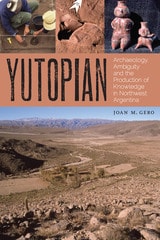
Yutopian
Archaeology, Ambiguity, and the Production of Knowledge in Northwest ArgentinaBy Joan M. Gero
University of Texas Press, 2015
Around 400 BCE, inhabitants of the Southern Andes took up a sedentary lifestyle that included the practice of agriculture. Settlements were generally solitary or clustered structures with walled agricultural fields and animal corrals, and the first small villages appeared in some regions. Surprisingly, people were also producing and circulating exotic goods: polychrome ceramics, copper and gold ornaments, bronze bracelets and bells. To investigate the apparent contradiction between a lack of social complexity and the broad circulation of elaborated goods, archaeologist Joan Gero co-directed a binational project to excavate the site of Yutopian, an unusually well-preserved Early Formative village in the mountains of Northwest Argentina.
In Yutopian, Gero describes how archaeologists from the United States and Argentina worked with local residents to uncover the lifeways of the earliest sedentary people of the region. Gero foregounds many experiential aspects of archaeological fieldwork that are usually omitted in the archaeological literature: the tedious labor and constraints of time and personnel, the emotional landscape, the intimate ethnographic settings and Andean people, the socio-politics, the difficult decisions and, especially, the role that ambiguity plays in determining archaeological meanings. Gero’s unique approach offers a new model for the site report as she masterfully demonstrates how the decisions made in conducting any scientific undertaking play a fundamental role in shaping the knowledge produced in that project.

Yuuyaraq
The Yup'ik Way of BeingDavina Carl
University of Alaska Press, 2018