Results by title
18284 books match the query 'United States' and 68 start with y
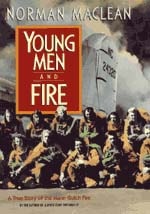
Young Men and Fire
Norman Maclean
University of Chicago Press, 1992
Young Men and Fire won the National Book Critics Circle Award in 1992.
"A magnificent drama of writing, a tragedy that pays tribute to the dead and offers rescue to the living.... Maclean's search for the truth, which becomes an exploration of his own mortality, is more compelling even than his journey into the heart of the fire. His description of the conflagration terrifies, but it is his battle with words, his effort to turn the story of the 13 men into tragedy that makes this book a classic."—from New York Times Book Review Editor's Choice, Best Books of 1992
"A treasure: part detective story, part western, part tragedy, part elegy and wholly eloquent ghost story in which the dead and the living join ranks cheerfully, if sometimes eerily, in a search for truth and the rest it brings."—Joseph Coates, Chicago Tribune
"An astonishing book. In compelling language, both homely and elegant, Young Men and Fire miraculously combines a fascinating primer on fires and firefighting, a powerful, breathtakingly real reconstruction of a tragedy, and a meditation on writing, grief and human character.... Maclean's last book will stir your heart and haunt your memory."—Timothy Foote, USA Today
"Beautiful.... A dark American idyll of which the language can be proud."—Robert M. Adams, The New York Review of Books
"Young Men and Fire is redolent of Melville. Just as the reader of Moby Dick comes to comprehend the monstrous entirety of the great white whale, so the reader of Young Men and Fire goes into the heart of the great red fire and comes out thoroughly informed. Don't hesitate to take the plunge."—Dennis Drabelle, Washington Post Book World
"Young Men and Fire is a somber and poetic retelling of a tragic event. It is the pinnacle of smokejumping literature and a classic work of 20th-century nonfiction."—John Holkeboer, The Wall Street Journal
"Maclean is always with the brave young dead. . . . They could not have found a storyteller with a better claim to represent their honor. . . . A great book."—James R. Kincaid, New York Times Book Review
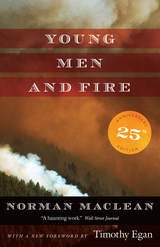
Young Men and Fire
Twenty-fifth Anniversary EditionNorman Maclean
University of Chicago Press, 2017
Alongside Maclean’s now-canonical A River Runs through It and Other Stories, Young Men and Fire is recognized today as a classic of the American West. This twenty-fifth anniversary edition of Maclean’s later triumph—the last book he would write—includes a powerful new foreword by Timothy Egan, author of The Big Burn and The Worst Hard Time. As moving and profound as when it was first published, Young Men and Fire honors the literary legacy of a man who gave voice to an essential corner of the American soul.
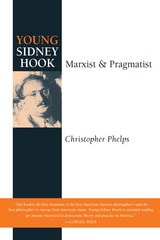
Young Sidney Hook
Marxist and PragmatistChristopher Phelps
University of Michigan Press, 2005
"This book is the best treatment of the best American Marxist philosopher-and the best philosopher to emerge from American slums. Young Sidney Hook is essential reading for anyone interested in democratic theory and practice in America."
---Cornel West
"A very detailed, and fascinating account of Hook's formative years . . . [a] first-rate contribution to the history of American leftist intellectual life."
---Richard Rorty, Raritan
"Fascinating . . . well researched and packed with information."
---Times Literary Supplement
"Succeeds in establishing the young Hook as a dedicated revolutionary Marxist."
---Amos Perlmutter, Washington Times
"A brilliant, lucid portrait of a scholar, adversarial by temperament, who turned his extraordinary powers of analysis and polemic successively against capitalism, Stalinism, and the New Left."
---Alan Wald, Monthly Review
"The best study of Hook's thought. . . . Supersedes all earlier treatments."
---David A. Hollinger and Charles Capper, The American Intellectual Tradition
"A major contribution to our understanding of Hook and the American Marxist tradition. . . . Extremely insightful."
---American Studies
"Persuasive. . . . Discovers not just a brilliant interpreter of Marx and the Russian Revolution, but a remarkable advocate and practitioner of the Americanization of Marxism."
---In These Times
"Phelps's effort to uncover, explore, and analyze Hook's forgotten leftism must be judged an unqualified success."
---Left History
"Penetrating, closely argued, and lucid. . . . An important contribution to the history of American radicalism in the 1930s."
---Labor History
One of the most controversial figures in the history of American philosophy, Sidney Hook was "an intellectual street fighter," who began his career as a brilliant Marxist thinker and "probably the greatest polemicist of [the 20th] century" (Edward Shils) before breaking with the Communist Party in the late 1930s. Turning in his later years to an allegiance with American conservatives including Richard Nixon and Ronald Reagan, Hook is now widely known as an intellectual father of the neoconservative movement.
Young Unwed Fathers
Changing Roles and Emerging Policiesedited by Robert I. Lerman and Theodora J. Ooms
Temple University Press, 1994
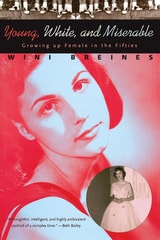
Young, White, and Miserable
Growing Up Female in the FiftiesWini Breines
University of Chicago Press, 2001
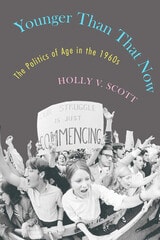
Younger Than That Now
The Politics of Age in the 1960sHolly V. Scott
University of Massachusetts Press, 2016
Retrospectives of the 1960s routinely include the face of youth rebellion: long-haired students occupying campus buildings, young men burning draft cards, hippies dancing at Woodstock. In Younger Than That Now, Holly V. Scott explores how the idea of “youth” served as a tactic in the political and social activism of these years. In the early part of that decade, young white activists began to learn from the civil rights movement's defiance of racism. They examined their own lives and concluded that campus rules and the draft were repression as well. As a group, they were ripe for revolution, and their age gave them a unique perspective for understanding and protesting against injustice. In short, young people began to use their youth as a political strategy.
Some in the New Left were dubious of this strategy and asked how it might damage long-term progress. Young feminists and people of color were particularly quick to question the idea that age alone was enough to sustain a movement. And the media often presented young people as impulsive and naive, undermining their political legitimacy. In tracing how “youth” took on multiple meanings as the 1960s progressed, Scott demonstrates the power of this idea to both promote and hinder social change.
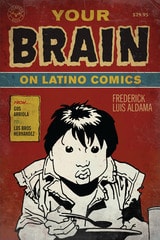
Your Brain on Latino Comics
From Gus Arriola to Los Bros HernandezBy Frederick Luis Aldama
University of Texas Press, 2009
Though the field of comic book studies has burgeoned in recent years, Latino characters and creators have received little attention. Putting the spotlight on this vibrant segment, Your Brain on Latino Comics illuminates the world of superheroes Firebird, Vibe, and the new Blue Beetle while also examining the effects on readers who are challenged to envision such worlds.
Exploring mainstream companies such as Marvel and DC as well as rising stars from other segments of the industry, Frederick Aldama provides a new reading of race, ethnicity, and the relatively new storytelling medium of comics themselves. Overview chapters cover the evolution of Latino influences in comics, innovations, and representations of women, demonstrating Latino transcendence of many mainstream techniques. The author then probes the rich and complex ways in which such artists affect the cognitive and emotional responses of readers as they imagine past, present, and future worlds.
Twenty-one interviews with Latino comic book and comic strip authors and artists, including Laura Molina, Frank Espinosa, and Rafael Navarro, complete the study, yielding captivating commentary on the current state of the trade, cultural perceptions, and the intentions of creative individuals who shape their readers in powerful ways.
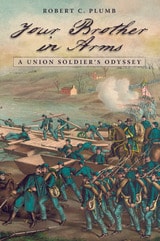
Your Brother in Arms
A Union Soldier's OdysseyRobert C. Plumb
University of Missouri Press, 2011
Your Technology Outreach Adventure
Tools for Human-Centered Problem SolvingErin Jones
American Library Association, 2019
Your Time Will Come
The Law of Age Discrimination and RetirementLawrence M. Friedman
Russell Sage Foundation, 1984

Yours Till Death
Civil War Letters of John W. CottonJohn Cotton
University of Alabama Press, 1951
Letters from a Confederate soldier to his wife during the Civil War.
Yours Till Death: Civil War Letters of John W. Cotton offers a rare and deeply personal window into the lived experience of the American Civil War through the words of an ordinary Confederate soldier. Composed of letters written by John W. Cotton to his wife in Coosa County, Alabama, this collection preserves an unfiltered, intimate record of wartime life from 1862 to 1865, revealing both the hardships of military service and the enduring ties of family and home.
Cotton, a yeoman farmer who enlisted in the Confederate Army in the spring of 1862, writes with directness and honesty about his daily experiences as he moves through the major campaigns of the war, including service in Tennessee, Kentucky, Georgia, and South Carolina. His correspondence captures not only the movements and conditions of military life—guard duty, illness, shortages, and shifting morale—but also the emotional landscape of a soldier separated from his family. His letters are filled with concern for his wife, children, and farm, illustrating the constant tension between duty to country and responsibility to home.
More than a military chronicle, Yours Till Death is also a valuable portrait of rural Southern life during wartime. Cotton’s references to crops, weather, labor, and household concerns provide insight into how families on the home front coped with absence, uncertainty, and economic strain. These details illuminate the broader social and agricultural context of the Confederacy, offering readers a richer understanding of how war reshaped everyday life for civilians as well as soldiers.
The letters, preserved and edited by historian Lucille Griffith, retain the immediacy and authenticity of Cotton’s voice. Written without the benefit of hindsight, they convey the evolving attitudes, anxieties, and hopes of a man living through one of the most turbulent periods in American history. As such, they serve as an important primary source for scholars and students, complementing official histories with the perspective of an individual whose experiences reflect those of countless others who lived and fought during the Civil War.
Yours Till Death will appeal to readers interested in Civil War studies, Southern history, and personal narratives of wartime experience. By bringing together themes of conflict, family, survival, and resilience, this collection transforms historical events into a deeply human story—one that reminds us that the past is best understood not only through battles and politics, but through the voices of those who lived it.
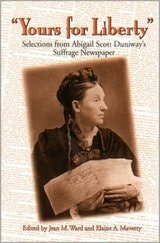
Yours for Liberty
Selections from Abigail Scott Duniway's Suffrage NewspaperJean M. Ward
Oregon State University Press, 2000
Yours
The Civil War, a Love Triangle, and the Steamboat SultanaLila Jeanne Elliott Sybesma
Indiana Historical Society Press, 2019
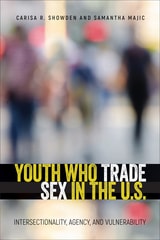
Youth Who Trade Sex in the U.S.
Intersectionality, Agency, and VulnerabilityCarisa R. Showden and Samantha Majic
Temple University Press, 2018
When cases of domestic minor sex trafficking (DMST) by predatory men are reported in the media, it is often presented that a young, innocent girl has been abused by bad men with their demand for sex and profit. This narrative has shaped popular understandings of young people in the commercialized sex trades, sparking new policy responses. However, the authors of Youth Who Trade Sex in the U.S. challenge this dominant narrative as incomplete. Carisa Showden and Samantha Majic investigate young people’s engagement in the sex trades through an intersectional lens.
The authors examine the dominant policy narrative’s history and the political circumstances generating its emergence and current form. With this background, Showden and Majic review and analyze research published since 2000 about young people who trade sex since 2000 to develop an intersectional “matrix of agency and vulnerability” designed to improve research, policy, and community interventions that center the needs of these young people. Ultimately, they derive an understanding of the complex reality for most young people who sell or trade sex, and are committed to ending such exploitation.
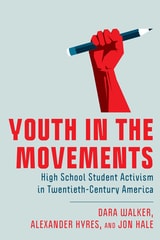
Youth in the Movements
High School Student Activism in Twentieth-Century AmericaDara Walker
Rutgers University Press, 2027
Youth in the Movements documents the history of the rise of American high school and youth activism in the United States since the Second World War. Spaces within high schools and the adults at them provided support or inspiration – both negative and positive – for youth engaged in protest, organizing, and activism. Through rich research of archival sources and oral histories, contributors reveal new perspectives on American high school and youth activism. Viewed through the eyes of high school-aged youth around the United States – in familiar locations such as Boston, New York City, and Detroit, as well as less familiar locales in the historiography, such as Salt Lake City and the Navajo Reservation – we extend our understanding of high school and how it has been experienced by youth activists in the post-World War II period.
Youth on Trial
A Developmental Perspective on Juvenile JusticeEdited by Thomas Grisso and Robert G. Schwartz
University of Chicago Press, 2003
Yugoslav-American Economic Relations Since World War II
John R. Lampe, Russell O. Prickett and Ljubisa S. Adamovic
Duke University Press, 1990
The authors describe American official and private support for Yugoslavia’s decades-long efforts at economic reform that included the first foreign investment legislation in 1967 and the first introduction of convertible currency in 1990 for any communist country. Also examined are the origins of Yugoslavia’s international debt crisis of the early 1980s and the American role in the highly complex multibillion-dollar international effort that helped Yugoslavia surmount that crisis.
In the past, U.S. support for the Yugoslav economy was proffered in part, the authors claim, to counter perceived threats from the Soviet Union and its allies. This may have enabled Yugoslavia to avoid some of the hard but necessary economic policy choices; hence, future U.S. support, the book concludes, will likely be tied more closely to the economic and political soundness of Yugoslavia’s own actions.
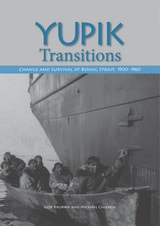
Yupik Transitions
Change and Survival at Bering Strait, 1900-1960Igor Krupnik and Michael Chlenov
University of Alaska Press, 2013