Results by title
3576 books match the query 'American' and 9 start with z
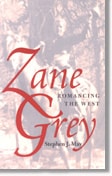
Zane Grey
Romancing The WestStephen J. May
Ohio University Press, 1997
One of the century’s most enduring American writers, Zane Grey left a legacy to our national consciousness that far outstrips the literary contribution of his often predictable plots and recurring themes. How did Grey capture the attention of millions of readers and promote the Western fantasy that continues to occupy many of the world’s leisure hours? This study assesses the Zane Grey phenomenon by examining Grey’s romantic novels in the context of his life and era.
Grey, whose roots were in Zanesville, Ohio, was the son of a dentist and practiced dentistry himself in his early adulthood. He threw over that life for one of adventure, traveling throughout the world in search of excitement, a course that ultimately led him to become one of America’s most popular authors. But he also was dogged by depression and inertia that affected his ability and will to work.
In Zane Grey: Romancing the West, author Stephen J. May traces the career of Grey by analyzing the development of his novels and popularity and the degree to which that shaped his world.
The book also investigates Grey’s personal life—from his fling with Hollywood to his passion for deep-sea fishing—illuminating the literature that shaped America’s vision of itself through one of its most enduring and cherished myths.

Zen, Poetry, the Art of Lucien Stryk
Susan Porterfield
Ohio University Press, 1993
Lucien Stryk has been a presence in American letters for almost fifty years. Those who know his poetry well will find this collection particularly gratifying. Like journeying again to places visited long ago, Stryk’s writing is both familiar and wonderfully fresh.
For those just becoming acquainted with Stryk’s work, Zen, Poetry, the Art of Lucien Stryk makes an excellent introduction. It includes his early essay, “The American Scene Versus the International Scene,” written shortly after his service in the Pacific during World War II, and “Digging In,” his first published poem, as well as some of his best-known pieces on Zen and Zen poetry. Among the latter are “Beginnings, Ends,” “Poetry and Zen,” “I Fear Nothing: A Note on the Zen Poetry of Death,” and his introduction to the great haiku poets, Issa and Basho. Selections of his most recent work include “The Red Rug: An Introduction to Poetry,” and an imagined conversation among all four leading haiku poets called “Meeting at Hagi-no-Tera.”
Porterfield’s informative collection includes essays about Stryk’s work as well as his own prose and poetry. As the volume makes clear, writing poetry is for Lucien Stryk a sacred act. It is both escape and communion, inseparable from life’s daily activities.
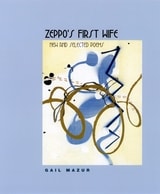
Zeppo's First Wife
New and Selected PoemsGail Mazur
University of Chicago Press, 2005
. . . Sad, so sad-compared to what?
To your earlier more oblivious state?
It never was oblivious enough-
always those presentiments of sadness
prickling the limbic. Now a voice says, Get outside
yourself, go walk on the flats. The tide's gone out—
but your little metal detector will detect little metallic coins
of enormous sadness in the teeming wet sand,
and then, the tide will come back, erasing, cleansing!
And you, standing there in the salty scouring air-
will you still be enormously sad,
While the other world, outside your tiny purview, struck
by iron, reels? World of intentional iron, pure savage
organized iron of the world, it hasn't the time
that you have for your puny enormous sadness.
Widely acclaimed for expanding the stylistic boundaries of both the narrative and meditative lyric, Gail Mazur’s poetry crackles with verbal invention as she confronts the inevitable upheavals of a lived life. Zeppo’s First Wife, which includes excerpts from Mazur’s four previous books, as well as twenty-two new poems, is epitomized by the worldly longing of the title poem, with its searching poignancy and comic bravura. Mazur’s explorations of “this fallen world, this loony world” are deeply moving acts of empathy by a singular moral sensibility—evident from the earliest poem included here, the much-anthologized “Baseball,” a stunning bird’s-eye view of human foibles and passions. Clear-eyed, full of paradoxical griefs and appetites, her poems brave the most urgent subjects—from the fraught luscious Eden of the ballpark, to the fragility of our closest human ties, to the implications for America in a world where power and war are cataclysmic for the strong as well as the weak.
Ziggurat
Peter Balakian
University of Chicago Press, 2010
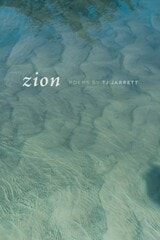
Zion
TJ Jarrett
Southern Illinois University Press, 2014
Zion, the latest collection of poems by TJ Jarrett, is the poignant study of the resonating effects of the civil rights movement on one family. Jarrett lovingly explores the minutiae of mortality and race across three generations of “Dark Girls” who have come together one summer to grieve and to remember as one of them passes to the farther shore—a place beyond retribution, where there is only forgiveness.
The Mississippi of Jarrett’s collection is alive with fireflies and locusts and murders of crows; yet for some, it is a wasteland of unanswered prayers, burning evenings, and the shades of dead or disappeared loved ones. There, the dark nights of the soul weigh long and heavy, and “every heart has its solstice, and its ache is unrelenting.”
Yet much as every solstice has an equinox, every time to kill has a time to forgive. Throughout the volume, the author imagines opportunities for compassion on multiple levels, from sweeping pardons to the most intimate of mercies. Jarrett’s faceless narrator confesses the past through conversation and exploration with notorious Mississippi governor Theodore Bilbo: two minds, two hearts, two races at last face to face.
At once brutal and achingly tender, Jarrett’s volume itself is a vibrant and musical body, singing to all its parts.
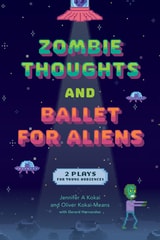
Zombie Thoughts and Ballet for Aliens
Two Plays for Young AudiencesJennifer A. Kokai and Oliver Kokai-Means with Gerard Hernandez
Vanderbilt University Press, 2025
Ballet for Aliens was co‑written with both Oliver Kokai‑Means and new playwright, a then-twelve‑year‑old Gerard Hernandez, about Gerard’s experience as a youth with Crohn’s disease. Gerard was a ballet dancer through his childhood, though his health often made this difficult, and the piece required formal ballet movement, so the production was co-created with highly regarded dance company Ballet West’s Peter Christie, their education director. A portion of this play was presented to the Utah Legislature in 2022 to argue for the importance of funding the arts in elementary schools.
Zombie Thoughts and Ballet for Aliens have gone on to be produced across the United States and internationally by school groups, universities, and professional tours of varying theatre sizes. This volume offers both plays and an introduction by Kokai and the youth playwrights, which contextualizes efforts for theatrical interventions in youth mental health.
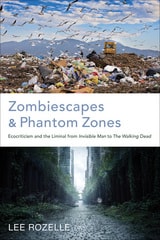
Zombiescapes and Phantom Zones
Ecocriticism and the Liminal from "Invisible Man" to "The Walking Dead"Lee Rozelle
University of Alabama Press, 2016
A Critical Journey Through Zombie Worlds and Ecological Thought.
In Zombiescapes and Phantom Zones: Ecocriticism and the Liminal from “Invisible Man” to “The Walking Dead,” Lee Rozelle chronicles the weirdest, ugliest, and most mixed-up characters to appear on the literary scene since World War II—creatures intimately linked to damaged habitats that rise from the muck, not to destroy or rule the world, but to save it. The book asks what happens to these landscapes after the madness, havoc, and destruction. What monsters and magic surface then?
Rozelle argues that zombiescapes and phantom zones depicted in the book become catalysts for environmental reanimation and sources of hope. Liminality offers exciting and useful new ways to conceptualize places that have historically proven troublesome, unwieldy, or hard to define. Zombiescapes can reduce the effects of pollution, promote environmental justice, lessen economic disparity, and localize food production. The grotesques that ooze and crawl from these passages challenge readers to consider new ways to re-inhabit broken lands at a time when energy efficiency, fracking, climate change, the Pacific trade agreement, local food production, and sustainability shape the intellectual landscape.
Rozelle focuses on literary works from 1950 to 2015—the zombiescapes and monsterscapes of post–World War II literature—that portray in troubling and often devastating ways the “brownfields” that have been divested of much of their biodiversity and ecological viability. However, he also highlights how these literary works suggest a new life and new potential for such environments. With an unlikely focus on places of ruination and an application of interdisciplinary, transnational approaches to a range of fields and texts, Rozelle advances the notion that places of distortion might become a nexus where revelation and advocacy are possible again.
Zombiescapes and Phantom Zones has much to offer to various fields of scholarship, including literary studies, ecocriticism, and environmental studies. Research, academic, and undergraduate audiences will be captivated by Rozelle’s lively prose and unique anthropological, ecocritical, and literary analyses.
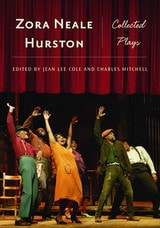
Zora Neale Hurston
Collected PlaysJean Lee Cole and Charles Mitchell
Rutgers University Press, 2008
Though she died penniless and forgotten, Zora Neale Hurston is now recognized as a major figure in African American literature. Best known for her 1937 novel Their Eyes Were Watching God, she also published numerous short stories and essays, three other novels, and two books on black folklore.
Even avid readers of Hurston’s prose, however, may be surprised to know that she was also a serious and ambitious playwright throughout her career. Although several of her plays were produced during her lifetime—and some to public acclaim—they have languished in obscurity for years. Even now, most critics and historians gloss over these texts, treating them as supplementary material for understanding her novels. Yet, Hurston’s dramatic works stand on their own merits and independently of her fiction.
Now, eleven of these forgotten dramatic writings are being published together for the first time in this carefully edited and annotated volume. Filled with lively characters, vibrant images of rural and city life, biblical and folk tales, voodoo, and, most importantly, the blues, readers will discover a “real Negro theater” that embraces all the richness of black life.
Zorba's Daughter
poemsElisabeth Murawski
Utah State University Press, 2010
In Zorba's Daughter, the 14th volume in the Swenson Poetry Award series, Elisabeth Murawski speaks from a vital and unique sensibility, finding in ordinary images an opening to the passion of human courage in the face of deep existential pain and ambivalence. These poems awaken our joy as well as guilt, our hope as well as grief. They often evoke a sorrowful music, like the voice of mourning, but even in pointing to "the black holes of heaven," Murawski turns our gaze upward.
Zorba's Daughter was selected for the Swenson Award by the distinguished poet Grace Schulman. An icon of the literary scene, Schulman is acclaimed for her searching, highly original, lyric poetry, as well as for her teaching and her influential tenure as the poetry editor at The Nation, (1971-2006). Harold Bloom calls her "one of the permanent poets of her generation." Richard Howard says, "she is a torch."