Results by title
1882 books match the query 'Criticism and interpretation' and 6 start with z

Zen, Poetry, the Art of Lucien Stryk
Susan Porterfield
Ohio University Press, 1993
Lucien Stryk has been a presence in American letters for almost fifty years. Those who know his poetry well will find this collection particularly gratifying. Like journeying again to places visited long ago, Stryk’s writing is both familiar and wonderfully fresh.
For those just becoming acquainted with Stryk’s work, Zen, Poetry, the Art of Lucien Stryk makes an excellent introduction. It includes his early essay, “The American Scene Versus the International Scene,” written shortly after his service in the Pacific during World War II, and “Digging In,” his first published poem, as well as some of his best-known pieces on Zen and Zen poetry. Among the latter are “Beginnings, Ends,” “Poetry and Zen,” “I Fear Nothing: A Note on the Zen Poetry of Death,” and his introduction to the great haiku poets, Issa and Basho. Selections of his most recent work include “The Red Rug: An Introduction to Poetry,” and an imagined conversation among all four leading haiku poets called “Meeting at Hagi-no-Tera.”
Porterfield’s informative collection includes essays about Stryk’s work as well as his own prose and poetry. As the volume makes clear, writing poetry is for Lucien Stryk a sacred act. It is both escape and communion, inseparable from life’s daily activities.
Zhang Hongtu
Expanding Visions of a Shrinking WorldLuchia Meihua Lee and Jerome Silbergeld, editors
Duke University Press, 2015
From his early work in China during the Cultural Revolution to his decades as an artist in New York, Zhang reflects the complex attitudes of a scholar-artist toward modernity, as well as toward Asian and Western societies and himself. Placing Zhang in the context of his cultural milieu both in China and in the Chinese immigrant artist community in America, this volume's contributors examine his adaptations of classic art to reflect a contemporary sensibility, his relation to Cubism and Social Realism, his collaboration with the celebrated fashion designer Vivienne Tam, and his visual critique of China's current environmental crisis. Zhang's work will be on display at the Queens Museum in New York City from October 17, 2015 to March 6, 2016.
Contributors: Julia F. Andrews, Alexandra Chang, Tom Finkelpearl, Michael Fitzgerald, Wu Hung, Luchia Meihua Lee, Morgan Perkins, Kui Yi Shen, Jerome Silbergeld, Eugenie Tsai, Thuy Linh Nguyen Tu, Lilly Wei
Co-published by the Queens Museum and Duke University Press.
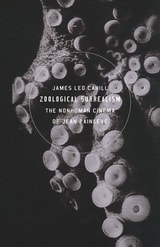
Zoological Surrealism
The Nonhuman Cinema of Jean PainlevéJames Leo Cahill
University of Minnesota Press, 2019
An archive-based, in-depth analysis of the surreal nature and science movies of the pioneering French filmmaker Jean Painlevé
Before Jacques-Yves Cousteau, there was Jean Painlevé, a pioneering French scientific and nature filmmaker with a Surrealist’s eye. Creator of more than two hundred films, his studies of strange animal worlds doubled as critical reimaginations of humanity. With an unerring eye for the uncanny and unexpected, Painlevé and his assistant Geneviève Hamon captured oneiric octopuses, metamorphic crustaceans, erotic seahorses, mythic vampire bats, and insatiable predatory insects.
Zoological Surrealism draws from Painlevé’s early oeuvre to rethink the entangled histories of cinema, Surrealism, and scientific research in interwar France. Delving deeply into Painlevé’s archive, James Leo Cahill develops an account of “cinema’s Copernican vocation”—how it was used to forge new scientific discoveries while also displacing and critiquing anthropocentric viewpoints.
From Painlevé’s engagements with Sergei Eisenstein, Georges Franju, and competing Surrealists to the historiographical dimensions of Jean Vigo’s concept of social cinema, Zoological Surrealism taps never-before-examined sources to offer a completely original perspective on a cutting-edge filmmaker. The first extensive English-language study of Painlevé’s early films and their contexts, it adds important new insight to our understanding of film while also contributing to contemporary investigations of the increasingly surreal landscapes of climate change and ecological emergency.

Zoological Surrealism
The Nonhuman Cinema of Jean PainlevéJames Leo Cahill
University of Minnesota Press, 2019
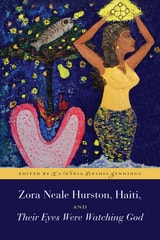
Zora Neale Hurston, Haiti, and Their Eyes Were Watching God
La Vinia Delois Jennings
Northwestern University Press, 2013
Zora Neale Hurston wrote her most famous novel, Their Eyes Were Watching God, while in Haiti on a trip funded by a Guggenheim fellowship to research the region’s transatlantic folk and religious culture; this work grounded what would become her ethnography Tell My Horse: Voodoo and Life in Haiti and Jamaica. The essays in Zora Neale Hurston, Haiti, and “Their Eyes Were Watching God” persuasively demonstrate that Hurston’s study of Haitian Voudoun informed the characterization, plotting, symbolism, and theme of her novel. Much in the way that Voudoun and its North American derivative Voodoo are syncretic religions, Hurston’s fiction enacts a syncretic, performative practice of reference, freely drawing upon Greco-Roman, Judeo-Christian, and Haitian Voudoun mythologies for its political, aesthetic, and philosophical underpinnings. Zora Neale Hurston, Haiti, and “Their Eyes Were Watching God” connects Hurston’s work more firmly to the cultural and religious flows of the African diaspora and to the literary practice by twentieth-century American writers of subscripting in their fictional texts symbols and beliefs drawn from West and Central African religions.
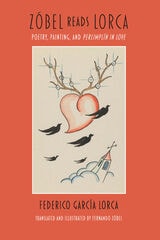
Zóbel Reads Lorca
Poetry, Painting, and Perlimplín In LoveFederico García Lorca
Swan Isle Press, 2022
Painting, poetry, and music come together in Zóbel Reads Lorca, as Fernando Zóbel, a Harvard student who would become one of Spain’s most famous painters, translates and illustrates Federico García Lorca’s haunting play about the wounds of love.
The premiere of Amor de Don Perlimplín con Belisa en su jardín, an “erotic allelujia” which Lorca once called his most cherished play, was shut down in 1928 by Spanish government censors who confiscated the manuscript and locked it away in the pornography section of a state archive. Lorca rewrote the work in New York, and an amateur theater group brought it to the Spanish stage a few years later. Since his death, the play has also been transformed into ballet and opera.
Zóbel Reads Lorca presents Zóbel’s previously unpublished translation and features contextual essays from several scholars. Art historian Felipe Pereda studies Lorca in the context of Zóbel’s development as a painter, Luis Fernández Cifuentes describes the precarious and much-debated state of the humanities in Zóbel’s Harvard and throughout the United States in the 1940s, and Christopher Maurer delves into musical and visual aspects of the play’s American productions.