Results by title
2706 books match the query 'European' and 5 start with z

Zapolska's Women
Three Plays: Malka Szwarcenkopf, The Man, and Miss MaliczewskaGabriela Zapolska
Intellect Books, 2009
Gabriela Zapolska (1857–1921) was one of the foremost modernist Polish playwrights. Zapolska’s Women features three of her performance texts that focus on the economic and social pressures faced by women in partitioned Poland at the end of the eighteenth century. In addition to the plays, Zapolska’s Women provides a detailed biography of Zapolska, relating her life story to the themes of each play; an analysis of her significance within Polish and European literary and theatrical traditions; and background on the social and historical conditions within Poland during the time the plays were written and originally performed. This informative collection of groundbreaking plays will introduce an English-speaking audience to Zapolska’s important work.
Zayde
A Spanish RomanceMarie-Madeleine Pioche de La Vergne, Comtesse de Lafayette
University of Chicago Press, 2006
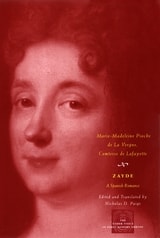
Zayde unfolds during the long medieval struggle between Christians and Muslims for control of the Iberian Peninsula; Madame de Lafayette (1634-93) takes the reader on a Mediterranean tour typical of classical and seventeenth-century romances—from Catalonia to Cyprus and back again—with battles, prophecies, and shipwrecks dotting the crisscrossed paths of the book’s noble lovers. But where romance was long and episodic, Zayde possesses a magisterial architecture of suspense. Chaste and faithful heroines and heroes are replaced here by characters who are consumed by jealousy and unable to love happily. And, unlike in traditional romance, the reader is no longer simply expected to admire deeds of bravery and virtue, but instead is caught up in intense first-person testimony on the psychology of desire.
Unavailable in English for more than two centuries, Zayde reemerges here in Nicholas Paige’s accessible and vibrant translation as a worthy representative of a once popular genre and will be welcomed by readers of French literature and students of the European novelistic tradition.
Zenobia
Gellu Naum
Northwestern University Press, 1995
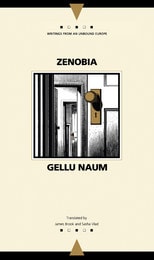
His wife, artist Lyggia Naum, was the inspiration for the title character. In this 1985 masterpiece, penned in the twilight of the totalitarian regime of Nicolae Ceausescu, love, in all its intimate, carnal communion, lights the path through the dark forest, the streets of Bucharest, and the desert swamps. The narrator, speaking from the depths of love and despair, invites the reader to share his quest. Highly praised now and then, Zenobia is an enduring avant-garde classic of twentieth-century Eastern European literature.
Zionism in Translation
Encounters in the German-Hebrew ArchiveNa'ama Rokem
University of Chicago Press, 2026
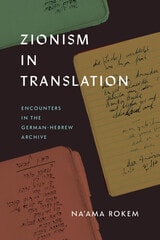
Examining a network of correspondences and encounters that cross between German and Hebrew, Zionism in Translation argues that the space between the languages enabled ambivalent conversations about the foundation of the State of Israel.
Zionism in Translation concerns exchanges—primarily of letters but also drafts, reviews, and other ephemera—sent to or from Jerusalem in the decades after 1948. All were written in German and Hebrew by a fascinating range of literary figures, including Hannah Arendt, Gershom Scholem, Yehuda Amichai, Ludwig Strauss, Erich Auerbach, Walter Benjamin, Leah Goldberg, Peter Szondi, Paul Celan, and Tuvia Ruebner. Na’ama Rokem illuminates the complexities that emerge as the two languages mix in this extraordinary epistolary network.
The writers that Rokem studies here contend with the genocidal violence that brought the rich historical relation between German and Hebrew to a seeming end. They also grapple, in different ways, with the new reality in Israel/Palestine in the wake of the founding of the State of Israel and the Palestinian Nakba. The bilingual conversation that crosses over between German and Hebrew in these letters thus centers around the question of Jewish fate in the twentieth century and is immersed in negotiations about Jewish nationalism, the Zionist movement, and the possibilities of Jewish poetry. In the space between German and Hebrew, Rokem argues, the protagonists of her story voice ambivalences and hesitancies not found elsewhere.
Zionism in Translation joins a growing body of scholarship that uncovers the complex modes of belonging and resistance that unfold around the Zionist movement in the twentieth century. It will interest all readers concerned with modern Jewish intellectual, cultural, and literary history, the history of Zionism, and writers such as Arendt or Celan.
Zurich Transit
Max Frisch
Seagull Books, 2010
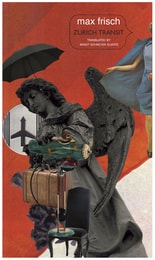
This screenplay by Swiss playwright and novelist Max Frisch was developed from an episode in his 1964 novel Gantenbein, or A Wilderness of Mirrors. At the center of both works is Theo Ehrismann, a man who cannot seem to change his life no matter how many times he resolves to do so. Chance comes to Theo one day upon returning from a trip abroad—he arrives home to read his own obituary in the paper. He shows up just on time for his own funeral and observes the attending mourners, and yet he is not able to reveal himself to them, and especially not to his wife. “How does one say that he is alive,” wonders Theo.
Life, as Frisch said, “is the sum of events that happen by chance, and it always could as well have turned out differently; there is not a single action or omission that does not allow for variables in the future.” Zurich Transit presents Frisch at the height of his dramatic powers and exemplifies his ardent believe in a dramaturgy of coincidence rather than causality.