Results by title
1445 books match the query 'Life Sciences' and 4 start with z
Zambian Plants
Their Vernacular Names and UsesDennis G. Fowler
Royal Botanic Gardens, Kew, 2007
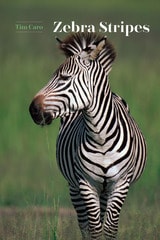
Zebra Stripes
Tim Caro
University of Chicago Press, 2016
Popular explanations for stripes range from camouflage to confusion of predators, social facilitation, and even temperature regulation. It is a serious challenge to test these proposals on large animals living in the wild, but using a combination of careful observations, simple field experiments, comparative information, and logic, Caro is able to weigh up the pros and cons of each idea. Eventually—driven by experiments showing that biting flies avoid landing on striped surfaces, observations that striping is most intense where biting flies are abundant, and knowledge of zebras’ susceptibility to biting flies and vulnerability to the diseases that flies carry—Caro concludes that black-and-white stripes are an adaptation to thwart biting fly attack. Not just a tale of one scientist’s quest to solve a classic mystery of biology, Zebra Stripes is also a testament to the tremendous value of longitudinal research in behavioral ecology, demonstrating how observation, experiment, and comparative research can together reshape our understanding of the natural world.
Zookeeping
An Introduction to the Science and TechnologyEdited by Mark D. Irwin, John B. Stoner, and Aaron M. Cobaugh
University of Chicago Press, 2013
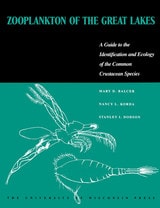
Zooplankton of the Great Lakes
A Guide to the Identification and Ecology of the Common Crustacean SpeciesMary D. Balcer, Nancy L. Korda, and Stanely I. Dodson
University of Wisconsin Press, 1984
Researchers, instructors, and students will appreciate this compilation of detailed information on the crustacean zooplankton of the Great Lakes. The authors have gathered data from more than three hundred sources and organized into a useful laboratory manual. The taxonomic keys are easy to use, suitable for both classroom and laboratory identifications. Detailed line drawings are provided to help confirm the identification of the major species. Zoologists, limnologists, hydrobiologists, fish ecologists, and those who study or monitor water quality will welcome this dependable new identification tool.
A concise summary of pertinent information on the ecology of these zooplankton is provided in the main body of the text. A check-list of all species reported from each of the Great Lakes and notes on the distribution and abundance of more than a hundred species were compiled from an extensive search of existing literature. In addition, the authors collected samples from several locations on Lake Superior, in order to provide information on the abundance and life histories of the major crustacean species.