Results by title
1787 books match the query 'Literary Collections' and 6 start with z
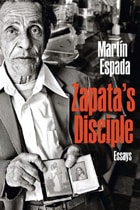
Zapata's Disciple
EssaysMartín Espada
Northwestern University Press, 2016
The ferocious acumen with which the award-winning poet Martín Espada attacks issues of social injustice in Zapata’s Disciple makes it no surprise that the book has been the subject of bans in both Arizona and Texas, targeted for its presence in the Mexican American Studies curriculum of Tucson’s schools and for its potential to incite a riot among Texas prison populations. This new edition of Zapata’s Disciple, which won the 1999 Independent Publisher Book Award for Essay / Creative Nonfiction, opens with an introduction in which the author chronicles this history of censorship and continues his lifelong fight for freedom of expression. A dozen of Espada’s poems, tender and wry as they are powerful, interweave with essays that address the denigration of the Spanish language by American cultural arbiters, castigate Nike for the exploitation of its workers, reflect upon National Public Radio’s censorship of Espada’s poem about Mumia Abu- Jamal, and more. Zapata’s Disciple is a potent assault on the continued marginalization of Latinos and other poor and working-class citizens in American society, and the collection breathes with a revolutionary zeal that is as relevant now as when it was first published.

Zen, Poetry, the Art of Lucien Stryk
Susan Porterfield
Ohio University Press, 1993
Lucien Stryk has been a presence in American letters for almost fifty years. Those who know his poetry well will find this collection particularly gratifying. Like journeying again to places visited long ago, Stryk’s writing is both familiar and wonderfully fresh.
For those just becoming acquainted with Stryk’s work, Zen, Poetry, the Art of Lucien Stryk makes an excellent introduction. It includes his early essay, “The American Scene Versus the International Scene,” written shortly after his service in the Pacific during World War II, and “Digging In,” his first published poem, as well as some of his best-known pieces on Zen and Zen poetry. Among the latter are “Beginnings, Ends,” “Poetry and Zen,” “I Fear Nothing: A Note on the Zen Poetry of Death,” and his introduction to the great haiku poets, Issa and Basho. Selections of his most recent work include “The Red Rug: An Introduction to Poetry,” and an imagined conversation among all four leading haiku poets called “Meeting at Hagi-no-Tera.”
Porterfield’s informative collection includes essays about Stryk’s work as well as his own prose and poetry. As the volume makes clear, writing poetry is for Lucien Stryk a sacred act. It is both escape and communion, inseparable from life’s daily activities.
Zenobia
Gellu Naum
Northwestern University Press, 1995
His wife, artist Lyggia Naum, was the inspiration for the title character. In this 1985 masterpiece, penned in the twilight of the totalitarian regime of Nicolae Ceausescu, love, in all its intimate, carnal communion, lights the path through the dark forest, the streets of Bucharest, and the desert swamps. The narrator, speaking from the depths of love and despair, invites the reader to share his quest. Highly praised now and then, Zenobia is an enduring avant-garde classic of twentieth-century Eastern European literature.
Zero at the Bone
Rewriting Life after a SnakebiteErec Toso
University of Arizona Press, 2008
Zero at the Bone is a deeply personal narrative about Toso’s physical recovery and emotional transformation following this near-death experience. In elegant prose that inspires as much as it unsettles, Toso takes the reader along with him on his expedition into the uncharted territory of cellular damage, hallucination, and ultimately profound spiritual awakening. On all levels, it is a book about pain. Toso spares no detail in his accounts of agonizing hospital procedures, in his revelations about rattlesnake lore, or in his descriptions of the wide-ranging effects of snake venom. But quickly the reader realizes that the physical pain of the snakebite is only the more tangible marker of the psychological pain and turmoil that Toso endures in the emotional journey that ensues.
In the months that follow his terrifying attack, priorities, daily habits, family relations, and definitions of self all come into question. What is predictable becomes problematic; what is comfortable becomes disconcerting. In a story that hinges on a common fear about an unlikely event—that of a snakebite—Toso uncovers a more widespread reality that many of us do not fear enough—complacency.
Zigzagger
StoriesManuel Muñoz and Helena María Viramontes
Northwestern University Press, 2025
Manuel Muñoz’s first collection of stories goes beyond the traditional family myths of Mexican American literature and the image of California’s Central Valley as a lush world of rural tranquility, instead exploring the constant struggle of characters against their physical and personal surroundings. A teenage boy learns the consequences of succumbing to the lure of a town outsider; a young farm worker attempts to hide his supervision of a group of children from the town police; a father must expose his own secrets after his son is found murdered in a highway motel. Experiencing conflicts of family and sexuality and the pain of loss and memory, the characters in Zigzagger seek to reconcile themselves with the rural towns of their upbringing—places that, by nature, are bordered by loneliness.
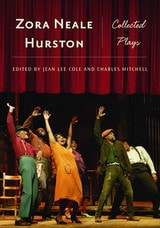
Zora Neale Hurston
Collected PlaysJean Lee Cole and Charles Mitchell
Rutgers University Press, 2008
Though she died penniless and forgotten, Zora Neale Hurston is now recognized as a major figure in African American literature. Best known for her 1937 novel Their Eyes Were Watching God, she also published numerous short stories and essays, three other novels, and two books on black folklore.
Even avid readers of Hurston’s prose, however, may be surprised to know that she was also a serious and ambitious playwright throughout her career. Although several of her plays were produced during her lifetime—and some to public acclaim—they have languished in obscurity for years. Even now, most critics and historians gloss over these texts, treating them as supplementary material for understanding her novels. Yet, Hurston’s dramatic works stand on their own merits and independently of her fiction.
Now, eleven of these forgotten dramatic writings are being published together for the first time in this carefully edited and annotated volume. Filled with lively characters, vibrant images of rural and city life, biblical and folk tales, voodoo, and, most importantly, the blues, readers will discover a “real Negro theater” that embraces all the richness of black life.