Results by title
3258 books match the query 'Performing Arts' and 8 start with z

Zapolska's Women
Three Plays: Malka Szwarcenkopf, The Man, and Miss MaliczewskaGabriela Zapolska
Intellect Books, 2009
Gabriela Zapolska (1857–1921) was one of the foremost modernist Polish playwrights. Zapolska’s Women features three of her performance texts that focus on the economic and social pressures faced by women in partitioned Poland at the end of the eighteenth century. In addition to the plays, Zapolska’s Women provides a detailed biography of Zapolska, relating her life story to the themes of each play; an analysis of her significance within Polish and European literary and theatrical traditions; and background on the social and historical conditions within Poland during the time the plays were written and originally performed. This informative collection of groundbreaking plays will introduce an English-speaking audience to Zapolska’s important work.
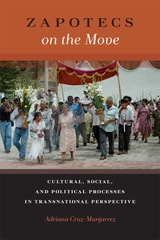
Zapotecs on the Move
Cultural, Social, and Political Processes in Transnational PerspectiveCruz-Manjarrez, Adriana
Rutgers University Press, 2013
Based on multi-site fieldwork conducted over a five-year period, Adriana Cruz-Manjarrez analyzes how and why Yalálag Zapotec identity and culture have been reconfigured in the United States, using such cultural practices as music, dance, and religious rituals as a lens to bring this dynamic process into focus. By illustrating the sociocultural, economic, and political practices that link immigrants in Los Angeles to those left behind, the book documents how transnational migration has reflected, shaped, and transformed these practices in both their place of origin and immigration.
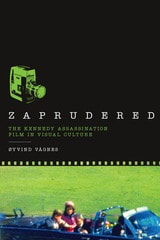
Zaprudered
The Kennedy Assassination Film in Visual CultureBy Øyvind Vågnes
University of Texas Press, 2011
Winner, Peter C. Rollins Book Award, 2012
As the fiftieth anniversary of the Kennedy assassination approaches, the traumatic aspects of the tragedy continue to haunt our perceptions of the 1960s. One reason for this lies in the home movie of the incident filmed by Abraham Zapruder, a bystander who became one of the twentieth century's most important accidental documentarians.
The first book devoted exclusively to the topic, Zaprudered traces the journey of the film and its effect on the world's collective imagination. Providing insightful perspective as an observer of American culture, Norwegian media studies scholar Øyvind Vågnes begins by analyzing three narratives that are projections of Zapruder's images: performance group Ant Farm's video The Eternal Frame, Don DeLillo's novel Underworld, and an episode from Seinfeld. Subsequent topics he investigates include Dealey Plaza's Sixth Floor Museum, Zoran Naskovski's installation Death in Dallas, assassin video games, and other artifacts of the ways in which the footage has made a lasting impact on popular culture and the historical imagination. Vågnes also explores the role of other accidental documentarians, such as those who captured scenes of 9/11.
Zapruder's footage has never yielded a conclusive account of what happened in Dealey Plaza. Zaprudered thoroughly examines both this historical enigma and its indelible afterimages in our collective imagination.
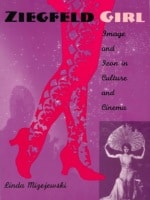
Ziegfeld Girl
Image and Icon in Culture and CinemaLinda Mizejewski
Duke University Press, 1999
Mizejewski traces the Ziegfeld Girl’s connections to turn-of-the-century celebrity culture, black Broadway, the fashion industry, and the changing sexual and gender identities evident in mainstream entertainment during the Ziegfeld years. In addition, she emphasizes how crises of immigration and integration made the identity and whiteness of the American Girl an urgent issue on Broadway’s revue stages during that era. Although her focus is on the showgirl as a “type,” the analysis is intermingled with discussions of figures like Anna Held, Fanny Brice, and Bessie McCoy, the Yama Yama girl, as well as Ziegfeld himself. Finally, Mizejewski discusses the classic American films that have most vividly kept this showgirl alive in both popular and camp culture, including The Great Ziegfeld, Ziegfeld Girl, and the Busby Berkeley musicals that cloned Ziegfeld’s showgirls for decades.
Ziegfeld Girl will appeal to scholars and students in American studies, popular culture, theater and performance studies, film history, gender studies, gay and lesbian studies, and social history.
Zombie Cinema
Olney, Ian
Rutgers University Press, 2017
Zombie Cinema is a lively and accessible introduction to this massively popular genre. Presenting a historical overview of zombie appearances in cinema and on television, Ian Olney also considers why, more than any other horror movie monster, zombies have captured the imagination of twenty-first-century audiences.
Surveying the landmarks of zombie film and TV, from White Zombie to The Walking Dead, the book also offers unique insight into why zombies have gone global, spreading well beyond the borders of American and European cinema to turn up in films from countries as far-flung as Cuba, India, Japan, New Zealand, and Nigeria. Both fun and thought-provoking, Zombie Cinema will give readers a new perspective on our ravenous hunger for the living dead.
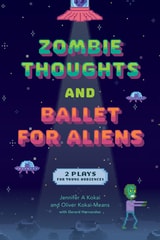
Zombie Thoughts and Ballet for Aliens
Two Plays for Young AudiencesJennifer A. Kokai and Oliver Kokai-Means with Gerard Hernandez
Vanderbilt University Press, 2025
Ballet for Aliens was co‑written with both Oliver Kokai‑Means and new playwright, a then-twelve‑year‑old Gerard Hernandez, about Gerard’s experience as a youth with Crohn’s disease. Gerard was a ballet dancer through his childhood, though his health often made this difficult, and the piece required formal ballet movement, so the production was co-created with highly regarded dance company Ballet West’s Peter Christie, their education director. A portion of this play was presented to the Utah Legislature in 2022 to argue for the importance of funding the arts in elementary schools.
Zombie Thoughts and Ballet for Aliens have gone on to be produced across the United States and internationally by school groups, universities, and professional tours of varying theatre sizes. This volume offers both plays and an introduction by Kokai and the youth playwrights, which contextualizes efforts for theatrical interventions in youth mental health.
Zombies in the Academy
Living Death in Higher EducationEdited by Andrew Whelan, Ruth Walker, and Christopher Moore
Intellect Books, 2013
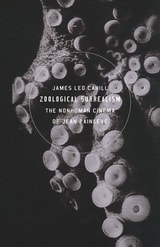
Zoological Surrealism
The Nonhuman Cinema of Jean PainlevéJames Leo Cahill
University of Minnesota Press, 2019
An archive-based, in-depth analysis of the surreal nature and science movies of the pioneering French filmmaker Jean Painlevé
Before Jacques-Yves Cousteau, there was Jean Painlevé, a pioneering French scientific and nature filmmaker with a Surrealist’s eye. Creator of more than two hundred films, his studies of strange animal worlds doubled as critical reimaginations of humanity. With an unerring eye for the uncanny and unexpected, Painlevé and his assistant Geneviève Hamon captured oneiric octopuses, metamorphic crustaceans, erotic seahorses, mythic vampire bats, and insatiable predatory insects.
Zoological Surrealism draws from Painlevé’s early oeuvre to rethink the entangled histories of cinema, Surrealism, and scientific research in interwar France. Delving deeply into Painlevé’s archive, James Leo Cahill develops an account of “cinema’s Copernican vocation”—how it was used to forge new scientific discoveries while also displacing and critiquing anthropocentric viewpoints.
From Painlevé’s engagements with Sergei Eisenstein, Georges Franju, and competing Surrealists to the historiographical dimensions of Jean Vigo’s concept of social cinema, Zoological Surrealism taps never-before-examined sources to offer a completely original perspective on a cutting-edge filmmaker. The first extensive English-language study of Painlevé’s early films and their contexts, it adds important new insight to our understanding of film while also contributing to contemporary investigations of the increasingly surreal landscapes of climate change and ecological emergency.