Results by title
6 books match the query 'Łódź'
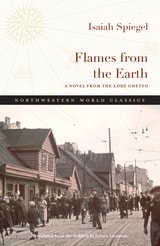
Flames from the Earth
A Novel from the Lódz GhettoIsaiah Spiegel, translated from the Yiddish by Julian Levinson
Northwestern University Press, 2023
Flames from the Earth: A Novel from the Łódź Ghetto is an autobiographical novel written by Isaiah Spiegel, one of the most revered Yiddish authors to survive the Holocaust. Originally published in Israel in 1966, the novel brings together material that Spiegel wrote while imprisoned in the Łódź Ghetto, which he recovered from a cellar when he returned from Auschwitz after the war. The only works by Spiegel previously available to English readers have been short stories.
In this, his first novel, Spiegel explores a complex web of characters in and around the Łódź Ghetto: Vigdor and Gitele, lovers who are involved in the ghetto resistance movement; Nicodem, a Polish priest, who hides a member of the Jewish underground; Stefan Kaczmarek, a Polish tavern keeper who betrays Nicodem to preserve his own smuggling business; Franz Jessike, a Nazi guard who blackmails local Poles for personal gain; and Chaim Vidaver, the heroic leader of the ghetto resistance. Based largely on historical events, the novel’s lyrical style echoes its emotional intensity.
Gripping and atmospheric, Flames from the Earth honors daring acts of heroism and human connections forged amid unthinkable conditions. Spiegel’s novel represents an important contribution to the archive of literary depictions of historical trauma.
Ghetto Kingdom
Tales of the Lodz GhettoIsaiah Spiegel
Northwestern University Press, 1998
The stories examine the relationship between inmates and their families, their friends, their Christian former neighbors, the German soldiers, and, ultimately, the world of hopelessness and desperation that surrounded them. In using his creative powers to transform the suffering and death of his people into stories that preserve their memory, Spiegel succeeds in affirming the humanity and dignity the Germans were so intent on destroying.
Originally published as Malchut geto (Malkhes geto) in Yiddish.
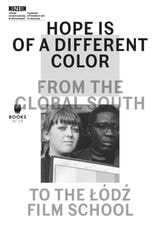
Hope Is of a Different Color
From the Global South to the Lodz Film SchoolEdited by Magda Lipska and Monika Talarczyk
Museum of Modern Art in Warsaw, 2020
As Poland’s second-largest city, Łódź was a hub for international students who studied in Poland from the mid-1960s to 1989. The Łódź Film School, a member of CILECT since 1955, was a favored destination, with students from Africa, Latin America, and the Middle East accounting for one-third of its international student body. Despite the school’s international reputation, the experience of its filmmakers from the Global South is little known beyond Poland.
Hope Is of a Different Color addresses the history of student exchanges between the Global South and the Polish People’s Republic during the Cold War. It sheds light on the experiences and careers of a generation of young filmmakers at Łódź, many of whom went on to achieve success as artists in their home countries, and provides insight into emerging areas of research and race relations in Central and Eastern Europe. The essays reflect on these issues from multiple perspectives, considering sociology, political science, art, and film history. The book also features previously unpublished photographs and film stills from private archives along with visual and written material collected at the Łódź Film School.
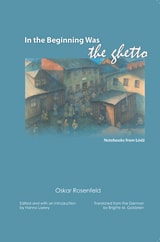
In the Beginning Was the Ghetto
Notebooks from LodzOskar Rosenfeld
Northwestern University Press, 2002
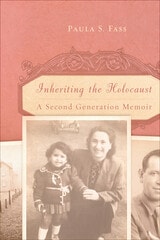
Inheriting the Holocaust
A Second-Generation MemoirPaula S. Fass
Rutgers University Press, 2011
Fass begins her journey through time and relationships when she travels to Poland and locates birth certificates of the murdered siblings she never knew. That journey to recover her family's story provides her with ever more evidence for the perplexing reliability of memory and its winding path toward historical reconstruction. In the end, Fass recovers parts of her family's history only to discover that Poland is rapidly re-imagining the role Jews played in the nation's past.
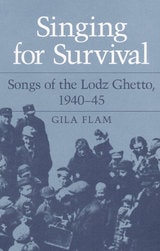
SINGING FOR SURVIVAL
"SONGS OF THE LODZ GHETTO, 1940-45"Gila Flam
University of Illinois Press, 1992
"An extremely accurate and valuable work. There is nothing like it in either the extensive holocaust literature or the ethnomusicology literature."
-- Mark Slobin, author of Chosen Voices: The Story of the American Cantorate