Results by title
7 books match the query '100 Years'
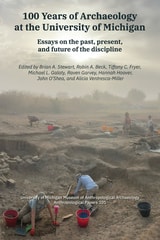
100 Years of Archaeology at the University of Michigan
Essays on the Past, Present, and Future of the DisciplineEdited by Brian A. Stewart, Robin A. Beck, Tiffany C. Fryer, Michael L. Galaty, Raven Garvey, Hannah Hoover, John O’Shea, and Alicia Ventresca-Miller
University of Michigan Press, 2025
The University of Michigan has been at the forefront of archaeological research for more than 100 years, since 1922, when the Museum of Anthropology (now the Museum of Anthropological Archaeology) was established on the Ann Arbor campus. The goal of its curators for many decades was to create a research and teaching program that emphasized methodological rigor in the analysis of archaeological materials, attempting to solve grand questions about human behavior through fieldwork, collections, and laboratory work. About fifty years ago, the Museum's emphasis shifted to developing archaeological theory when a new generation of curators with processualist leanings made Ann Arbor a testing ground for the so-called New Archaeology.
Now, archaeology stands at a crossroads. Some archaeologists refer to the death of archaeological theory. Others stake out opposed camps of generalists and particularists. At U-M, as at many other universities, the past decade has seen a new commitment to collaborative archaeology, working with descendant communities and acknowledging the discipline's roots in colonialism and extraction.
In 2022, to celebrate a century of existence, the University of Michigan Museum of Anthropological Archaeology (UMMAA) hosted an international conference to explore possibilities for a middle way: an archaeology for the next 100 years, combining humanistic and scientific approaches, which allows for both agents and systems, description and explanation, science and heritage. This volume is meant to be a snapshot of that conference and this moment in the development of the discipline. Included are most of the papers and posters presented, as well as photographs of the panels and the proceedings.

100 Years of Kurt Weill, Volume 30
Tom Sellar, ed.
Duke University Press, 0
100 Years of Kurt Weill makes a notable addition to the commemoration of the anniversary with the English-language publication of two major Weill librettos, both translated and introduced by international opera director Jonathan Eaton. Written in 1925, Royal Palace is a one-act opera with a libretto by surrealist/expressionist poet-playwright Yvan Goll. It was one of the first operas to incorporate film. The other work, Die Bürgschaft (The Pledge), was inspired by a dark social parable by Johann Gottfried von Herder and written in collaboration with Caspar Neher. The piece was banned in 1933 by the Nazi regime because of its controversial content and was not restaged in its original form until Eaton’s 1998 and 1999 productions in Bielefeld, Germany, and at the Spoleto Festival U.S.A.
This special issue specifically addresses the theatrical context of Weill’s music, exploring new perspectives on the artist and his work and on recent developments in Weill scholarship. These articles, combined with the previously unpublished works, make 100 Years of Kurt Weill a considerable and unique contribution to the centenary commemoration of his birth.

100 Years of Permanent Revolution
Results and ProspectsEdited by Bill Dunn and Hugo Radice
Pluto Press, 2006
One hundred years after their first appearance in Leon Trotsky's Results and Prospects, this book critically reevaluates two key Marxist theories: uneven and combined development, and permanent revolution. It brings together a formidable array of Marxist intellectuals from across the world including Daniel Bensaid, Michael Löwy, Hillel Ticktin and Patrick Bond.
Marx saw societies progressing through distinct historical stages feudal, bourgeois and communist. Trotsky advanced this model by considering how countries at different stages of development influence each other. Developed countries colonise less developed countries and exploit their people and resources. Elsewhere, even as many were kept in poverty, the influence of foreign capital and state-led industrialisation produced novel economic forms and prospects for political alliances and change. The contributors show how, 100 years on from its original publication, Trotsky's theories are hugely useful for understanding today's globalised economy, dominated by US imperialism. The book makes an ideal introduction to Trosky's thinking, and is ideal for students of political theory and development economics.
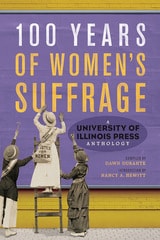
100 Years of Women's Suffrage
A University of Illinois Press AnthologyCompiled by Dawn Durante. Introduction by Nancy A. Hewitt
University of Illinois Press, 2019
A curation of important scholarship on a pivotal historical moment, 100 Years of Women’s Suffrage captures the complex and enduring struggle for fair and equal voting rights.
Contributors: Laura L. Behling, Erin Cassese, Mary Chapman, M. Margaret Conway, Carolyn Daniels, Bonnie Thornton Dill, Ellen Carol DuBois, Julie A. Gallagher, Barbara Green, Nancy A. Hewitt, Leonie Huddy, Kimberly Jensen, Mary-Kate Lizotte, Lady Constance Lytton, and Andrea G. Radke-Moss
And Here
100 Years of Upper Peninsula Writing, 1917–2017Ronald Riekki
Michigan State University Press, 2017
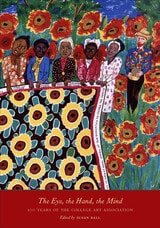
The Eye, the Hand, the Mind
100 Years of the College Art AssociationBall, Susan
Rutgers University Press, 2011
The Eye, the Hand, the Mind is a collaborative journey, filled with pictorial mementoes and enlivening stories and anecdotes. Its pages unfold along a path-an architectural framework-that connects the organization's sixteen goals and tells its rich, sometimes controversial, story. Readers will discover the important role the CAA played in major issues in higher education such as curriculum development, preservation of world monuments, workforce issues and market equity, intellectual property and free speech, capturing conflicts and reconciliations inherent among artists and art historians, pedagogical approaches and critical interpretations/interventions as played out in association publications, annual conferences, advocacy efforts, and governance.
Celebrating the centennial of CAA members and milestones, Susan Ball and renowned contributors honor the organization's complex history which, in part, also represents many learned societies and the humanities over the last one hundred years.
Wisconsin on the Air
100 Years of Public Broadcasting in the State That Invented ItJack Mitchell
Wisconsin Historical Society Press, 2016
On a wintry evening in 1917, university professor Earle Terry listened with guests as the popular music of the day filtered from a physics laboratory in Science Hall into a receiving set in his living room. Little did they know that one hundred years of public service broadcasting had just begun. Terry’s radio experiment blossomed into a pioneering endeavor to carry out the "Wisconsin Idea," a promise to make the university’s knowledge accessible to all Wisconsinites, in their homes, statewide, a Progressive-era principle that still guides public broadcasting in Wisconsin and throughout the nation. In 1947, television was added to this public service model with Channel 21 in Madison, produced, like radio, from the University of Wisconsin campus. By 1967, when the Public Broadcasting Act created the Public Broadcasting System (PBS) and National Public Radio (NPR), the Wisconsin stations had been broadcasting for fifty years. A history one hundred years in the making, Wisconsin on the Air introduces readers to the personalities and philosophies, the funding challenges and legislation, the original Wisconsin programming and pioneering technology that gave us public radio and television. Author Jack Mitchell, who developed All Things Considered for NPR before becoming the head of Wisconsin Public Radio, deftly maps public broadcasting’s hundred-year journey by charting Wisconsin’s transition from the early days of radio and television to educational broadcasting to the news, information, and music of Wisconsin Public Radio and Wisconsin Public Television.