Results by title

3 books match the query '1492-1549'
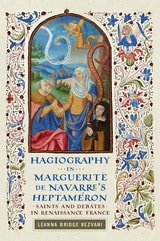
cover of Hagiography in Marguerite de Navarre’s Heptaméron: Saints and Debates in Renaissance France

Hagiography in Marguerite de Navarre’s Heptaméron

Saints and Debates in Renaissance France

Leanna Bridge Rezvani

University of Delaware Press, 2026
Marguerite de Navarre was one of the most educated and powerful women of Renaissance Europe. The Heptaméron, her celebrated collection of tales and debates, offers readers invaluable insights into diverse aspects of sixteenth-century French society. Scholars of Marguerite have written extensively on the complexities of her religious thought, but the influence of Catholic narrative tradition on the Heptaméron has been underexplored. Through an analysis of Marguerite’s tales together with literary works, religious writings, and visual images of the saints, Hagiography in Marguerite de Navarre’s Heptaméron reveals the important relationship between the Queen of Navarre’s text, hagiographic tradition, and various sixteenth-century controversies. By contextualizing the Heptaméron within these theological and literary debates, this volume illustrates how Marguerite both borrowed from and revised hagiography to lend greater authority to her writing, advocate on behalf of women, and craft an innovative response to polemics about gender, religion, and the cult of saints.
[more]
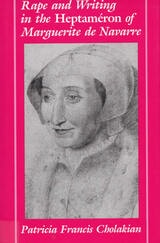
cover of Rape and Writing in the Heptameron of Marguerite de Navarre

Rape and Writing in the Heptameron of Marguerite de Navarre

Patricia Francis Cholakian

Southern Illinois University Press, 1991

Marguerite de Navarre (1492–1549), the sister of the French king François I, composed the Heptaméron as a complex collection of seventy-two novellas, creating one of the first examples of realistic, psychological fiction in French literature. These novellas, framed by debates among ten storytellers, all noble lords and ladies, reveal the author’s desire to depart from the purely masculine voice of the age.

Cholakian contends that this Renaissance text is characterized by feminine writing. She reads the text as the product of the author’s personal experience. Beginning her study with the rape narrative in the autobiographical novella 4, she examines how the Heptaméron interacts with male literary traditions and narrative conventions about gender relations. She analyzes such words as rape, and honor, noting how they are defined differently by men and women and how these differences in perception affect the development of both plot and character.
[more]
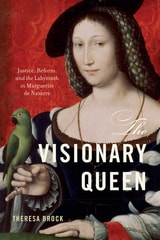
cover of The Visionary Queen: Justice, Reform, and the Labyrinth in Marguerite de Navarre

The Visionary Queen

Justice, Reform, and the Labyrinth in Marguerite de Navarre

Theresa Brock

University of Delaware Press, 2024

The Visionary Queen affirms Marguerite de Navarre’s status not only as a political figure, author, or proponent of nonschismatic reform but also as a visionary. In her life and writings, the queen of Navarre dissected the injustices that her society and its institutions perpetuated against women. We also see evidence that she used her literary texts, especially the Heptaméron, as an exploratory space in which to generate a creative vision for institutional reform. The Heptaméron’s approach to reform emerges from statistical analysis of the text’s seventy-two tales, which reveals new insights into trends within the work, including the different categories of wrongdoing by male, institutional representatives from the Church and aristocracy, as well as the varying responses to injustice that characters in the tales employ as they pursue reform. Throughout its chapters, The Visionary Queen foregrounds the trope of the labyrinth, a potent symbol in early modern Europe that encapsulated both the fallen world and redemption, two themes that underlie Marguerite's project of reform.
[more]