Results by title
2 books match the query '1539-1616'
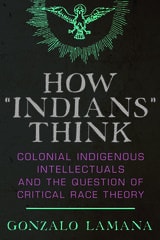
How “Indians” Think
Colonial Indigenous Intellectuals and the Question of Critical Race TheoryGonzalo Lamana
University of Arizona Press, 2019
The conquest and colonization of the Americas marked the beginning of a social, economic, and cultural change of global scale. Most of what we know about how colonial actors understood and theorized this complex historical transformation comes from Spanish sources. This makes the few texts penned by Indigenous intellectuals in colonial times so important: they allow us to see how some of those who inhabited the colonial world in a disadvantaged position thought and felt about it.
This book shines light on Indigenous perspectives through a novel interpretation of the works of the two most important Amerindian intellectuals in the Andes, Felipe Guaman Poma de Ayala and Garcilaso de la Vega, el Inca. Building on but also departing from the predominant scholarly position that views Indigenous-Spanish relations as the clash of two distinct cultures, Gonzalo Lamana argues that Guaman Poma and Garcilaso were the first Indigenous activist intellectuals and that they developed post-racial imaginaries four hundred years ago. Their texts not only highlighted Native peoples’ achievements, denounced injustice, and demanded colonial reform, but they also exposed the emerging Spanish thinking and feeling on race that was at the core of colonial forms of discrimination. These authors aimed to alter the way colonial actors saw each other and, as a result, to change the world in which they lived.
[more]
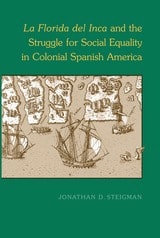
La Florida del Inca and the Struggle for Social Equality in Colonial Spanish America
Jonathan D. Steigman
University of Alabama Press, 2005
A cross-disciplinary view of an important De Soto chronicle.
Among the early Spanish chroniclers who contributed to popular images of the New World was the Amerindian-Spanish (mestizo) historian and literary writer, El Inca Garcilaso de la Vega (1539-1616). He authored several works, of which La Florida del Inca (1605) stands out as the best because of its unique Amerindian and European perspectives on the De Soto expedition (1539-1543). As the child of an Indian mother and a Spanish father, Garcilaso lived in both worlds--and saw value in each. Hailed throughout Europe for his excellent contemporary Renaissance writing style, his work was characterized as literary art. Garcilaso revealed the emotions, struggles, and conflicts experienced by those who participated in the historic and grandiose adventure in La Florida. Although criticized for some lapses in accuracy in his attempts to paint both the Spaniards and the Amerindians as noble participants in a world-changing event, his work remains the most accessible of all the chronicles.
In this volume, Jonathan Steigman explores El Inca’s rationale and motivations in writing his chronicle. He suggests that El Inca was trying to influence events by influencing discourse; that he sought to create a discourse of tolerance and agrarianism, rather than the dominant European discourse of intolerance, persecution, and lust for wealth. Although El Inca's purposes went well beyond detailing the facts of De Soto’s entrada, his skill as a writer and his dual understanding of the backgrounds of the participants enabled him to paint a more complete picture than most--putting a sympathetic human face on explorers and natives alike.
[more]