Results by title
2 books match the query '1755-1842'
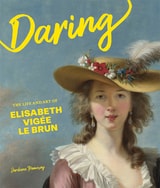
Daring
The Life and Art of Elisabeth Vigée Le BrunJordana Pomeroy
J. Paul Getty Trust, The, 2025
The dramatic life story of Elisabeth Vigée Le Brun, one of the greatest portrait painters of all time.
Supremely talented and strategically charming, Elisabeth Vigée Le Brun (1755–1842) overcame tragedy and broke gender barriers to reach the height of success as a portrait painter, first in Paris, and then across Europe. After losing her father at age twelve and facing financial insecurity, she fought to gain access to artistic training and opportunity. She was pressured to marry at age twenty, to an art dealer who both helped and harmed her career. Vigée Le Brun deployed her intelligence and beauty to attract powerful clients, who relied on her to style the personal identities they projected to the world.
Vigée Le Brun’s salons were the talk of Paris, and she became court painter to Marie Antoinette. Then came the French Revolution, when marginalized groups demanded change to centuries-old systems of oppression. Vigée Le Brun was forced to reexamine her alliances and run for her life, taking her young daughter but leaving her husband behind. Making her way through the countrysides and capitals of Europe and Russia—including a stay at the imperial court of Catherine the Great—the artist conquered fear and adversity to refashion her life and art.
Ages thirteen and up.
[more]
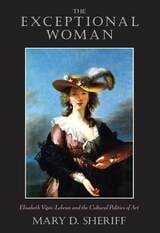
The Exceptional Woman
Elisabeth Vigee-Lebrun and the Cultural Politics of ArtMary D. Sheriff
University of Chicago Press, 1996
Elisabeth Vigée-Lebrun (1755-1842) was an enormously successful painter, a favorite portraitist of Marie-Antoinette, and one of the few women accepted into the Royal Academy of Painting and Sculpture. In accounts of her role as an artist, she was simultaneously flattered as a charming woman and vilified as monstrously unfeminine.
In The Exceptional Woman, Mary D. Sheriff uses Vigée-Lebrun's career to explore the contradictory position of "woman-artist" in the moral, philosophical, professional, and medical debates about women in eighteenth-century France. Paying particular attention to painted and textual self-portraits, Sheriff shows how Vigée-Lebrun's images and memoirs undermined the assumptions about "woman" and the strictures imposed on women.
Engaging ancien-régime philosophy, as well as modern feminism, psychoanalysis, literary theory, and art criticism, Sheriff's interpretations of Vigée-Lebrun's paintings challenge us to rethink the work and the world of this controversial woman artist.
[more]