Results by title
2 books match the query '1769-1822'
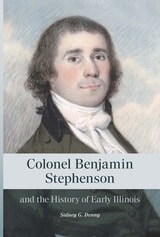
Colonel Benjamin Stephenson and the History of Early Illinois
Sidney G. Denny, with a foreword by Jason Stacy
Southern Illinois University Press, 2025
WINNER, Certificate of Excellence in “Scholarly Publications” from the Illinois State Historical Society’s 2026 Best of Illinois History Awards!
Rediscovering a forgotten Illinois founding father
In early 2024, the Director of the Colonel Benjamin Stephenson House in Edwardsville, Illinois, discovered an unpublished manuscript among the files of Sidney G. Denny, a longtime Friends of the Colonel Benjamin Stephenson House Board member who had passed away just months before. The manuscript compiled the materials from a decade’s worth of articles Denny had written for the House’s newsletter, the Spectator, on the history of the House, Benjamin Stephenson, and early Illinois—history that, without Denny, would have been lost to time.
Colonel Benjamin Stephenson, a founding father of both the city of Edwardsville and the state of Illinois, played a crucial role in the emergence of Illinois from a territory into the nation’s twenty-first state in 1818. Informed by a treasure trove of primary sources, Colonel Benjamin Stephenson and the History of Early Illinois traces Stephenson from his childhood in 18th-century Pennsylvania to his experiences on the Illinois frontier and, eventually, to his final residence, which is now a museum of his life and times in Edwardsville. The volume also provides a detailed chronicle that connects early Illinois history to the history of westward settlement and to the American Revolution itself.
Denny explores the rich history of Madison County and delves into the complexities of early Illinois and its pioneering leaders, weaving together the lives of various families to reveal the interconnected nature of early Illinois society. His meticulously researched work showcases how the impact of those early days is still visible today.
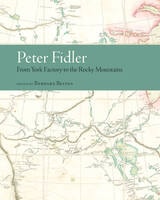
Peter Fidler
From York Factory to the Rocky MountainsBarbara Belyea
University Press of Colorado, 2026
The two journals—“From York Factory to Buckingham House” and “From Buckingham House to the Rocky Mountains”—detail Fidler’s travels over a period of nine months. They include remarks on fur trade history, organization of the inland brigade, three distinct geographical regions, and the daily life of a Plains nation. Belyea’s introduction and ample notes provide insight into the way geographic, specifically cartographic, information was noted in the journals, with additional information on industry trading techniques, traders’ economic decisions, broad changes in regional social and economic conditions, and interactions with indigenous peoples.
Fidler’s journals are an exceptional record of the fur trade’s western expansion and the daily life of a Plains nation at the height of its power and prosperity. With its rich analysis of primary source documents and painstaking reproduction of historical trade routes, Peter Fidler: From York Factory to the Rocky Mountains will be of great value to students and scholars in the fields of fur trade studies, cartography, travel literature, and Canadian history, as well as general readers interested in westward expansion, exploration, commerce, and indigenous-colonial relations.