Results by title
4 books match the query '1818-1881'
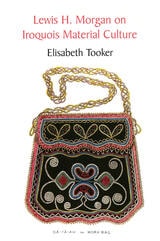
Lewis H. Morgan on Iroquois Material Culture
Elisabeth Tooker
University of Arizona Press, 1994
Lewis Henry Morgan's mid-nineteenth-century assemblage of Iroquois-made artifacts featured more than 500 objects and at the time was the largest such collection for a single Indian group. In this richly illustrated volume, Elisabeth Tooker has brought together much previously unpublished material not only to show how Morgan managed such an impressive feat of scholarship but also to reveal something of his too often neglected research methods.
[more]
Richard Kern's Far West Sketches
A Visual History of the 1853 Gunnison ExpeditionRobert Shlaer
University of Utah Press, 2020
In 1853 Richard Hovendon Kern was hired as topographer and artist for a government-sponsored reconnaissance led by Captain John Williams Gunnison. Kern sketched landscape panoramas as the group made its way from the eastern border of Kansas Territory toward the Pacific Ocean. When the expedition reached Sevier Lake, Utah, however, it was attacked by a band of Indians. Seven men, including Kern and Gunnison, were killed and Kern’s drawings were stolen. The sketches were soon recovered and eventually carried to Washington, D.C.
Robert Shlaer came across them many years later at the Newberry Library in Chicago and was inspired to locate the views depicted in the drawings and to photograph them, as nearly as was possible, from the same spot where Kern stood when he sketched them.
Richard Kern’s Far West Sketches juxtaposes Kern’s drawings with Shlaer's photographs, presenting 389 illustrations in geographic sequence from east to west, as well as a detailed narrative of the expedition. An associated website will include maps, drawings, and photographs so that they can be enlarged, compared, and studied in detail, providing an immersive experience of this important and ill-fated expedition.
[more]
The Promise of Progress
The Life and Work of Lewis Henry MorganDaniel Noah Moses
University of Missouri Press, 2009
A pioneering anthropologist, social theorist, railroad lawyer, and advocate for Native Americans, Lewis Henry Morgan was the only American to be cited by Darwin, Marx, and Freud. By many accounts, he was the most influential American social scientist of the nineteenth century. Morgan traced humanity’s progress from life among a primary group to one in an increasingly impersonal civilization—from primitive cave to civilized parlor—and along the way explained the meaning of modernity and the meaning of America. For Morgan, they were one and the same.
Daniel Noah Moses has written the most complete biography of this prominent intellectual to date, tracing his career and documenting in detail his worldwide influence. Although Morgan is best known among anthropologists, Moses reveals to a wider readership his life and accomplishments as an important American thinker who considered the United States the embodiment of the Enlightenment and a model for the world.
Moses presents Morgan’s life in great detail, with facts that will surprise even those who think they know him. From his early work with the Iroquois to his defense of American capitalism to his strange posthumous career among international communists and American leftists, Moses weaves together the diverse strands that made up the rich tapestry of this singular life. He locates Morgan’s American voice within a tradition of transatlantic social theory dedicated to understanding the spirit that motivates modern societies. In showing how Morgan reflected the interplay between Christian, classical, and liberal traditions, Moses delves into the role of such concepts as “savagery,” “barbarism,” the “primitive,” “progress,” and “civilization” in nineteenth-century social theory and in the broader American culture. And he tells how even today Morgan’s influence is felt among environmentalists, anarchists, feminists, and other social visionaries.
Morgan explained how humans evolved beyond nature to both the splendor and squalor of the Industrial Age and offered an unprecedented analysis of the interplay between family, property relations, the state, and the human mind. The Promise of Progress will spark the imagination of anyone who worries that progress has outstripped the human capacity to live together, allowing readers to better understand the relationship between the American emphasis on consumption, the buried riches of the American dream, and the possibilities for our future.
[more]
Written in Blood
Revolutionary Terrorism and Russian Literary Culture, 1861–1881Lynn Ellen Patyk
University of Wisconsin Press, 2017
Written in Blood offers a fundamentally new interpretation of the emergence of modern terrorism, arguing that it formed in the Russian literary imagination well before any shot was fired or bomb exploded. In March 1881, Russia stunned the world when a small band of revolutionaries calling themselves "terrorists" assassinated the Tsar-Liberator, Alexander II. Horrified Russians blamed the influence of European political and social ideas, while shocked Europeans perceived something new and distinctly Russian in a strategy of political violence that became known the world over as "terrorism" or "the Russian method."
Lynn Ellen Patyk contends that the prototype for the terrorist was the Russian writer, whose seditious word was interpreted as an audacious deed—and a violent assault on autocratic authority. The interplay and interchangeability of word and deed, Patyk argues, laid the semiotic groundwork for the symbolic act of violence at the center of revolutionary terrorism. While demonstrating how literary culture fostered the ethos, pathos, and image of the revolutionary terrorist and terrorism, she spotlights Fyodor Dostoevsky and his "terrorism trilogy"—Crime and Punishment (1866), Demons (1870–73), and The Brothers Karamazov (1878–80)—as novels that uniquely illuminate terrorism's methods and trajectory. Deftly combining riveting historical narrative with penetrating literary analysis of major and minor works, Patyk's groundbreaking book reveals the power of the word to spawn deeds and the power of literature to usher new realities into the world.
Lynn Ellen Patyk contends that the prototype for the terrorist was the Russian writer, whose seditious word was interpreted as an audacious deed—and a violent assault on autocratic authority. The interplay and interchangeability of word and deed, Patyk argues, laid the semiotic groundwork for the symbolic act of violence at the center of revolutionary terrorism. While demonstrating how literary culture fostered the ethos, pathos, and image of the revolutionary terrorist and terrorism, she spotlights Fyodor Dostoevsky and his "terrorism trilogy"—Crime and Punishment (1866), Demons (1870–73), and The Brothers Karamazov (1878–80)—as novels that uniquely illuminate terrorism's methods and trajectory. Deftly combining riveting historical narrative with penetrating literary analysis of major and minor works, Patyk's groundbreaking book reveals the power of the word to spawn deeds and the power of literature to usher new realities into the world.
[more]