Results by title
2 books match the query '1826-1890'
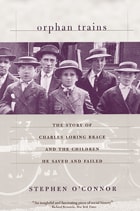
Orphan Trains
The Story of Charles Loring Brace and the Children He Saved and FailedStephen O'Connor
University of Chicago Press, 2004
In mid-nineteenth-century New York, vagrant youth, both orphans and runaways, filled the streets. For years the city had been sweeping these children into prisons or almshouses, but in 1853 the young minister Charles Loring Brace proposed a radical solution to the problem by creating the Children's Aid Society, an organization that fought to provide homeless children with shelter, education, and, for many, a new family in the country. Combining a biography of Brace with firsthand accounts of orphans, Stephen O'Connor here tells of the orphan trains that, between 1854 and 1929, spirited away some 250,000 destitute children to rural homes in every one of the forty-eight contiguous states.
A powerful blend of history, biography, and adventure, Orphans Trains remains the definitive work on this little-known episode in American history.
A powerful blend of history, biography, and adventure, Orphans Trains remains the definitive work on this little-known episode in American history.
[more]
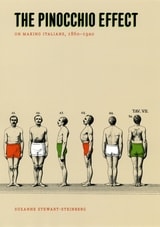
The Pinocchio Effect
On Making Italians, 1860-1920Suzanne Stewart-Steinberg
University of Chicago Press, 2007
Soon after the disparate states of the Italian peninsula unified in the 1860s to create a single nation, the nationalist Massimo D’Azeglio is said to have remarked, “We have made Italy, now we have to make Italians.” The Pinocchio Effect draws on a remarkably broad array of sources to trace this making of a modern national identity in Italy, a subject that remains strikingly understudied in the English-speaking world of Italian studies.
Taking as her guiding metaphor the character of Pinocchio—a national icon made famous in 1881 by the eponymous children’s book—Susan Stewart-Steinberg argues that just like the renowned puppet, modern Italians were caught in a complex interplay between freely chosen submission and submission demanded by an outside force. In doing so, she explores all the ways that identity was constructed through newly formed attachments, voluntary and otherwise, to the young nation. Featuring deft readings of the period’s most important Italian cultural and social thinkers—including the theorist of mass psychology Scipio Sighele, the authors Matilde Serao and Edmondo De Amicis, the criminologist Cesare Lombroso, and the pedagogue Maria Montessori—Stewart-Steinberg’s richly multidisciplinary book will set a new standard in Italian studies.
Taking as her guiding metaphor the character of Pinocchio—a national icon made famous in 1881 by the eponymous children’s book—Susan Stewart-Steinberg argues that just like the renowned puppet, modern Italians were caught in a complex interplay between freely chosen submission and submission demanded by an outside force. In doing so, she explores all the ways that identity was constructed through newly formed attachments, voluntary and otherwise, to the young nation. Featuring deft readings of the period’s most important Italian cultural and social thinkers—including the theorist of mass psychology Scipio Sighele, the authors Matilde Serao and Edmondo De Amicis, the criminologist Cesare Lombroso, and the pedagogue Maria Montessori—Stewart-Steinberg’s richly multidisciplinary book will set a new standard in Italian studies.
[more]