Results by title
7 books match the query '1849-1877'
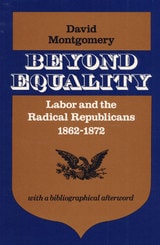
Beyond Equality
Labor and the Radical Republicans, 1862-1872David Montgomery
University of Illinois Press, 1981
"Beyond Equality is a masterpiece. . . . A book of bold and brilliant originality, it is now shaping the perspective of a new generation of graduate students." -- David Brion Davis, author of The Problem of Slavery in Western Culture
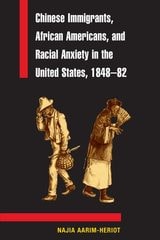
Chinese Immigrants, African Americans, and Racial Anxiety in the United States, 1848-82
Najia Aarim-Heriot
University of Illinois Press, 2003
The “Chinese question” and the “Negro problem” were bound up with one another in nineteenth-century America. Indeed, the negative stereotypes, exclusionary laws, and incendiary rhetoric employed against both populations bore striking similarities.
Najia Aarim-Heriot forcefully demonstrates that the anti-Chinese sentiment behind the passage of the Chinese Exclusion Act of 1882 is inseparable from the racial double standards applied by mainstream white society toward white and nonwhite groups during the same period. Aarim-Heriot argues that previous studies on American Sinophobia have overemphasized the resentment labor organizations felt toward incoming Chinese workers. As a result, scholars have overlooked the broader ways in which the growing nation sought to define and unify itself through the exclusion and oppression of nonwhite peoples.
A challenge to traditional approaches to Chinese American history, Chinese immigrants, African Americans, and Racial Anxiety in the United States, 1848–82 offers a holistic examination of American Sinophobia and the racialization of national immigration policies.
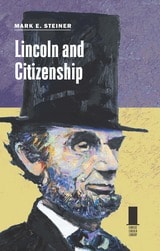
Lincoln and Citizenship
Mark E. Steiner
Southern Illinois University Press, 2021
At its most basic level, citizenship is about who belongs to a political community, and for Abraham Lincoln in nineteenth-century America, the answer was in flux. The concept of “fellow citizens,” for Lincoln, encompassed different groups at different times. In this first book focused on the topic, Mark E. Steiner analyzes and contextualizes Lincoln’s evolving views about citizenship over the course of his political career.
As an Illinois state legislator, Lincoln subscribed to the by-then-outmoded belief that suffrage must be limited to those who met certain obligations to the state. He rejected the adherence to universal white male suffrage that had existed in Illinois since statehood. In 1836 Lincoln called for voting rights to be limited to white people who had served in the militia or paid taxes. Surprisingly, Lincoln did not exclude women, though later he did not advocate giving women the right to vote and did not take women seriously as citizens. The women at his rallies, he believed, served as decoration.
For years Lincoln presumed that only white men belonged in the political and civic community, and he saw immigration through this lens. Because Lincoln believed that white male European immigrants had a right to be part of the body politic, he opposed measures to lengthen the time they would have to wait to become a citizen or to be able to vote. Unlike many in the antebellum north, Lincoln rejected xenophobia and nativism. He opposed black citizenship, however, as he made clear in his debates with Stephen Douglas. Lincoln supported Illinois’s draconian Black Laws, which prohibited free black men from voting and serving on juries or in the militia. Further, Lincoln supported sending free black Americans to Africa—the ultimate repudiation and an antithesis of citizenship.
Yet, as president, Lincoln came to embrace a broader vision of citizenship for African Americans. Steiner establishes how Lincoln’s meetings at the White House with Frederick Douglass and other black leaders influenced his beliefs about colonization, which he ultimately disavowed, and citizenship for African Americans, which he began to consider. Further, the battlefield success of black Union soldiers revealed to Lincoln that black men were worthy of citizenship. Lincoln publicly called for limited suffrage among black men, including military veterans, in his speech about Reconstruction on April 11, 1865. Ahead of most others of his era, Lincoln showed just before his assassination that he supported rights of citizenship for at least some African Americans.
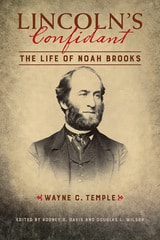
Lincoln's Confidant
The Life of Noah BrooksWayne C. Temple, Edited by Douglas L. Wilson and Rodney O. Davis: Introduction by Michael Burlingame
University of Illinois Press, 2019
Best remembered as one of the president's few true intimates, Brooks was also a nationally recognized man of letters, who mingled with the likes of Mark Twain and Bret Harte. Temple draws on archives and papers long thought lost to re-create Brooks's colorful life and relationship with Lincoln. Brooks's closeness to the president made him privy to Lincoln's thoughts on everything from literature to spirituality. Their frank conversations contributed to the wealth of journalism and personal observations that would make Brooks's writings a much-quoted source for historians and biographers of Lincoln.
A carefully researched and well-documented scholarly resource, Lincoln's Confidant is the story of an extraordinary friendship by one of the luminaries of Lincoln scholarship.
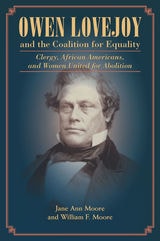
Owen Lovejoy and the Coalition for Equality
Clergy, African Americans, and Women United for AbolitionJane Ann Moore and William F. Moore
University of Illinois Press, 2019
Owen Lovejoy and the Coalition for Equality examines how these three distinct groups merged their agendas into a single antislavery, religious, political campaign for equality with Lovejoy at the helm. Combining scholarly biography, historiography, and primary source material, Jane Ann Moore and William F. Moore demonstrate Lovejoy's crucial role in nineteenth-century politics, the rise of antislavery sentiment in religious spaces, and the emerging congressional commitment to end slavery. Their compelling account explores how the immorality of slavery became a touchstone of political and religious action in the United States through the efforts of a synergetic coalition led by an essential abolitionist figure.
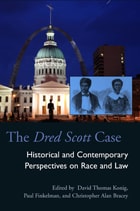
The Dred Scott Case
Historical and Contemporary Perspectives on Race and LawDavid Thomas Konig
Ohio University Press, 2010
In 1846 two slaves, Dred and Harriet Scott, filed petitions for their freedom in the Old Courthouse in St. Louis, Missouri. As the first true civil rights case decided by the U.S. Supreme Court, Dred Scott v. Sandford raised issues that have not been fully resolved despite three amendments to the Constitution and more than a century and a half of litigation.
The Dred Scott Case: Historical and Contemporary Perspectives on Race and Law presents original research and the reflections of the nation’s leading scholars who gathered in St. Louis to mark the 150th anniversary of what was arguably the most infamous decision of the U.S. Supreme Court. The decision, which held that African Americans “had no rights” under the Constitution and that Congress had no authority to alter that, galvanized Americans and thrust the issue of race and law to the center of American politics. This collection of essays revisits the history of the case and its aftermath in American life and law. In a final section, the present-day justices of the Missouri Supreme Court offer their reflections on the process of judging and provide perspective on the misdeeds of their nineteenth-century predecessors who denied the Scotts their freedom.
Contributors: Austin Allen, Adam Arenson, John Baugh, Hon. Duane Benton, Christopher Alan Bracey, Alfred L. Brophy, Paul Finkelman, Louis Gerteis, Mark Graber, Daniel W. Hamilton, Cecil J. Hunt II, David Thomas Konig, Leland Ware, Hon. Michael A. Wolff
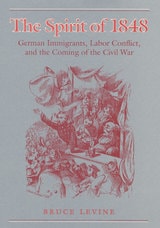
The Spirit of 1848
German Immigrants, Labor Conflict, and the Coming of the Civil WarBruce Levine
University of Illinois Press, 1992
The Spirit of 1848 offers much new information and insight concerning craftwork, the nature of the antebellum labor movement (including the great New York City tailors' strike of 1850), the meaning of nativism, the significance of the push for land reform, the diverse character of the free-soil movement, and the popular appeals of both the Democratic and Republican parties.