Results by title
5 books match the query '1850 - 1950'
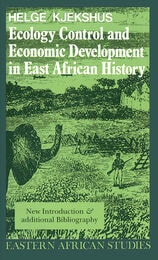
Ecology Control and Economic Development in East African History
The Case of Tanganyika, 1850–1950Helge Kjekshus
Ohio University Press, 1995
The book puts people at the centre of events. It thus serves as a modification to nationalist history with its emphasis on leaders. It presents environmental factors that had been underestimated; for instance, it points to the critical importance of the rinderpest outbreak.
Helge Kjekshus provides evidence to suggest that the nineteenth century was a period of relative prosperity with well-developed trade. He questions the view that warfare was pervasive and that the slave trade led to depopulation. He points to a balance between man and the environment.
This book is reissued at the same time as the first publication of Custodians of the Land: Ecology and Culture in the History of Tanzania edited by Gregory Maddox, James I. Giblin and Isaria N. Kimambo. The footnotes in that book point to the importance of the work of Helge Kjekshus.
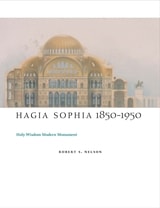
Hagia Sophia, 1850-1950
Holy Wisdom Modern MonumentRobert S. Nelson
University of Chicago Press, 2004
Built from 532 to 537 as the Cathedral of Constantinople, Hagia Sophia was little studied and seldom recognized as a great monument of world art until the nineteenth century, and Nelson examines the causes and consequences of the building's newly elevated status during that time. He chronicles the grand dome's modern history through a vibrant cast of characters—emperors, sultans, critics, poets, archaeologists, architects, philanthropists, and religious congregations—some of whom spent years studying it, others never visiting the building. But as Nelson shows, they all had a hand in the recreation of Hagia Sophia as a modern architectural icon. By many means and for its own purposes, the West has conceptually transformed Hagia Sophia into the international symbol that it is today.
While other books have covered the architectural history of the structure, this is the first study to address its status as a modern monument. With his narrative of the building's rebirth, Nelson captures its importance for the diverse communities that shape and find meaning in Hagia Sophia. His book will resonate with cultural, architectural, and art historians as well as with those seeking to acquaint themselves with the modern life of an inspired and inspiring building.
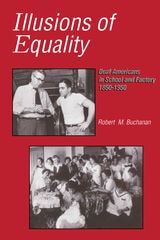
Illusions of Equality
Deaf Americans in School and Factory, 1850-1950Robert M. Buchanan
Gallaudet University Press, 1999
The working lives of Deaf Americans from the mid-1850s to the post-World War II era depended upon strategies created by Deaf community leaders to win and keep jobs through periods of low national employment as well as high. Deaf people typically sought to de-emphasize their identity as sign language users to be better integrated into the workforce. But in his absorbing new book Illusions of Equality, Robert Buchanan shows that events during the next century would thwart these efforts.
The residential schools for deaf students established in the 19th century favored a bilingual approach to education that stressed the use of American Sign Language while also recognizing the value of learning English. But the success of this system was disrupted by the rise of oralism, with its commitment to teaching deaf children speech and its ban of sign language. Buchanan depicts the subsequent ramifications in sobering terms: most deaf students left school with limited educations and abilities that qualified them for only marginal jobs. He also describes the insistence of the male hierarchy in the Deaf community on defending the tactics of individual responsibility through the end of World War II, a policy that continually failed to earn job security for Deaf workers. Illusions of Equality is an original, edifying work that will be appreciated by scholars and students for years to come.
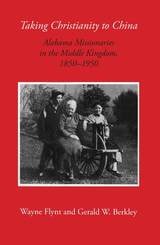
Taking Christianity to China
Alabama Missionaries in the Middle Kingdom, 1850–1950Wayne Flynt and Gerald W. Berkley
University of Alabama Press, 2017
A study of faith, cultural exchange, and the Alabama missionaries who helped shape the story of Christianity in modern China.
Beginning early in the 19th century, the American missionary movement made slow headway in China. Alabamians became part of that small beachhead. After 1900 both the money and personnel rapidly expanded, peaking in the early 1920s. By the 1930s many American denominations became confused and divided over the appropriateness of the missionary endeavor. Secular American intellectuals began to criticize missionaries as meddling do-gooders trying to impose American Evangelicalism on a proud, ancient culture.
By examining the lives of 47 Alabama missionaries who served in China between 1850 and 1950, Flynt and Berkley reach a different conclusion. Although Alabama missionaries initially fit the negative description of Americans trying to superimpose their own values and beliefs on "heathen," they quickly learned to respect Chinese civilization. The result was a new synthesis, neither entirely southern nor entirely Chinese. Although previous works focus on the failure of Christianity to change China, this book focuses on the degree to which their service in China changed Alabama missionaries. And the change was profound.
In their consideration of 47 missionaries from a single state--their call to missions, preparation for service in China, living, working, contacts back home, cultural clashes, political views, internal conflicts, and gender relations--the authors suggest that the efforts by Baptist, Methodist, and Presbyterian missionaries from Alabama were not the failure judged by many historians. In fact, the seeds sown in the hundred years before the Communist revolution in 1950 seem to be reaping a rich harvest in the declining years of the 20th century, when the number of Chinese Christians is estimated by some to be as high as one hundred million.
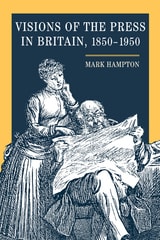
Visions of the Press in Britain, 1850-1950
Mark Hampton
University of Illinois Press, 2004
In Visions of the Press in Britain, 1850-1950, Mark Hampton argues that qualities expected of the contemporary British press--lively writing, speed, impartiality, depth, and the ability to topple corrupt governments by informing readers--are not obvious attributes of journalism but derive from more than a century of debate. He analyzes the various historical conceptions of the British press that helped to create its modern role, and demonstrates that these conceptions were intimately involved in the emergence of mass democracy in the late nineteenth and early twentieth centuries.
Hampton surveys a diversity of sources--Parliamentary speeches and commissions, books, pamphlets, periodicals and select private correspondence--in order to identify how governmental elites, the educated public, professional journalists, and industry moguls characterized the political and cultural function of the press. The resulting blend of cultural history and media sociology demonstrates how once optimistic visions of the press have given way to more pessimistic contemporary views about the power of the mass media.
With clarity and panache, this book shows that many competing conceptions continued to influence twentieth-century understandings of the press but did not remain satisfactory in new political, cultural, and media environments. Visions of the Press in Britain, 1850-1950 provides a rich tapestry against which to understand the contemporary realities of journalism, democracy, and mass media.