Results by title
2 books match the query '1875 - 1925'
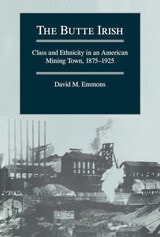
The Butte Irish
Class and Ethnicity in an American Mining Town, 1875-1925David M. Emmons
University of Illinois Press, 1989
In this pioneering study, David Emmons tells the story of Butte's large and assertive population of Irish immigrants. He traces their backgrounds in Ireland, the building of an ethnic community in Butte, the nature and hazards of their work in the copper mines, and the complex interplay between Irish nationalism and worker consciousness.
From a treasure trove of "Irish stuff," the reports, minutes, and correspondence of the major Irish-American organizations in Butte, Emmons shows how the stalwart supporters of the RELA and the Ancient Order of Hiberians marched and drilled for Irish freedom---and how, as they ran the town, the miners' union, and the largest mining companies, they used this tradition of ethnic cooperation to ensure safe and steady work, Irish mines taking care of Irish miners. Butte was new, overwhelmingly Irish, and extraordinarily dangerous---the ideal place to test the seam between class and ethnicity.
[more]
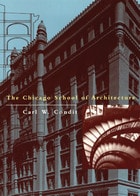
The Chicago School of Architecture
A History of Commercial and Public Building in the Chicago Area, 1875-1925Carl W. Condit
University of Chicago Press, 1973
This thoroughly illustrated classic study traces the history of the world-famous Chicago school of architecture from its beginnings with the functional innovations of William Le Baron Jenney and others to their imaginative development by Louis Sullivan and Frank Lloyd Wright. The Chicago School of Architecture places the Chicago school in its historical setting, showing it at once to be the culmination of an iron and concrete construction and the chief pioneer in the evolution of modern architecture. It also assesses the achievements of the school in terms of the economic, social, and cultural growth of Chicago at the turn of the century, and it shows the ultimate meaning of the Chicago work for contemporary architecture.
"A major contribution [by] one of the world's master-historians of building technique."—Reyner Banham, Arts Magazine
"A rich, organized record of the distinguished architecture with which Chicago lives and influences the world."—Ruth Moore, Chicago Sun-Times
"A major contribution [by] one of the world's master-historians of building technique."—Reyner Banham, Arts Magazine
"A rich, organized record of the distinguished architecture with which Chicago lives and influences the world."—Ruth Moore, Chicago Sun-Times
[more]