Results by title
8 books match the query '1879-1940'

100 Years of Permanent Revolution
Results and ProspectsEdited by Bill Dunn and Hugo Radice
Pluto Press, 2006
One hundred years after their first appearance in Leon Trotsky's Results and Prospects, this book critically reevaluates two key Marxist theories: uneven and combined development, and permanent revolution. It brings together a formidable array of Marxist intellectuals from across the world including Daniel Bensaid, Michael Löwy, Hillel Ticktin and Patrick Bond.
Marx saw societies progressing through distinct historical stages feudal, bourgeois and communist. Trotsky advanced this model by considering how countries at different stages of development influence each other. Developed countries colonise less developed countries and exploit their people and resources. Elsewhere, even as many were kept in poverty, the influence of foreign capital and state-led industrialisation produced novel economic forms and prospects for political alliances and change. The contributors show how, 100 years on from its original publication, Trotsky's theories are hugely useful for understanding today's globalised economy, dominated by US imperialism. The book makes an ideal introduction to Trosky's thinking, and is ideal for students of political theory and development economics.
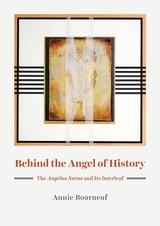
Behind the Angel of History
The "Angelus Novus" and Its InterleafAnnie Bourneuf
University of Chicago Press, 2022
This book begins with artist R. H. Quaytman uncovering something startling about a picture by Paul Klee. Pasted beneath Klee’s 1920 Angelus Novus—famous for its role in the writings of its first owner, Walter Benjamin—Quaytman found that Klee had interleaved a nineteenth-century engraving of Martin Luther, leaving just enough visible to provoke questions.
Behind the Angel of History reveals why this hidden face matters, delving into the intertwined artistic, political, and theological issues consuming Germany in the wake of the Great War. With the Angelus Novus, Klee responded to a growing call for a new religious art. For Benjamin, Klee’s Angelus became bound up with the prospect of meaningful dialogue among religions in Germany.
Reflecting on Klee’s, Benjamin’s, and Quaytman’s strategies of superimposing conflicting images, Annie Bourneuf reveals new dimensions of complexity in this iconic work and the writing it inspired.

International Trotskyism, 1929-1985
A Documented Analysis of the MovementRobert J. Alexander
Duke University Press, 1991
Renowned scholar Robert J. Alexander has amassed, from disparate sources, an unprecedented amount of primary and secondary material to provide a documentary history of the origins, development, and nature of the Trotskyist movement around the world. Drawing on interviews and correspondence with Trotskyists, newspaper reports and pamphlets, historical writings including the annotated writings of Trotsky in both English and French, historical memoirs of Trotskyist leaders, and documents of the Fourth International, Alexander recounts the history of the movement since Trotsky’s exile from the Soviet Union in 1929.
Organized alphabetically in a double-column, country-by-country format this book charts the formation and growth of Trotskyism in more than sixty-five countries, providing biographic information about its most influential leaders, detailed accounts of Trotsky’s personal involvement in the development of the movement in each country, and thorough reports of its various factions and splits. Multiple chapters are reserved for countries where the movement was more active or fully developed and various chapters are organized around crucial thematic issues, such as the Fourth International. The chapters are followed by extensive name, organization, publication, and subject indexes, which provide optimal access to the wealth of information contained in the main body of the work.

Paul Klee
His Work and ThoughtMarcel Franciscono
University of Chicago Press, 1991
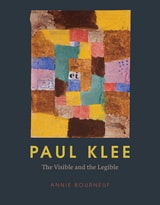
Paul Klee
The Visible and the LegibleAnnie Bourneuf
University of Chicago Press, 2015
Bourneuf argues that Klee joined these elements to invite a manner of viewing that would unfold in time, a process analogous to reading. From his elaborate titles to the small scale he favored to his metaphoric play with materials, Klee created forms that hover between the pictorial and the written. Through his unique approach, he subverted forms of modernist painting that were generally seen to threaten slow, contemplative viewing. Tracing the fraught relations among seeing, reading, and imagining in the early twentieth century, Bourneuf shows how Klee reconceptualized abstraction at a key moment in its development.

The Great Prince Died
A Novel about the Assassination of TrotskyBernard Wolfe
University of Chicago Press, 2015
In The Great Prince Died, Bernard Wolfe offers his lyrical, fictionalized account of Trotsky’s assassination as witnessed through the eyes of an array of characters: the young American student helping to translate the exiled Trotsky’s work (and to guard him), the Mexican police chief, a Rumanian revolutionary, the assassin and his handlers, a poor Mexican “peón,” and Trotsky himself. Drawing on his own experiences working as the exiled Trotsky’s secretary and bodyguard and mixing in digressions on Mexican culture, Stalinist tactics, and Bolshevik history, Wolfe interweaves fantasy and fact, delusion and journalistic reporting to create one of the great political novels of the past century.
The Making of Paul Klee's Career, 1914-1920
Otto Karl Werckmeister
University of Chicago Press, 1989
Drawing on rich documentary evidence—records of Klee's sales, reviews of his exhibitions, the artist's published writings about his art, unpublished correspondence, as well as contemporary criticism—Werckmeister follows Klee's transformation from an idiosyncratic abstract individualist to a metaphysical storyteller to mystical sage. Werckmeister argues that this latter image was promoted by a number of influential art critics and dealers acting in cooperation with the artist himself. This posture prompted Klee's success first in the war-weary modernist art world of 1916-18 and then in the pseudo-revolutionary art world of 1919-20.
This work is a critical challenge to the myth of Klee's art and to the hagiography of his artistic personality. Werckmeister's historical account is sure to be a controversial yet significant contribution to Klee studies—one that will change the nature of Klee scholarship for some time to come.
The Serge Trotsky Papers
Correspondence and Other Writings Between Victor Serge and Leon TrotskyDavid Cotterill
Pluto Press, 1994