Results by title
2 books match the query '1880 - 1922'
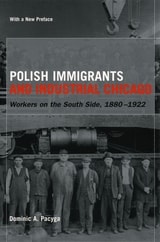
Polish Immigrants and Industrial Chicago
Workers on the South Side, 1880-1922Dominic A. Pacyga
University of Chicago Press, 2003
How did working-class immigrants from Poland create new communities in Chicago during the industrial age? This book explores the lives of immigrants in two iconic South Side Polish neighborhoods—the Back of the Yards and South Chicago—and the stockyards and steel mills in which they made their living. Pacyga shows how Poles forged communities on the South Side in an attempt to preserve the customs of their homeland; how through the development of churches, the building of schools, the founding of street gangs, and the opening of saloons they tried to recreate the feel of an Eastern European village. Through such institutions, Poles also were able to preserve their folk beliefs and family customs. But in time, the economic hardships of industrialization forced Poles to reach out to their non-Polish neighbors. And this led, in large part, to the organization of labor unions in Chicago's steel and meatpacking industries.
[more]
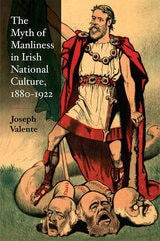
The Myth of Manliness in Irish National Culture, 1880-1922
Joseph Valente
University of Illinois Press, 2011
This study aims to supply the first contextually precise account of the male gender anxieties and ambivalences haunting the culture of Irish nationalism in the period between the Act of Union and the founding of the Irish Free State. To this end, Joseph Valente focuses upon the Victorian ethos of manliness or manhood, the specific moral and political logic of which proved crucial to both the translation of British rule into British hegemony and the expression of Irish rebellion as Irish psychomachia. The influential operation of this ideological construct is traced through a wide variety of contexts, including the career of Ireland's dominant Parliamentary leader, Charles Stewart Parnell; the institutions of Irish Revivalism--cultural, educational, journalistic, and literary; the writings of both canonical authors (Yeats, Synge, Gregory, and Joyce) and subcanonical authors (James Stephens, Patrick Pearse, Lennox Robinson); and major political movements of the time, including suffragism, Sinn Fein, Na Fianna E Éireann, and the Volunteers.
The construct of manliness remains very much alive today, underpinning the neo-imperialist marriage of ruthless aggression and the sanctities of duty, honor, and sacrifice. Mapping its earlier colonial and postcolonial formations can help us to understand its continuing geopolitical appeal and danger.
[more]