Results by title
5 books match the query '1880-1956'
"Ich Kuss Die Hand"
The Letters of H. L. Mencken To Gretchen HoodH. L. Mencken
University of Alabama Press, 1986
What started as a correspondence between an illustrious personage and an ardent fan developed into a friendship between two individuals with congenial temperaments, interests, and tastes
“Ich Kuss Die Hand”: The Letters of H. L. Mencken to Gretchen Hood relates an episode in Mencken's life that has received only passing mention from his biographers. Gretchen Hood's acquaintance with the journalistic life of Washington formed a bond with Mencken, who thought of himself, first and foremost, as an inveterate newspaperman (they playfully entertained the idea of starting their own Washington newspaper), and she had a ready appreciation for his performances as a connoisseur of the Washington political spectacle. Mencken, the amateur musician and music buff, respected her talent and professional background.
His letters indicate that he found in her an intelligent, witty, and charming respondent to his characteristic traits of personality and style. She both flattered his ego and challenged him to exhibit his celebrated manner at its best. On her part, Hood was not simply awestruck by Mencken's attentions but met them with her independent verve. “Nothing scared me,” she later said of her attitude; “ready to take on all comers.” Mencken liked to refer to her as “a licensed outlaw,” a designation that captures his impression of her and describes as well the fashionable unconventionality, which fueled the Mencken vogue.
Mencken wrote Hood over two hundred letters, and she must have written him about the same number. For much of the time they corresponded, they exchanged several letters every month, sometimes as many as four or five a week. As their communications blossomed into a four-year friendship, personal meetings soon supplemented the flow of letters.
[more]
An Infuriating American
The Incendiary Arts of H. L. MenckenHal Crowther
University of Iowa Press, 2014
As American journalism shape-shifts into multimedia pandemonium and seems to diminish rapidly in influence and integrity, the controversial career of H. L. Mencken, the most powerful individual journalist of the twentieth century, is a critical text for anyone concerned with the balance of power between the free press, the government, and the corporate plutocracy. Mencken, the belligerent newspaperman from Baltimore, was not only the most outspoken pundit of his day but also, by far, the most widely read, and according to many critics the most gifted American writer ever nurtured in a newsroom—a vanished world of typewriter banks and copy desks that electronic advances have precipitously erased.
Nearly 60 years after his death, Mencken’s memory and monumental verbal legacy rest largely in the hands of literary scholars and historians, to whom he will always be a curious figure, unchecked and alien and not a little distasteful. No faculty would have voted him tenure. Hal Crowther, who followed in many of Mencken’s footsteps as a reporter, magazine editor, literary critic, and political columnist, focuses on Mencken the creator, the observer who turned his impressions and prejudices into an inimitable group portrait of America, painted in prose that charms and glowers and endures. Crowther, himself a working polemicist who was awarded the Baltimore Sun’s Mencken prize for truculent commentary, examines the origin of Mencken’s thunderbolts—where and how they were manufactured, rather than where and on whom they landed.
Mencken was such an outrageous original that contemporary writers have made him a political shuttlecock, defaming or defending him according to modern conventions he never encountered. Crowther argues that loving or hating him, admiring or despising him are scarcely relevant. Mencken can inspire and he can appall. The point is that he mattered, at one time enormously, and had a lasting effect on the national conversation. No writer can afford to ignore his craftsmanship or success, or fail to be fascinated by his strange mind and the world that produced it. This book is a tribute—though by no means a loving one—to a giant from one of his bastard sons.
[more]
Denial and Repression of Anti-Semitism
Post-Communist Rehabilitation of the Serbian Bishop Nikolaj VelimirovicJovan Byford
Central European University Press, 2008
Bishop Nikolaj Velimirovic (1881–1956) is arguably one the most controversial figures in contemporary Serbian national culture. Having been vilified by the former Yugoslav Communist authorities as a fascist and an antisemite, this Orthodox Christian thinker has over the past two decades come to be regarded in Serbian society as the most important religious person since medieval times and an embodiment of the authentic Serbian national spirit. Velimirovic was formally canonised by the Serbian Orthodox Church in 2003. In this book, Jovan Byford charts the posthumous transformation of Velimirovic from 'traitor' to 'saint' and examines the dynamics of repression and denial that were used to divert public attention from the controversies surrounding the bishop's life, the most important of which is his antisemitism. Byford offers the first detailed examination of the way in which an Eastern Orthodox Church manages controversy surrounding the presence of antisemitism within its ranks and he considers the implications of the continuing reverence of Nikolaj Velimirovic for the persistence of antisemitism in Serbian Orthodox culture and in Serbian society as a whole. This book is based on a detailed examination of the changing representation of Bishop Nikolaj Velimirovic in the Serbian media and in commemorative discourse devoted to him. The book also makes extensive use of exclusive interviews with a number of Serbian public figures who have been actively involved in the bishop’s rehabilitation over the past two decades.
[more]
Fitzgerald's Mentors
Edmund Wilson, H. L. Mencken, and Gerald MurphyRonald Berman
University of Alabama Press, 2012
A fresh and compelling study of F. Scott Fitzgerald’s intellectual friendship with Edmund Wilson, H. L. Mencken, and Gerald Murphy
Fitzgerald was shaped through his engagements with key literary and artistic figures in the 1920s. This book is about their influence— and also about the ways that Fitzgerald defended his own ideas about writing. Influence was always secondary to independence.
Fitzgerald’s education began at Princeton with Edmund Wilson. There Wilson imparted to Fitzgerald many ideas about education and literary values, among them respect for the classics and an acute awareness of literary tradition.
In New York H. L. Mencken impressed upon Fitzgerald his belief in the stifling effect of public morality on writers. Furthermore, Mencken’s The American Language changed Fitzgerald’s thinking about the power of everyday language.
After moving to France in 1924, Fitzgerald’s intellectual life took a very different turn. Gerald Murphy exposed him to the visual arts— including the work of Fernand Leger, Pablo Picasso, and Man Ray—and to people deeply interested in the perception of art in daily life. Equally important, Fitzgerald had many discussions about artistic values with both Gerald and Sara Murphy.
[more]
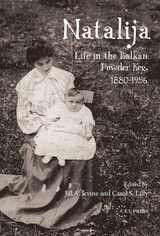
Natalija
Life in the Balkan Powder Keg, 1880-1956Natalija Matic-Zrnic
Central European University Press, 2009
The life story of a Serbian woman over a period of more than 70 years, preserved in memoirs, letters and mostly diaries, recounts the triumphs and tragedies of a life that takes place against the backdrop of extraordinary turbulence in the Balkans. It covers more than half a century, five wars (including the two world wars), and four ideologies. This is a time of excitement in Serbia as its leaders carve an independent state out of the Ottoman Empire and attempt to modernize a largely rural and “backward” corner of Europe. A time of opportunity for many who join in the effort to build the infrastructure of a modern economy, as well as the growing number of middle class families who send their children, in rare cases even girls, to the emerging system of state schools. Above all, a time of war, as the expanding Serbian state comes into conflict with its neighbors and, ultimately, the Great Powers of Europe. Accompanied by an introductory study, Natalija’s diary provides a rich background to understanding the on-going conflict in the Balkans today.
[more]