Results by title
2 books match the query '1883-1945'

A Coin in Nine Hands
A NovelMarguerite Yourcenar
University of Chicago Press, 1994
During the space of a day in Rome in 1933, a ten-lira coin passes through the hands of nine people—including an aging artist, a prostitute, and a would-be assassin of Mussolini. The coin becomes the symbol of contact between human beings, each lost in private passions and nearly impenetrable solitude.
"A Coin in Nine Hands has . . . passages that move close to poetry and a story that belongs in both literature and history."—Doris Grumbach, Los Angeles Times Book Review
"What lingers at the end of A Coin in Nine Hands is the shadowiness and puppetlike vagueness of the Dictator, and the compelling specificity of the so-called 'common people' revolving all around him."—Anne Tyler, The New Republic
"Within a few pages we have met half the major characters in this haunting, brilliantly constructed novel. . . . The studied perfection, the structural intricacy and brevity remind one of Camus. Yet by comparison, Yourcenar's prose is lavish, emotional and imagistic."—Cynthia King, Houston Post
"Transcends its specific time and place to become a portrait of vividly delineated characters caught in the vise of a tragically familiar political situation."—Publisher's Weekly
Best known as the author of Memoirs of Hadrian and The Abyss, Marguerite Yourcenar (1903-87) achieved countless literary honors and was the first woman ever elected to the Académie Française.
[more]
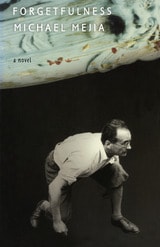
Forgetfulness
A NovelMichael Mejia
University of Alabama Press, 2005
The first part of Forgetfulness is a fictional monograph on the life of the Austrian modernist composer Anton von Webern (1883-1945).The collage-work monograph unfolds in a Webernian sequence of events and silences combining quotes from Webern, his friends and associates, and various historical and literary figures with short scenes, monologues, dialogues, newspaper articles, and theater and film scripts. The result is a lyrical panorama of early twentieth century Vienna.
The second part of the book takes place in Vienna on May 1st, 1986, shortly before the election of Kurt Waldheim as President of the Austrian Republic and shortly after the Chernobyl disaster. The three simultaneous, intertwining monologues of an archivist, a retired opera singer, and the author of the monograph, revisit the themes and events of the first part, commenting on postwar conceptions, analyses, and revisions of the period during which Webern lived, while continuously haunted by the specters of Waldheim and Chernobyl, the persistence of crimes that are immanent, unpaid for, or only dimly, disingenuously recalled.
The second part of the book takes place in Vienna on May 1st, 1986, shortly before the election of Kurt Waldheim as President of the Austrian Republic and shortly after the Chernobyl disaster. The three simultaneous, intertwining monologues of an archivist, a retired opera singer, and the author of the monograph, revisit the themes and events of the first part, commenting on postwar conceptions, analyses, and revisions of the period during which Webern lived, while continuously haunted by the specters of Waldheim and Chernobyl, the persistence of crimes that are immanent, unpaid for, or only dimly, disingenuously recalled.
[more]