Results by title
5 books match the query '1886-1969'
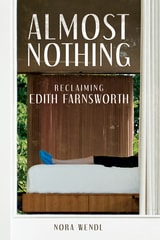
Almost Nothing
Reclaiming Edith FarnsworthNora Wendl
University of Illinois Press, 2025
Nora Wendl’s audacious work of creative nonfiction explodes the sex-and-real-estate myth surrounding the Edith Farnsworth House and its two central figures. An eminent physician and woman of letters, Farnsworth left a rich trove of correspondence, memoirs, and photographs that Wendl uses to reconstruct her voice. Farnsworth’s memories and experiences alternate with Wendl’s thoughts on topics like misogyny and professional ambition to fashion a lyrical examination of love, loneliness, beauty, and the search for the divine.
Eloquent and confessional, Almost Nothing restores Edith Farnsworth to her place in architectural history and the masterpiece that bears her name.
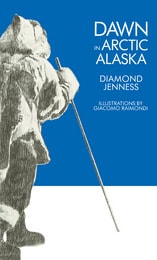
Dawn in Arctic Alaska
Diamond Jenness
University of Chicago Press, 1985
In 1913 a young ethnologist from New Zealand boarded a ship for the Arctic, beginning a personal journey that was to make Diamond Jenness one of the twentieth century's foremost authorities on Alaskan Eskimos. Jenness had been asked to join the Stefansson expedition, and his official duties were to collect ethnographic details on the Eskimos—their culture, technology, religion, and social organization. His account of the expedition was published as People of the Twilight in 1928, but Jenness also kept a diary of his three years among the Eskimos. He was eventually persuaded to publish it as Dawn in Arctic Alaska.
Predating the genre of personal ethnographies that has become so popular and important today, Jenness's tales blend his keen observations of the Arctic and its people with his own reflections and sensory experiences. He expresses great adimiration for the customs and character of the Eskimos and great regret and disappointment over the destruction of their lifeway through contact with white men.
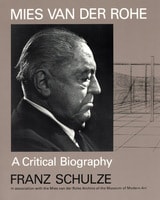
Mies van der Rohe
A Critical BiographyFranz Schulze
University of Chicago Press, 1985
“Franz Schulze’s 1985 biography of Ludwig Mies van der Rohe has always been acknowledged as the most comprehensive and thoughtful biography of one of the key figures in twentieth-century architecture. This revised edition with significant new scholarship by its two authors will undoubtedly come to occupy the same position.”—Dietrich Neumann, Brown University
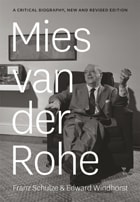
Mies van der Rohe
A Critical Biography, New and Revised EditionFranz Schulze and Edward Windhorst
University of Chicago Press, 2012
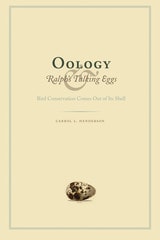
Oology and Ralph's Talking Eggs
Bird Conservation Comes Out of Its ShellBy Carrol L. Henderson
University of Texas Press, 2007
Before modern binoculars and cameras made it possible to observe birds closely in the wild, many people collected eggs as a way of learning about birds. Serious collectors called their avocation "oology" and kept meticulous records for each set of eggs: the bird's name, the species reference number, the quantity of eggs in the clutch, the date and location where the eggs were collected, and the collector's name. These documented egg collections, which typically date from the nineteenth and early twentieth centuries, now provide an important baseline from which to measure changes in the numbers, distribution, and nesting patterns of many species of birds.
In Oology and Ralph's Talking Eggs, Carrol L. Henderson uses the vast egg collection of Ralph Handsaker, an Iowa farmer, as the starting point for a fascinating account of oology and its role in the origins of modern birdwatching, scientific ornithology, and bird conservation in North America. Henderson describes Handsaker's and other oologists' collecting activities, which included not only gathering bird eggs in the wild but also trading and purchasing eggs from collectors around the world. Henderson then spotlights sixty of the nearly five hundred bird species represented in the Handsaker collection, using them to tell the story of how birds such as the Snowy Egret, Greater Prairie Chicken, Atlantic Puffin, and Wood Duck have fared over the past hundred years or so since their eggs were gathered. Photos of the eggs and historical drawings and photos of the birds illustrate each species account. Henderson also links these bird histories to major milestones in bird conservation and bird protection laws in North America from 1875 to the present.