Results by title

3 books match the query '1887-1948'
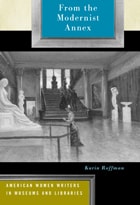
cover of From the Modernist Annex: American Women Writers in Museums and Libraries

From the Modernist Annex

American Women Writers in Museums and Libraries

Karin Roffman

University of Alabama Press, 2010
In the 19th and early 20th centuries, the majority of women were forced to seek their education outside the walls of American universities. Many turned to museums and libraries, for their own enlightenment, for formal education, and also for their careers. In Roffman’s close readings of four modernist writers—Edith Wharton, Nella Larsen, Marianne Moore, and Ruth Benedict—she studied the that modernist women writers were simultaneously critical of and shaped by these institutions.
 
From the Modernist Annex offers new and critically significant ways of understanding these writers and their texts, the distribution of knowledge, and the complicated place of women in modernist institutions.
[more]
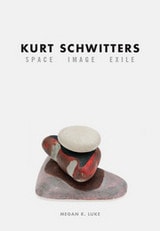
cover of Kurt Schwitters: Space, Image, Exile

Kurt Schwitters

Space, Image, Exile

Megan R. Luke

University of Chicago Press, 2014

German artist Kurt Schwitters (1887–1948) is best known for his pioneering work in fusing collage and abstraction, the two most transformative innovations of twentieth-century art. Considered the father of installation art, Schwitters was also a theorist, a Dadaist, and a writer whose influence extends from Robert Rauschenberg and Eva Hesse to Thomas Hirschhorn. But while his early experiments in collage and installation from the interwar period have garnered much critical acclaim, his later work has generally been ignored. In the first book to fill this gap, Megan R. Luke tells the fascinating, even moving story of the work produced by the aging, isolated artist under the Nazi regime and during his years in exile.
 
Combining new biographical material with archival research, Luke surveys Schwitters’s experiments in shaping space and the development of his Merzbau, describing his haphazard studios in Scandinavia and the United Kingdom and the smaller, quieter pieces he created there. She makes a case for the enormous relevance of Schwitters’s aesthetic concerns to contemporary artists, arguing that his later work provides a guide to new narratives about modernism in the visual arts. These pieces, she shows, were born of artistic exchange and shaped by his rootless life after exile, and they offer a new way of thinking about the history of art that privileges itinerancy over identity and the critical power of humorous inversion over unambiguous communication. Packed with images, Kurt Schwitters completes the narrative of an artist who remains a considerable force today.
[more]
cover of Ruth Benedict: Stranger in This Land

Ruth Benedict

Stranger in This Land

By Margaret M. Caffrey

University of Texas Press, 1989

Poet, anthropologist, feminist—Ruth Fulton Benedict was all of these and much more. Born into the last years of the Victorian era, she came of age during the Progressive years and participated in inaugurating the modern era of American life. Ruth Benedict: Stranger in This Land provides an intellectual and cultural history of the first half of the twentieth century through the life of an important and remarkable woman.

As a Lyricist poet, Ruth Benedict helped define Modernism. As an anthropologist, she wrote the classic Patterns of Culture and at one point was considered the foremost anthropologist in the United States—the first woman ever to attain such status. She was an intellectual and an artist living in a time when women were not encouraged to be either. In this fascinating study, Margaret Caffrey attempts to place Benedict in the cultural matrix of her time and successfully shows the way in which Benedict was a product of and reacted to the era in which she lived.

Caffrey goes far beyond providing simple biographical material in this well-written interdisciplinary study. Based on exhaustive research, including access for the first time to the papers of Margaret Mead, Benedict's student and friend, Caffrey is able to put Benedict's life clearly in perspective. By identifying the family and educational influences that so sharply influenced Benedict's psychological makeup, the author also closely analyzes the currents of thought that were strong when Victorianism paralleled the Modernism that figured in Benedict's life work. The result is a richly detailed study of a gifted woman.

This important work will be of interest to students of Modernism, poetry, and women's studies, as well as to anthropologists.

[more]