Results by title
3 books match the query '1888-1976'
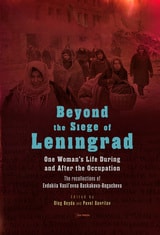
Beyond the Siege of Leningrad
One Woman’s Life during and after the Occupation: The Recollections of Evdokiia Vasil’evna Baskakova-BogachevaPavel Gavrilov
Central European University Press, 2024
This memoir about the experiences of German occupation during the siege of Leningrad (now Saint Petersburg) was written by Moscow-born Evdokiia Vasil’evna Baskakova-Bogacheva (1888–1976), an émigré in Australia, at the age of eighty-one. The text had been forgotten in the Museum of Russian Culture in San Francisco since 1970 until the editors of this volume discovered it.
In the memoirs, after accounting on her youth spent against the background of the First World War and of the two Russian revolutions of 1917, Evdokiia describes the inferno of the Nazi occupation as experienced in a suburb of Leningrad in 1941-43. She survived for nearly two years almost on the front line, within a few kilometers of the blockade ring. As a medical practitioner, she became useful for the occupational authorities and the ever-shrinking town population, until her family was evacuated to the west in October 1943. Besides hunger, discord, disease, the hunt for food and firewood, along with violence and death, Evdokiia’s account deals with various forms of cooperation between Soviet citizens and the new authorities.
All the events she recalls can be confirmed through other sources. The introduction and the detailed notes to the text help the reader to locate Evdokiia’s recollections in time and place, and situate them in their historical context.
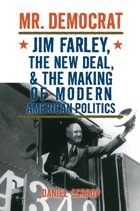
Mr. Democrat
Jim Farley, the New Deal and the Making of Modern American PoliticsDaniel Scroop
University of Michigan Press, 2006
Mr. Democrat tells the story of Jim Farley, Franklin D. Roosevelt's campaign manager. As party boss, Farley experienced unprecedented success in the New Deal years. And like his modern counterpart Karl Rove, Farley enjoyed unparalleled access and power. Unlike Rove, however, Farley was instrumental in the creation of an overwhelming new majority in American politics, as the emergence of the New Deal transformed the political landscape of its time.
Mr. Democrat is timely and indispensable not just because Farley was a fascinating and unduly neglected figure, but also because an understanding of his career advances our knowledge of how and why he revolutionized the Democratic Party and American politics in the age of the New Deal.
Daniel Scroop is Lecturer in American History, University of Liverpool School of History.
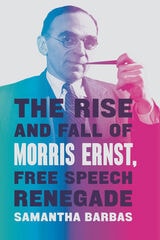
The Rise and Fall of Morris Ernst, Free Speech Renegade
Samantha Barbas
University of Chicago Press, 2021
In the 1930s and ’40s, Morris Ernst was one of America’s best-known liberal lawyers. The ACLU’s general counsel for decades, Ernst was renowned for his audacious fights against artistic censorship. He successfully defended Ulysses against obscenity charges, litigated groundbreaking reproductive rights cases, and supported the widespread expansion of protections for sexual expression, union organizing, and public speech. Yet Ernst was also a man of stark contradictions, waging a personal battle against Communism, defending an autocrat, and aligning himself with J. Edgar Hoover’s inflammatory crusades.
Arriving at a moment when issues of privacy, artistic freedom, and personal expression are freshly relevant, The Rise and Fall of Morris Ernst, Free Speech Renegade brings this singularly complex figure into a timely new light. As Samantha Barbas’s eloquent and compelling biography makes ironically clear, Ernst both transformed free speech in America and inflicted damage to the cause of civil liberties. Drawing on Ernst’s voluminous cache of publications and papers, Barbas follows the life of this singular idealist from his pugnacious early career to his legal triumphs of the 1930s and ’40s and his later idiosyncratic zealotry. As she shows, today’s challenges to free speech and the exercise of political power make Morris Ernst’s battles as pertinent as ever.