Results by title
2 books match the query '1891-1968'
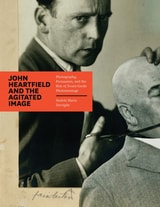
John Heartfield and the Agitated Image
Photography, Persuasion, and the Rise of Avant-Garde PhotomontageAndrés Mario Zervigón
University of Chicago Press, 2012
Working in Germany between the two world wars, John Heartfield (born Helmut Herzfeld, 1891–1968) developed an innovative method of appropriating and reusing photographs to powerful political effect. As a pioneer of modern photomontage, he sliced up mass media photos with his iconic scissors and then reassembled the fragments into compositions that utterly transformed the meaning of the originals. In John Heartfield and the Agitated Image, Andrés Mario Zervigón explores this crucial period in the life and work of a brilliant, radical artist whose desire to disclose the truth obscured by the mainstream press and imperial propaganda made him a de facto prosecutor of Germany’s visual culture.
Zervigón charts the evolution of Heartfield’s photomontage from an act of antiwar resistance into a formalized and widely disseminated political art in the Weimar Republic. Appearing on everything from campaign posters to book covers, the photomonteur’s notorious pictures challenged well-worn assumption and correspondingly walked a dangerous tightrope over the political, social, and cultural cauldron that was interwar Germany. Zervigón explains how Heartfield’s engagement with montage arose from a broadly-shared dissatisfaction with photography’s capacity to represent the modern world. The result was likely the most important combination of avant-garde art and politics in the twentieth century.
A rare look at Heartfield’s early and middle years as an artist and designer, this book provides a new understanding of photography’s role at this critical juncture in history.
[more]
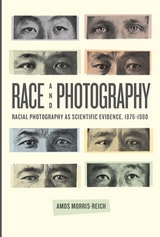
Race and Photography
Racial Photography as Scientific Evidence, 1876-1980Amos Morris-Reich
University of Chicago Press, 2015
Race and Photography studies the changing function of photography from the 1870s to the 1940s within the field of the “science of race,” what many today consider the paradigm of pseudo-science. Amos Morris-Reich looks at the ways photography enabled not just new forms of documentation but new forms of perception. Foregoing the political lens through which we usually look back at race science, he holds it up instead within the light of the history of science, using it to explore how science is defined; how evidence is produced, used, and interpreted; and how science shapes the imagination and vice versa.
Exploring the development of racial photography wherever it took place, including countries like France and England, Morris-Reich pays special attention to the German and Jewish contexts of scientific racism. Through careful reconstruction of individual cases, conceptual genealogies, and patterns of practice, he compares the intended roles of photography with its actual use in scientific argumentation. He examines the diverse ways it was used to establish racial ideologies—as illustrations of types, statistical data, or as self-evident record of racial signs. Altogether, Morris-Reich visits this troubling history to outline important truths about the roles of visual argumentation, imagination, perception, aesthetics, epistemology, and ideology within scientific study.
Exploring the development of racial photography wherever it took place, including countries like France and England, Morris-Reich pays special attention to the German and Jewish contexts of scientific racism. Through careful reconstruction of individual cases, conceptual genealogies, and patterns of practice, he compares the intended roles of photography with its actual use in scientific argumentation. He examines the diverse ways it was used to establish racial ideologies—as illustrations of types, statistical data, or as self-evident record of racial signs. Altogether, Morris-Reich visits this troubling history to outline important truths about the roles of visual argumentation, imagination, perception, aesthetics, epistemology, and ideology within scientific study.
[more]