Results by title
5 books match the query '1892-1971'

Flying for the Air Service
The Hughes Brothers in World War IDavid K. Vaughan
University of Wisconsin Press, 1998
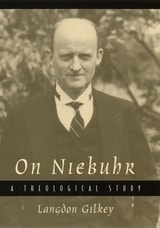
On Niebuhr
A Theological StudyLangdon Gilkey
University of Chicago Press, 2001
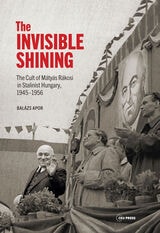
The Invisible Shining
The Cult of Mátyás Rákosi in Stalinist Hungary, 19451956Balazs Apor
Central European University Press, 2018
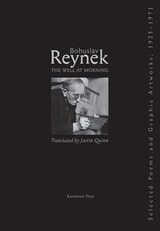
The Well at Morning
Selected Poems, 1925–1971Bohuslav Reynek
Karolinum Press, 2017
A chaffinch in a tree
of cherry sings merrily
spring’s introit.
Its blazing bobble dwells
in leaves, alive, and swells
in scarlet.
The flowers are flares of white.
The chaffinch has gone quiet
and turned sky-gazer.
My eyes close on the day:
an orb revolves in grey
and red and azure.
Poet and artist Bohuslav Reynek spent most of his life in the relative obscurity of the Czech-Moravian Highlands; although he suffered at the hands of the Communist regime, he cannot be numbered among the dissident poets of Eastern Europe who won acclaim for their political poetry in the second half of the twentieth century. Rather, Reynek belongs to an older pastoral-devotional tradition—a kindred spirit to the likes of English-language poets Gerard Manley Hopkins, William Wordsworth, Robert Frost, and Edward Thomas. The Well at Morning presents a selection of poems from across his life and is illustrated with twenty-five of his own color etchings. Also featuring three essays by leading scholars that place Reynek’s life and work alongside those of his better-known peers, this book presents a noted Czech artist to the wider world, reshaping and amplifying our understanding of modern European poetry.
Why Niebuhr Now?
John Patrick Diggins
University of Chicago Press, 2011
Barack Obama has called him “one of my favorite philosophers.” John McCain wrote that he is “a paragon of clarity about the costs of a good war.” Andrew Sullivan has said, “We need Niebuhr now more than ever.” For a theologian who died in 1971, Reinhold Niebuhr is maintaining a remarkably high profile in the twenty-first century.
In Why Niebuhr Now? acclaimed historian John Patrick Diggins tackles the complicated question of why, at a time of great uncertainty about America’s proper role in the world, leading politicians and thinkers are turning to Niebuhr for answers. Diggins begins by clearly and carefully working through Niebuhr’s theology, which focuses less on God’s presence than his absence—and the ways that absence abets the all-too-human sin of pride. He then shows how that theology informed Niebuhr’s worldview, leading him to be at the same time a strong opponent of fascism and communism and a leading advocate for humility and caution in foreign policy.
Turning to the present, Diggins highlights what he argues is a misuse of Niebuhr’s legacy on both the right and the left: while neoconservatives distort Niebuhr’s arguments to support their call for an endless war on terror in the name of stopping evil, many liberal interventionists conveniently ignore Niebuhr’s fundamental doubts about power. Ultimately, Niebuhr’s greatest lesson is that, while it is our duty to struggle for good, we must at the same time be wary of hubris, remembering the limits of our understanding.
The final work from a distinguished writer who spent his entire career reflecting on America’s history and promise, Why Niebuhr Now? is a compact and perceptive book that will be the starting point for all future discussions of Niebuhr.