Results by title
9 books match the query '1892-1975'
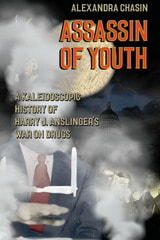
Assassin of Youth
A Kaleidoscopic History of Harry J. Anslinger’s War on DrugsAlexandra Chasin
University of Chicago Press, 2016
In Assassin of Youth, Alexandra Chasin gives us a lyrical, digressive, funny, and ultimately riveting quasi-biography of Anslinger. Her treatment of the man, his times, and the world that arose around and through him is part cultural history, part kaleidoscopic meditation. Each of the short chapters is anchored in a historical document—the court decision in Webb v. US (1925), a 1935 map of East Harlem, FBN training materials from the 1950s, a personal letter from the Treasury Department in 1985—each of which opens onto Anslinger and his context. From the Pharmacopeia of 1820 to death of Sandra Bland in 2015, from the Pennsylvania Railroad to the last passenger pigeon, and with forays into gangster lives, CIA operatives, and popular detective stories, Chasin covers impressive ground. Assassin of Youth is as riotous and loose a history of drug laws as can be imagined—and yet it culminates in an arresting and precise revision of the emergence of drug prohibition.
Today, even as marijuana is slowly being legalized, we still have not fully reckoned with the racist and xenophobic foundations of our cultural appetite for the severe punishment of drug offenders. In Assassin of Youth, Chasin shows us the deep, twisted roots of both our love and our hatred for drug prohibition.
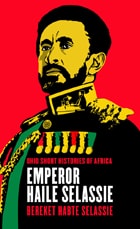
Emperor Haile Selassie
Bereket Habte Selassie
Ohio University Press, 2014
Emperor Haile Selassie was an iconic figure of the twentieth century, a progressive monarch who ruled Ethiopia from 1916 to 1974. This book, written by a former state official who served in a number of important positions in Selassie’s government, tells both the story of the emperor’s life and the story of modern Ethiopia.
After a struggle for the throne in 1916, the young Selassie emerged first as regent and then as supreme leader of Ethiopia. Over the course of his nearly six-decade rule, the emperor abolished slavery, introduced constitutional reform, and expanded educational opportunity. The Italian invasion of Ethiopia in the 1930s led to a five-year exile in England, from which he returned in time to lead his country through World War II. Selassie was also instrumental in the founding of the Organization of African Unity in 1963, but he fell short of the ultimate goal of a promised democracy in Ethiopia. The corruption that grew under his absolute rule, as well as his seeming indifference to the famine that gripped Ethiopia in the 1970s, led finally to his overthrow by the armed forces that he had created.
Haile Selassie was an enlightened monarch in many ways, but also a man with flaws like any other. This short biography is a sensitive portrayal of Selassie as both emperor and man, by one who knew him well.
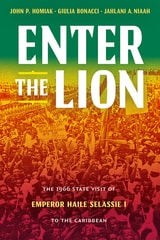
Enter the Lion
The 1966 State Visit of Emperor Haile Selassie I to the CaribbeanJohn P. Homiak, Giulia Bonacci, and Jahlani A. Niaah
Duke University Press, 2026
Exhuming Franco
Spain's Second Transition, Second EditionSebastiaan Faber
Vanderbilt University Press, 2023
This new edition, with additional interviews and a new introduction, illuminates the dangers of the rise of right-wing nationalist revisionism by using Spain as a case study for how nations face, or don't face, difficult questions about their past.
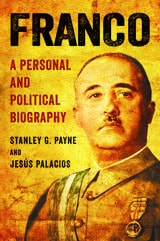
Franco
A Personal and Political BiographyStanley G. Payne and Jesús Palacios
University of Wisconsin Press, 2018
Franco: A Personal and Political Biography depicts his early life, explains his career and rise to prominence as an army officer who became Europe's youngest interwar brigadier general in 1926, and then discusses his role in the affairs of the troubled Second Spanish Republic (1931–36). Stanley G. Payne and Jesús Palacios examine in detail how Franco became dictator and how his leadership led to victory in the Spanish Civil War that consolidated his regime. They also explore Franco's role in the great repression that accompanied the Civil War—resulting in tens of thousands of executions—and examine at length his controversial role in World War II. This masterful biography highlights Franco's metamorphoses and adaptations to retain power as politics, culture, and economics shifted in the four decades of his dictatorship.
Best Books for General Audiences, selected by the American Association of School Librarians
Best Books for General Audiences, selected by the Public Library Reviewers
“An important book, destined to elicit a heated academic debate surrounding the man who ruled Spain for forty years and whose figure still casts a long shadow four decades after his death.”—Journal of Modern History
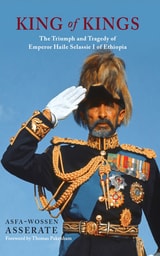
King of Kings
The Triumph and Tragedy of Emperor Haile Selassie I of EthiopiaAsfa-Wossen Asserate
Haus Publishing, 2015
Written by Asfa-Wossen Asserate, Haile Selassie’s grandnephew, this is the first major biography of this final “king of kings.” Asserate, who spent his childhood and adolescence in Ethiopia before fleeing the revolution of 1974, knew Selassie personally and gained intimate insights into life at the imperial court. Introducing him as a reformer and an autocrat whose personal history—with all of its upheavals, promises, and horrors—reflects in many ways the history of the twentieth century itself, Asserate uses his own experiences and painstaking research in family and public archives to achieve a colorful and even-handed portrait of the emperor.

The Emperor's Clothes
A Personal Viewpoint of Politics and Administration in the Imperial Ethiopian Government, 1941-1974Gaitachew Bekele
Michigan State University Press, 1993
. . . An engaging personal account of a public service career n the period leading to the 1974 revolution. It ...persuades and provides real insight into the genuine noblesse oblige of the first generation of technocrats drawn from the social elite of the post- war period.
-James McCann, Boston University
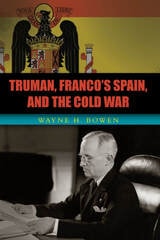
Truman, Franco's Spain, and the Cold War
Wayne H Bowen
University of Missouri Press, 2017
President Harry S. Truman harbored an abiding disdain for Spain and its government. During his presidency (1945–1953), the State Department and the Department of Defense lobbied Truman to form an alliance with Spain to leverage that nation’s geostrategic position, despite Francisco Franco’s authoritarian dictatorship. The eventual alliance between the two countries came only after years of argument for such a shift by nearly the entire U.S. diplomatic and military establishment. This delay increased the financial cost of the 1953 defense agreements with Spain, undermined U.S. planning for the defense of Europe, and caused dysfunction over foreign policy at the height of the Cold War.

Victim of History
Cardinal Mindszenty, a biographyMargit Balogh
Catholic University of America Press, 2022