Results by title
5 books match the query '1895-1963'
Colonial Inscriptions
Race, Sex, and Class in KenyaCarolyn Martin Shaw
University of Minnesota Press, 1995
In Kenyan colonialist imagery, the Kikuyu were vilified as deceitful servants while the Maasai were romanticized as noble savages in a fashion similar to American representation of the Black slave and the "wild" Indian. Carolyn Martin Shaw examines this imagery in the works of historians and ethnographers, as well as in novels and films.
Through the works of Louis Leakey, Jomo Kenyatta, Elspeth Huxley, and Isak Dinesen, along with her own ethnographic research, Martin Shaw investigates the discourses that shaped inequalities, rivalries, and fantasies in colonial Kenya. She explores narratives of domination and subordination, arguing that Europeans brought to Africa long-established ideas of difference that influenced racial inequalities in the colonial situation. Including discussion of the controversial practice of female genital mutilation, Colonial Inscriptions presents an African American woman's views of how images of African colonialism have been influenced by European and American racism and sexual fantasies.
Empire State-Building
War and Welfare in Kenya, 1925–1952Joanna Lewis
Ohio University Press, 2001
This history of administrative thought and practice in colonial Kenya looks at the ways in which white people tried to engineer social change.
It asks four questions:
- Why was Kenya’s welfare operation so idiosyncratic and spartan compared with that of other British colonies?
- Why did a transformation from social welfare to community development produce further neglect of the very poor?
- Why was there no equivalent to the French tradition of community medicine?
- If there was a transformatory element of colonial rule that sought to address poverty, where and why did it fall down?
The answers offer revealing insight into the dynamics of rule in the late colonial period in Kenya.
Fertility and Other Stories
Vsevolod Ivanov
Northwestern University Press, 1998
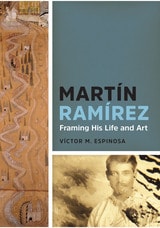
Martín Ramírez
Framing His Life and ArtBy Víctor M. Espinosa
University of Texas Press, 2015
Martín Ramírez, a Mexican migrant worker and psychiatric patient without formal artistic training, has been hailed by leading New York art critics as one of the twentieth century’s greatest artists. His work has been exhibited alongside masters such as José Clemente Orozco, Diego Rivera, Rufino Tamayo, Salvador Dalí, Marc Chagall, Paul Klee, and Joan Miró. A landmark exhibition of Ramírez’s work at the American Folk Art Museum in 2007 broke attendance records and garnered praise from major media, including the New York Times, New Yorker, and Village Voice.
Martín Ramírez offers the first sustained look at the life and critical reception of this acclaimed artist. Víctor Espinosa challenges the stereotype of outsider art as an indecipherable enigma by delving into Ramírez’s biography and showing how he transformed memories of his life in Mexico, as well as his experiences of displacement and seclusion in the United States, into powerful works of art. Espinosa then traces the reception of Ramírez’s work, from its first anonymous showings in the 1950s to contemporary exhibitions and individual works that have sold for as much as a half-million dollars. This eloquently told story reveals how Ramírez’s three-decades-long incarceration in California psychiatric institutions and his classification as “chronic paranoid schizophrenic” stigmatized yet also protected what his hands produced. Stripping off the labels “psychotic artist” and “outsider master,” Martín Ramírez demonstrates that his drawings are not passive manifestations of mental illness. Although he drew while confined as a psychiatric patient, the formal elements and content of Ramírez’s artwork are shaped by his experiences of cultural and physical displacement.
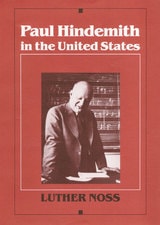
Paul Hindemith in the United States
Luther Noss
University of Illinois Press, 1989
Concentrating upon the composer's first three US concert tours and his thirteen years at Yale, Luther Noss brings to life a observant, energetic, stubborn, and wry personality. Hindemith's journals offer detailed commentary on his experiences at Tanglewood while Noss draws on archives to describe the composer's groundbreaking Collegium concerts, classes, controversial plans to reorganize the School of Music, and other activities. Noss also delves into professional activity that included a huge number of commissions, writing four theory textbooks, an expansion of his Charles Eliot Norton Lectures, and numerous world premieres and other events.