Results by title
4 books match the query '1899-1973'
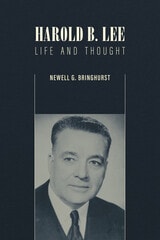
Harold B. Lee
Life and ThoughtNewell G. Bringhurst
Signature Books, 2021
While Harold B. Lee served as president of the Church of Jesus Christ of Latter-day Saints for a mere one and half-years—among the shortest tenure of any church leader—his impact on the modern LDS Church remains among the most profound. Lee implemented the Church Welfare Program, which provided relief to suffering church members during the 1930s Great Depression and continues to impact the lives of church members today. As a high-ranking general authority from 1941 to 1973, he championed other innovations, the most important being Correlation. Lee acted in response to the church’s record growth and increased diversity to consolidate and streamline churchwide instruction and administration. As a teacher/mentor, he promoted conservative church doctrine and practice, which influenced a generation of church leaders, including future presidents Spencer W. Kimball, Ezra Taft Benson, Howard W. Hunter, Gordon B. Hinckley, and Thomas S. Monson. Noted historian Newell G. Bringhurst succinctly narrates the major, defining events in Lee’s remarkable life, while highlighting Lee’s important, lasting contributions. This is the first volume in Signature’s new Brief Mormon Lives series.
[more]
How Will the Heart Endure
Elizabeth Bowen and the Landscape of WarHeather Bryant Jordan
University of Michigan Press, 1992
The career of Elizabeth Bowen (1899-1973) has been hard to categorize. As an Anglo-lrish writer, a follower of the modernists but not technically one herself; as an independent woman writer but not, by her admission, a feminist; and as a creative writer in time of war, she has eluded compartmentalization. In How Will the Heart Endure, Heather Bryant Jordan provides a new assessment of Bowen’s achievement, arguing that Bowen’s response to war is the best lens for elucidating the relation between art and life expressed in Bowen’s work.Bowen created novels, short stories, essays, and autobiographical works in a war-torn world that saw successively the Troubles in Ireland, the Irish Civil War, World War I, and World War Il. The strains she felt as a result of these experiences were expressed in the intensely personal vision of loss and betrayal that her fiction conveys.Jordan’s study combines historical and literary analysis and incorporates new archival research on Bowen’s correspondence and on her war reports to the Ministry of Information. How Will the Heart Endure offers not only a new reading of Bowen’s work, but an insightful look into the wartime publishing climate in which Bowen and her circle—which included Virginia Woolf, T. S. Eliot, John and Rosalind Lehmann, Cyril Connolly, Evelyn Waugh, Graham Greene, and Stephen Spender—operated. It will be of interest to specialists in modern British fiction, women’s studies, Irish studies, and Anglo-lrish literature.
[more]
Leo Strauss, Max Weber, and the Scientific Study of Politics
Nasser Behnegar
University of Chicago Press, 2002
Can politics be studied scientifically, and if so, how? Assuming it is impossible to justify values by human reason alone, social science has come to consider an unreflective relativism the only viable basis, not only for its own operations, but for liberal societies more generally. Although the experience of the sixties has made social scientists more sensitive to the importance of values, it has not led to a fundamental reexamination of value relativism, which remains the basis of contemporary social science. Almost three decades after Leo Strauss's death, Nasser Behnegar offers the first sustained exposition of what Strauss was best known for: his radical critique of contemporary social science, and particularly of political science.
Behnegar's impressive book argues that Strauss was not against the scientific study of politics, but he did reject the idea that it could be built upon political science's unexamined assumption of the distinction between facts and values. Max Weber was, for Strauss, the most profound exponent of values relativism in social science, and Behnegar's explication artfully illuminates Strauss's critique of Weber's belief in the ultimate insolubility of all value conflicts.
Strauss's polemic against contemporary political science was meant to make clear the contradiction between its claim of value-free premises and its commitment to democratic principles. As Behnegar ultimately shows, values—the ethical component lacking in a contemporary social science—are essential to Strauss's project of constructing a genuinely scientific study of politics.
[more]
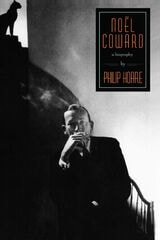
Noel Coward
A BiographyPhilip Hoare
University of Chicago Press, 1998
To several generations, actor, playwright, songwriter, and filmmaker, Noël Coward (1899-1973) was the very personification of wit, glamour, and elegance. His biographer, Philip Hoare, given unprecedented access to the private papers and correspondence of Coward family members, compatriots, and numerous lovers, has produced the definitive biography of one of the twentieth century's most celebrated and controversial figures.
"Philip Hoare's careful research and lucid presentation in his Noël Coward: A Biography adds depth to the picture."-New York Times Book Review
"A fascinating, in-depth biography."—Library Journal
"Hoare has profiled vividly and in-depth a complex legend who had a talent for creating and recreating both himself and his works."—Publishers Weekly
"In the thicket of books about the life and work of Coward, Philip Hoare's stands out as the most well-documented and objective."—Los Angeles Times
"[Hoare's] book, like its subject, strives for effortless sophistication, and succeeds."—Newsday
"Hoare's retelling of Coward's story [is] the most vivid, insightful, and fascinating so far."—John Lahr, The New Yorker
[more]