Results by title
3 books match the query '1899-1988'
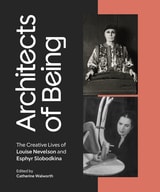
Architects of Being
The Creative Lives of Louise Nevelson and Esphyr SlobodkinaCatherine Walworth
University of Arkansas Press, 2025
Born just nine years apart in Ukraine and Siberia, respectively, Louise Nevelson and Esphyr Slobodkina were both children of Jewish families who fled Russian governmental repression and conflict. Both made early marriages of convenience or convention that were short-lived. Both went to New York in the 1920s, struggling to become artists amid the Great Depression. Both overcame the accepted modes of making, moving between art forms in expansive, category-defying ways. The parallels are poignant, including their similarly fearless devotion to abstract art in an era that had yet to fully embrace it. Architects of Being pays homage to these two women who were direct and dauntless.
Fittingly, this book draws its title from Nevelson’s insight that “there’s something very important about character: character is structure. Character is the architecture of the being.” The connection between inner self and outward manifestation—both one’s art and one’s self-fashioning—is at the heart of Architects of Being. This richly illustrated and expertly researched exhibition catalog celebrates Nevelson’s and Slobodkina’s artistic journeys and architectural affinities, expanding our understanding of how these pioneering figures dissolved boundaries between art forms in ways that prefigured what we see throughout the art world today.
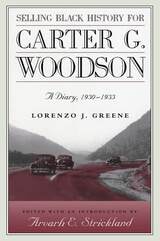
Selling Black History for Carter G. Woodson
A Diary, 1930-1933Lorenzo J. Greene, Edited & Intro by Arvarh E. Strickland
University of Missouri Press, 1996
In the summer of 1930, Lorenzo Johnston Greene, a graduate of Howard University and a doctoral candidate at Columbia University, became a book agent for the man with the undisputed title of "Father of Negro History," Carter G. Woodson. With little more than determination, Greene, along with four Howard University students, traveled throughout the South and Southeast selling books published by Woodson's Associated Publishers. Their dual purpose was to provide needed funds for the Association for the Study of Negro Life and History and to promote the study of African American history. Greene returned east by way of Chicago, and, for a time, he settled in Philadelphia, selling books there and in the nearby cities of Delaware and New Jersey. He left Philadelphia in 1931 to conduct a survey in Washington, D.C., of firms employing and not employing black workers.
From 1930 until 1933, when Greene began teaching at Lincoln University in Jefferson City, Missouri, Selling Black History for Carter G. Woodson provides a unique firsthand account of conditions in African American communities during the Great Depression. Greene describes in the diary, often in lyrical terms, the places and people he visited. He provides poignant descriptions of what was happening to black professional and business people, plus working-class people, along with details of high school facilities, churches, black business enterprises, housing, and general conditions in communities. Greene also gives revealing accounts of how the black colleges were faring in 1930.
Selling Black History for Carter G. Woodson offers important glimpses into the private thoughts of a young man of the 1930s, a developing intellectual and scholar. Greene's diary also provides invaluable insights into the personality of Carter Woodson that are not otherwise available. This fascinating and comprehensive view of black America during the early thirties will be a welcome addition to African American studies.
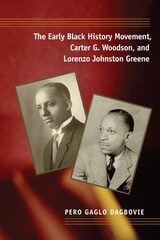
The Early Black History Movement, Carter G. Woodson, and Lorenzo Johnston Greene
Pero Gaglo Dagbovie
University of Illinois Press, 2007