Results by title
4 books match the query '1901-1976'

A Bountiful Harvest
The Midwestern Farm Photographs of Pete Wettach, 1925-1965Leslie A. Loveless
University of Iowa Press, 2002
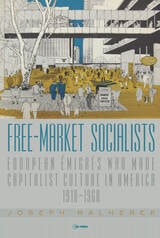
Free-Market Socialists
European Émigrés Who Made Capitalist Culture in America, 1918–1968Joseph Malherek
Central European University Press, 2022
The Hungarian artist-designer László Moholy-Nagy, the Austrian sociologist Paul Lazarsfeld, and his fellow Viennese Victor Gruen—an architect and urban planner—made careers in different fields. Yet they shared common socialist politics, Jewish backgrounds, and experience as refugees from the Nazis. This book tells the story of their intellectual migration from Central Europe to the United States, beginning with the collapse of the Habsburg Empire, and moving through the heady years of newly independent social-democratic republics before the descent into fascism. It follows their experience of exile and adaptation in a new country, and culminates with a surprising outcome of socialist thinking: the opening of the first fully enclosed, air-conditioned suburban shopping center in the United States. Although the American culture they encountered ostensibly celebrated entrepreneurial individualism and capitalistic “free enterprise,” Moholy-Nagy, Lazarsfeld, and Gruen arrived at a time of the progressive economic reforms of the New Deal and an extraordinary open-mindedness about social democracy. This period of unprecedented economic experimentation nurtured a business climate that, for the most part, did not stifle the émigrés’ socialist idealism but rather channeled it as the source of creative solutions to the practical problems of industrial design, urban planning, and consumer behavior.
Based on a vast array of original sources, Malherek interweaves the biographies of these three remarkable personalities and those of their wives, colleagues, and friends with whom they collaborated on innovative projects that would shape the material environment and consumer culture of their adopted home. The result is a narrative of immigration and adaptation that challenges the crude binary of capitalism and socialism with a story of creative economic hybridization.

Malraux, the Absolute Agnostic; or, Metamorphosis as Universal Law
Claude Tannery
University of Chicago Press, 1991
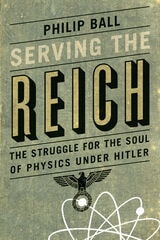
Serving the Reich
The Struggle for the Soul of Physics under HitlerPhilip Ball
University of Chicago Press, 2014
After World War II, most scientists in Germany maintained that they had been apolitical or actively resisted the Nazi regime, but the true story is much more complicated. In Serving the Reich, Philip Ball takes a fresh look at that controversial history, contrasting the career of Peter Debye, director of the Kaiser Wilhelm Institute for Physics in Berlin, with those of two other leading physicists in Germany during the Third Reich: Max Planck, the elder statesman of physics after whom Germany’s premier scientific society is now named, and Werner Heisenberg, who succeeded Debye as director of the institute when it became focused on the development of nuclear power and weapons.
Mixing history, science, and biography, Ball’s gripping exploration of the lives of scientists under Nazism offers a powerful portrait of moral choice and personal responsibility, as scientists navigated “the grey zone between complicity and resistance.” Ball’s account of the different choices these three men and their colleagues made shows how there can be no clear-cut answers or judgment of their conduct. Yet, despite these ambiguities, Ball makes it undeniable that the German scientific establishment as a whole mounted no serious resistance to the Nazis, and in many ways acted as a willing instrument of the state.
Serving the Reich considers what this problematic history can tell us about the relationship between science and politics today. Ultimately, Ball argues, a determination to present science as an abstract inquiry into nature that is “above politics” can leave science and scientists dangerously compromised and vulnerable to political manipulation.