Results by title
8 books match the query '1903-'

Doctor Mary in Arabia
MemoirsBy Mary Bruins Allison
University of Texas Press, 1994
Until fairly recently, Arab women rarely received professional health care, since few women doctors had ever practiced in Arabia and their culture forbade them from consulting male doctors. Not surprisingly, Dr. Mary Bruins Allison faced an overwhelming demand when she arrived in Kuwait in 1934 as a medical missionary of the Reformed Church of America. Over the next forty years, "Dr. Mary" treated thousands of women and children, faithfully performing the duties that seemed required of her as a Christian—to heal the sick and seek converts.
These memoirs record a fascinating life. Dr. Allison briefly describes her upbringing and her professional training at Women's Medical College of Pennsylvania. She then focuses on her experiences in Kuwait, where women of all classes, including royalty, flocked to her care. In addition to describing many of her cases, Dr. Allison paints a richly detailed picture of life in Kuwait both before and after the discovery of oil transformed the country. Her recollections include invaluable details of women's lives in the Middle East during the early and mid-twentieth century. They add a valuable chapter to the story of modern medicine, to the largely unsuccessful efforts of the Christian church to win converts in the Middle East, and to the opportunities and limitations that faced American women of the period.
Dr. Allison also worked briefly in Bahrain, Qatar, Oman, and India, and she includes material on each country. The introduction situates her experiences in the context of Middle Eastern and medical developments of the period.

Good-Bye to Old Peking
The Wartime Letters Of U.S. Marine Captain John Seymour Letcher, 1937-1939John Seymour Letcher
Ohio University Press, 1998
Captain Letcher describes the flavor of life in pre-Communist China — the food, servants, cold Peking winters and torrid summers, hunting, and excursions to the major tourist sites.
But his letters also tell of the Japanese slaughter of Chinese troops in the opening days of the Sino-Japanese War. He wrote about life in a city under Japanese occupation and the stirring story of the Chinese guerrillas rebounding from devastating defeat.
These letters and accompanying introduction, preface, and notes, draw attention to the Western experience in a place and time largely overlooked by military historians and modern China specialists.
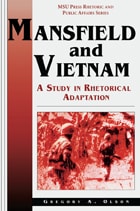
Mansfield and Vietnam
A Study in Rhetorical AdaptationGregory A. Olson
Michigan State University Press, 1995
Mansfield and Vietnam: A Study in Rhetorical Adaptation is the first major work to examine the role played by Senate Majority Leader Mike Mansfield, Democrat from Montana, in the formulation and execution of U.S. Vietnam policy. Drawing upon material from the Mansfield Papers, personal interviews, public speeches, and recently declassified documents, Olson traces Mansfield's journey from ardent supporter of Diem in the late 1950s to quiet critic of LBJ in the mid-1960s, and finally, to outspoken opponent of the Vietnam War in the late 1960s and early 1970s.
Olson focuses his attention on Mansfield's speaking ability and his use of the written word, analyzing the ways in which they proved crucial in shaping the policies of the Eisenhower, Kennedy, Johnson, Nixon, and Ford presidential administrations. He also examines the way personal and political situations converged to force Mansfield into the center of the stormy Vietnam controversy, and eventually into a position of leadership in the campaign to end America's military presence in Southeast Asia. To date, little has been done to evaluate the roles played by key congressional figures in the Vietnam War debate; thus, Mansfield and Vietnam is bound to become a significant contribution, not only to rhetorical studies, but also to twentieth-century diplomatic history and to the study of congressional-presidential relations.
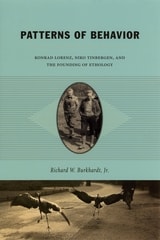
Patterns of Behavior
Konrad Lorenz, Niko Tinbergen, and the Founding of EthologyRichard W. Burkhardt, Jr.
University of Chicago Press, 2005
In Patterns of Behavior, Richard W. Burkhardt Jr. traces the scientific theories, practices, subjects, and settings integral to the construction of a discipline pivotal to our understanding of the diversity of life. Central to this tale are Konrad Lorenz and Niko Tinbergen, 1973 Nobel laureates whose research helped legitimize the field of ethology and bring international attention to the culture of behavioral research. Demonstrating how matters of practice, politics, and place all shaped "ethology's ecologies," Burkhardt's book offers a sensitive reading of the complex interplay of the field's celebrated pioneers and a richly textured reconstruction of ethology's transformation from a quiet backwater of natural history to the forefront of the biological sciences.

Remembering Tanizaki Jun’ichiro and Matsuko
Diary Entries, Interview Notes, and Letters, 1954-1989Anthony H. Chambers
University of Michigan Press, 2017

Taking Part
A Twentieth-Century LifeRobert Josephy
University of Iowa Press, 1993
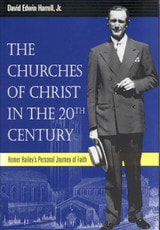
The Churches of Christ in the 20th Century
Homer Hailey's Personal Journey of FaithDavid Edwin Harrell
University of Alabama Press, 2002
The story of one of this country's major religious movements is told through the spiritual odyssey of one of its prominent spokesmen.
When Homer Hailey sparked controversy within Churches of Christ congregations over his stand on divorce and remarriage, he spoke to a movement already sundered. Historian David Edwin Harrell tells Hailey's story as a means of presenting the larger drama of faith and feuding within those churches.
A nondenominational movement of autonomous congregations, Churches of Christ have been among the fastest-growing religious bodies in the 20th century. Throughout the movement's history, church leaders debated issues ranging from missionary societies to the use of instrumental music in worship. Although some disagreements affected only the ties between congregations, others led to the creation of three distinct groups calling themselves Churches of Christ identified by their sociological and theological positions.
This book shows how the story of the Churches of Christ is reflected by Homer Hailey, a preacher, educator, and author whose life puts in perspective the personal journeys traveled by members in this century. Writing from the perspective of the non-institutional wing within the movement, Harrell avoids mainstream biases to describe the various dissenting views as fully and fairly as possible.
Combining institutional history and biography, Harrell's book is the first to bring the story of the Churches of Christ to century's end. It provides new insight into how this movement realigned itself and shows how one man's career reflected a century of spiritual growth and change for the church as a whole.
Zollikon Seminars
Protocols - Conversations - LettersMartin Heidegger
Northwestern University Press, 2001
Boss approached Heidegger asking for help in reflective thinking on the nature of Heidegger's work. Soon they were holding annual two-week meetings in Boss's home in Zollikon, Switzerland. The protocols from these seminars, recorded by Boss and reviewed, corrected, and supplemented by Heidegger himself, make up one part of this volume. They are augmented by Boss's record of the conversations he had with Heidegger in the days between seminars and by excerpts from the hundreds of letters the philosopher wrote to Boss between 1947 and 1971.