Results by title

4 books match the query '1904-1984'
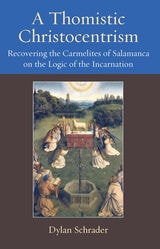
cover of A Thomistic Christocentrism: Recovering the Carmelites of Salamanca on the Logic of the Incarnation

A Thomistic Christocentrism

Recovering the Carmelites of Salamanca on the Logic of the Incarnation

Dylan Schrader

Catholic University of America Press, 2021

Saint Thomas Aquinas famously held the opinion that, in God’s actual plan for the world, the Word would not have become flesh except to redeem us from sin. Conversely, Blessed John Duns Scotus argued that God intended Christ first, such that Christ would have come even if there had been no sin. While Aquinas and Scotus were far from the first to consider this question, they became emblematic of two seemingly irreconcilable approaches. In this book, Father Dylan Schrader recovers the thought of the Salmanticenses, the Discalced Carmelites writing at the University of Salamanca in the seventeenth century. The Salmanticenses argue that Christ is primary in God’s intention precisely as redeemer, so that it is true both that God has made everything else for the sake of Christ and that Christ’s coming is essentially redemptive, connected with sin. In this way, the Salmanticenses offer a Thomistic Christocentrism. This book summarizes the historical background to the Salmanticenses, from the time of Anselm up through the early-modern period. Next, it presents and defends the Salmanticenses’ argument for the primacy of Christ the redeemer. A Thomistic Christocentrism then turns to two key post-conciliar figures, Karl Rahner and Hans Urs von Balthasar. Rahner sees Christ as the culmination of the world’s opening up to God. Balthasar sees Christ as the reconciler of divine and human freedom through his cross, descent, and resurrection. Both Christocentric approaches have good aspirations but suffer from serious flaws. In its final chapters, this book applies the Salamanca theory to Rahner and Balthasar, showing its enduring value for post-conciliar Christocentrism.
[more]
cover of Freedom Made Manifest

Freedom Made Manifest

Peter Joseph Fritz

Catholic University of America Press, 2019
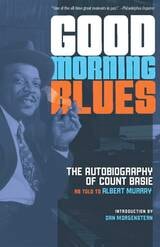
Freedom Made Manifest explicates Rahner’s theology of freedom by elucidating its configuration and sources. Much of its inquiry centers on the fundamental option: each human person’s eternal decision made, paradoxically, in time, as a definitive answer to God’s personally-tailored call to salvation. This idea stems from three principal sources: Catholic conversations with transcendental-idealist philosophy, penitential theology and practice, and Ignatian spirituality. Rahner’s unique redeployment of these sources inflects the fundamental option with theologies of concupiscence, mercy and forgiveness (especially as ecclesially mediated), and devotion to Jesus Christ. Awareness of these inflections can show how Rahner’s theology of freedom may assist in theological reflection on freedom’s susceptibility to injury and trauma.
[more]
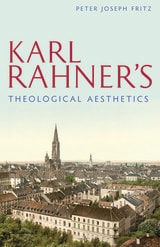
cover of Good Morning Blues: The Autobiography of Count Basie

Good Morning Blues

The Autobiography of Count Basie

Count Basie

University of Minnesota Press, 2016

Count Basie was one of America’s pre-eminent and influential jazz pianists, bandleaders, and composers, known for such classics as “Jumpin’ at the Woodside,” “Goin’ to Chicago Blues,” “Sent for You Yesterday and Here You Come Today,” and “One O’Clock Jump.” In Good Morning Blues, Basie recounts his life story to Albert Murray, from his childhood years playing ragtime with his own pickup band at dances and pig roasts, to his years in New York City in search of opportunity, to rollicking anecdotes of Basie’s encounters with Fats Waller, Frank Sinatra, Fred Astaire, Sammy Davis Jr., Quincy Jones, Billie Holliday, and Tony Bennett. In this classic of jazz autobiography that was ten years in the making, Albert Murray brings the voice of Count Basie to the printed page in what is both testimony and tribute to an incredibly rich life.
[more]
cover of Karl Rahner's Theological Aesthetics

Karl Rahner's Theological Aesthetics

Peter Joseph Fritz

Catholic University of America Press, 2014

This innovative book discloses Karl Rahner's foremost achievement: discovering and delineating an ethos of Catholicism, a multi-faceted and comprehensive approach to life in Christ. Karl Rahner's Theological Aesthetics does so by placing the German Jesuit and his teacher, philosopher Martin Heidegger, into a richly detailed dialogue on aesthetics. The book treats classic Rahner topics such as anthropology and Christology. But it breaks new ground by exploring themes such as angels, Mary, and the apocalypse, juxtaposed with analogous philosophical topics in Heidegger.
[more]