Results by title
12 books match the query '1907-'
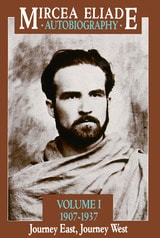
Autobiography, Volume 1
1907-1937, Journey East, Journey WestMircea Eliade
University of Chicago Press, 1990
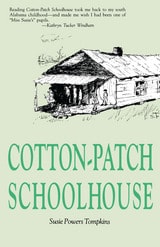
Cotton Patch Schoolhouse
Susie Powers Tompkins
University of Alabama Press, 1992
Step back into 1920s Alabama, where grit, laughter, and the red clay roads of the Black Belt shape one young woman’s unforgettable first year of teaching
Cotton-Patch Schoolhouse follows 18‑year‑old Susie Powers Tompkins as she takes on a one-room school with eight children, zero experience, and a Model T that’s always one mud puddle away from disaster. With warmth and wit, she discovers that the real curriculum is written not in textbooks—but in the faces, fears, and fierce hopes of her students.
In a world of cotton fields, nature walks, homemade art supplies, and potbellied stoves, Susie learns that teaching is as much about heart as it is about lessons. She navigates runaway love affairs, surprise pets (including an opinionated mouse), the hardships of rural poverty, and the extraordinary generosity of neighbors who have little but give much.
As contemporary readers grapple with educational inequities, rural depopulation, and renewed conversations about community, Cotton-Patch Schoolhouse feels strikingly fresh. It reminds us that creativity blooms under constraint, that relationships matter more than resources, and that small schools can make a big difference. Tompkins' memoir will delight lovers of Southern history, educators, memoir readers, rural studies enthusiasts, and anyone who enjoys heartfelt stories of resilience, community, and the transformative power of teaching
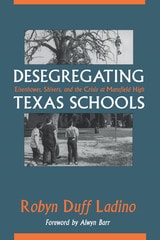
Desegregating Texas Schools
Eisenhower, Shivers, and the Crisis at Mansfield HighBy Robyn Duff Ladino
University of Texas Press, 1996
In the famous Brown v. the Board of Education decisions of 1954 and 1955, the United States Supreme Court ruled that "separate but equal" schools for black and white students were unconstitutional. Yet history records that it took more than a decade of legal battles, civil rights protests, and, tragically, violent confrontations before black students gained full access to previously white schools.
Mansfield, Texas, a small community southeast of Fort Worth, was the scene of an early school integration attempt. In this book, Robyn Duff Ladino draws on interviews with surviving participants, media reports, and archival research to provide the first full account of the Mansfield school integration crisis of 1956.
Ladino explores how power politics at the local, state, and federal levels ultimately prevented the integration of Mansfield High School in 1956. Her research sheds new light on the actions of Governor Allan Shivers—who, in the eyes of the segregationists, actually validated their cause by his political actions—and it underscores President Dwight Eisenhower's public passivity toward civil rights during his first term of office.
Despite the short-term failure, however, the Mansfield school integration crisis helped pave the way for the successful integration of Central High School in Little Rock, Arkansas, in 1957. Thus, it deserves a permanent place in the history of the civil rights movement, which this book amply provides.
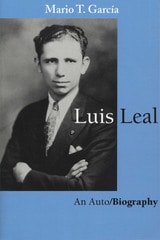
Luis Leal
An Auto/BiographyBy Mario T. García
University of Texas Press, 2000
Professor Luis Leal is one of the most outstanding scholars of Mexican, Latin American, and Chicano literatures and the dean of Mexican American intellectuals in the United States. He was one of the first senior scholars to recognize the viability and importance of Chicano literature, and, through his perceptive literary criticism, helped to legitimize it as a worthy field of study. His contributions to humanistic learning have brought him many honors, including Mexico's Aquila Azteca and the United States' National Humanities Medal.
In this testimonio or oral history, Luis Leal reflects upon his early life in Mexico, his intellectual formation at Northwestern University and the University of Chicago, and his work and publications as a scholar at the Universities of Illinois and California, Santa Barbara. Through insightful questions, Mario García draws out the connections between literature and history that have been a primary focus of Leal's work. He also elicits Leal's assessment of many of the prominent writers he has known and studied, including Mariano Azuela, William Faulkner, Octavio Paz, Carlos Fuentes, Juan Rulfo, Gabriel García Márquez, Jorge Luis Borges, Tomás Rivera, Rolando Hinojosa, Rudolfo Anaya, Elena Poniatowska, Sandra Cisneros, Richard Rodríguez, and Ana Castillo.

Memoirs of an Indo Woman
Twentieth Century Life in the East Indies and AbroadMarguérite Schenkhuizen
Ohio University Press, 1993
The memoirs of Marguérite Schenkhuizen provide an overview of practically the whole of the twentieth century as experienced by persons of mixed Dutch and Indonesian ancestry who lived in the former Dutch East Indies. The memoirs provide vignettes of Indonesian life, both rural and urban, as seen through the eyes of the author first as a girl, then as a wife separated from her husband during the Japanese occupation, finally as an immigrant to the United States after World War II.
This self-portrait gives glimpses of the life of Indos from inside their society, glimpses that are valuable for their descendents as well as for outsiders. Written with humor and a positive town, Schenkhuizen’s story sets aside the myth that Indos were denied access to the upper layers of Dutch colonial society or were otherwise disadvantaged. Instead, her life story provides an authentic view of a vital Indo culture and experience that has been unavailable to the general reader of English.
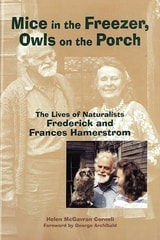
Mice in the Freezer, Owls on the Porch
The Lives of Naturalists Frederick and Francis HamerstromHelen M. Corneli
University of Wisconsin Press, 2006
Mice in the Freezer, Owls on the Porch is in many ways a love story—about a quiet scientist and his flamboyant wife, but also about their passions for hunting, for wild lands, and for the grouse and raptor species that they were instrumental in saving from destruction.
From the papers and letters of Frederick and Frances Hamerstrom, the reminiscences of contemporaries, and her own long friendship with this extraordinary couple who were her neighbors, Helen Corneli draws an intimate picture of Fran and "Hammy" from childhood through the genesis and maturation of a romantic, creative, and scientific relationship. Following the Hamerstroms as they give up a life of sophisticated convention and comfort for the more "civilized" (as Aldo Leopold would have it) pleasures of living and conducting on-the-spot research into diminishing species, Corneli captures the spirit of the Hamerstroms, their profession, and the natural and human environments in which they worked. A nuanced account of the labors, adventures, and achievements that distinguished the Hamerstroms over the years—and that inspired a generation of naturalists—this book also provides a dramatic account of conservation history over the course of the twentieth century, particularly in Wisconsin during the eventful years from the 1920s through the 1970s.
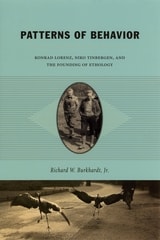
Patterns of Behavior
Konrad Lorenz, Niko Tinbergen, and the Founding of EthologyRichard W. Burkhardt, Jr.
University of Chicago Press, 2005
In Patterns of Behavior, Richard W. Burkhardt Jr. traces the scientific theories, practices, subjects, and settings integral to the construction of a discipline pivotal to our understanding of the diversity of life. Central to this tale are Konrad Lorenz and Niko Tinbergen, 1973 Nobel laureates whose research helped legitimize the field of ethology and bring international attention to the culture of behavioral research. Demonstrating how matters of practice, politics, and place all shaped "ethology's ecologies," Burkhardt's book offers a sensitive reading of the complex interplay of the field's celebrated pioneers and a richly textured reconstruction of ethology's transformation from a quiet backwater of natural history to the forefront of the biological sciences.
Representation Rights and the Burger Years
Nancy Maveety
University of Michigan Press, 1991
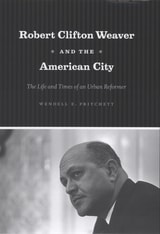
Robert Clifton Weaver and the American City
The Life and Times of an Urban ReformerWendell E. Pritchett
University of Chicago Press, 2008
Tracing Weaver’s career through the creation, expansion, and contraction of New Deal liberalism, Wendell E. Pritchett illuminates his instrumental role in the birth of almost every urban initiative of the period, from public housing and urban renewal to affirmative action and rent control. Beyond these policy achievements, Weaver also founded racial liberalism, a new approach to race relations that propelled him through a series of high-level positions in public and private agencies working to promote racial cooperation in American cities. But Pritchett shows that despite Weaver’s efforts to make race irrelevant, white and black Americans continued to call on him to mediate between the races—a position that grew increasingly untenable as Weaver remained caught between the white power structure to which he pledged his allegiance and the African Americans whose lives he devoted his career to improving.
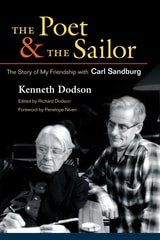
The Poet and the Sailor
The Story of My Friendship with Carl SandburgKenneth Dodson. Edited by Richard Dodson. Foreword by Penelope Niven
University of Illinois Press, 2006
Carl Sandburg first encountered Kenneth Dodson through a letter written at sea during World War II. Though Dodson wrote the letter to his wife, Letha, Sandburg read it in tears and told her, "I've got to meet this man." Composed primarily of their correspondence that continued until Sandburg's death in 1967, The Poet and the Sailor is a chronicle of the deep friendship that followed. Ranging over anything they found important, from writing to health and humor, the letters are arranged by Richard Dodson and are accompanied by a foreword from Sandburg's noted biographer, Penelope Niven.
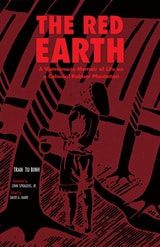
The Red Earth
A Vietnamese Memoir of Life on a Colonial Rubber PlantationBinh Tu Tran
Ohio University Press, 1985
Phu Rieng was one of many French rubber plantations in colonial Vietnam; Tran Tu Binh was one of 17,606 laborers brought to work there in 1927, and his memoir is a straightforward, emotionally searing account of how one Vietnamese youth became involved in revolutionary politics. The connection between this early experience and later activities of the author becomes clear as we learn that Tran Tu Binh survived imprisonment on Con Son island to help engineer the general uprising in Hanoi in 1945.
The Red Earth is the first of dozens of such works by veterans of the 1924–45 struggle in Vietnam to be published in English translation. It is important reading for all those interested in the many-faceted history of modern Vietnam and of communism in the non-Western world.
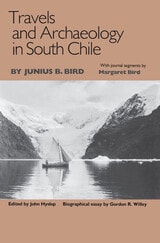
Travels and Archaeology in South Chile
Bird, Junius B.
University of Iowa Press, 1988